
What Does a Water Feature Cost?
Residential water features cost $1,000 to $20,000, averaging around $4,500. The type and scale determine the cost.
Standalone Fountain: $1,100 to $3,800
A self-contained fountain unit (a tiered stone or resin fountain, a disappearing fountain urn, or a sphere fountain): the prefab unit alone runs $130 to $3,000, which is not an installed price. Professional installation covers placing the unit, leveling the base, and running the electrical connection to power the pump. Total: $1,100 to $3,800 installed for a standard standalone fountain, with a larger 4 to 5-foot multi-tier stone fountain at the top of that range. Standalone fountains require a standard 120V outdoor outlet within 25 feet of the fountain location for the pump. No plumbing connection required — the fountain is a recirculating system that refills from a garden hose periodically.
Built-In Water Feature: $2,000 to $4,000
A built-in water feature (a wall-mounted water blade into a basin or an integrated fountain in a patio design): requires excavation, a reservoir, a pump system, electrical connection, and the decorative elements. Cost components: excavation and reservoir ($300 to $800), pump and plumbing ($400 to $800), electrical (GFCI outlet for the pump: $175 to $500), and the decorative rock, stone, or water feature elements ($800 to $2,000+). Total: $2,000 to $4,000 for a standard built-in feature. Professional installation is strongly recommended for built-in features due to the pump sizing, plumbing, and electrical requirements. (For more on this, see Common Fountain Installation Mistakes and How to Avoid Them.)
Custom or Large Feature: $7,000 to $25,000+
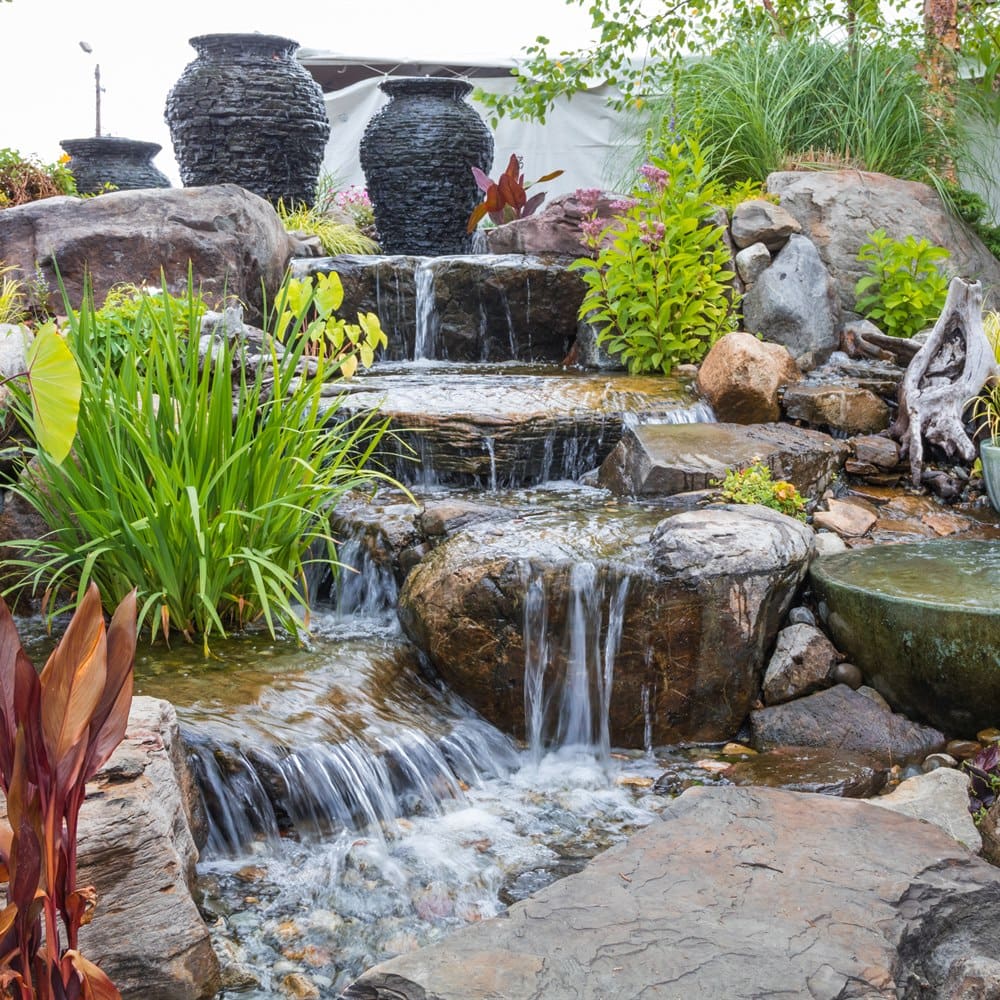
A custom water feature (a koi pond with waterfall and filtration, a large naturalistic stream, or a formal reflecting pool): $7,000 to $25,000+ depending on size, complexity, and the equipment required. Koi ponds require: a filtration system (mechanical and biological filtration), UV clarification, proper water chemistry management, and aeration. A pondless waterfall (all the visual and sound benefits of a waterfall without the fish-keeping and filtration complexity): the most popular custom water feature at $10,000 to $20,000+.
Water Feature Cost at a Glance
| Cost Factor | Typical Range | Notes |
|---|---|---|
| Standalone fountain | $1,100 to $3,800 installed | The prefab unit alone is $130 to $3,000, which is not an installed price |
| Built-in water feature | $2,000 to $4,000 installed | Integrated with plumbing and electrical |
| Custom or large feature (koi pond or pondless waterfall) | $7,000 to $25,000+ | A pondless waterfall runs $10,000 to $20,000+ and a natural backyard pond starts near $13,000 |
| Overall range | $1,000 to $20,000, averaging $4,500 | All water features require a GFCI-protected outdoor electrical outlet for the pump. The custom tier runs past the top of this range. |
Cost figures on this page were checked against published pricing on August 28, 2026. How we source cost data.
Planning Your Project Budget
The cost ranges in this article are based on industry data and are intended as planning benchmarks, not fixed prices. The actual cost for your project depends on your specific home, your local labor market, the current price of materials, and the scope the contractor confirms after a site inspection.
Always get at least two written quotes on equivalent defined scope before committing to any home services project. Wide price variation between quotes usually reflects differences in material quality, scope completeness (what is included and what is not), or contractor overhead and experience level rather than simple price competition.
Use the cost data in this article to ask better questions during the quoting process: What material is included? What does that per-square-foot or per-linear-foot rate include and exclude? Are permits, cleanup, and disposal included? What is the warranty on labor? These questions turn a quote into a comparable basis for decision-making. (For more on this, see Questions to Ask a Fountain Installer.)
Working With a Contractor on This Project
Getting the right outcome on any home services project starts before the work begins. A few consistent practices make the difference between a smooth project and a frustrating one.
Get at least two or three quotes. A single quote gives you no basis for comparison. Two or three quotes reveal the market rate for the work, expose scope differences between bidders, and let you assess contractor communication quality before any commitment is made. The lowest bid is not automatically the best value if the scope is thin or the materials are underspecified.
Ask for licenses and insurance before work starts. Verify current general liability insurance and, for any work involving workers on your property, workers compensation coverage. Licensing requirements vary by state and trade; confirm the specific requirements in your jurisdiction. A licensed contractor who carries appropriate insurance protects both parties if something goes wrong during the project.
Get the scope in writing. A written proposal that specifies materials, labor scope, timeline, what is included (permits, cleanup, disposal), and warranty terms is the foundation of a professional engagement. Verbal agreements on any of these points invite misunderstanding. For any project over $500, written scope is non-negotiable.
Clarify the payment schedule upfront. A reasonable payment schedule ties major payments to project milestones: a deposit at signing, a payment at material delivery or project start, and a final payment at completion after a walkthrough confirms satisfaction. A contractor who requires full payment upfront before work begins is a red flag in any trade.