What Does a Sprinkler System Cost?
A professionally installed lawn sprinkler system costs $1,800 to $12,000, averaging around $3,500 for a standard residential installation. Pricing is fundamentally zone-based: each zone, a circuit of heads covering one area, runs $500 to $1,000 installed, though a single zone is not a working system and almost no contractor will mobilize for a complete install for less than about $1,800. A small yard needing three or four zones lands in the $1,800 to $3,500 range, while a large property with eight to twelve zones, smart controls, or difficult terrain runs $5,000 to $12,000.
| Scope | Installed Cost |
|---|---|
| Per zone | $500 to $1,000 |
| Small-yard system, 3 to 4 zones | $1,800 to $3,500 |
| Typical small-lot install, rotary or pop-up heads with basic timer | $2,000 to $3,500 |
| Large or complex system, 8 to 12 zones | $5,000 to $12,000 |
| Smart controller upgrade | $150 to $350 |
| Booster pump or separate well pump system | $800 to $3,500 |
Cost figures on this page were checked against published pricing on September 2, 2026. How we source cost data.
Cost by System Size
Per-Zone Cost: $500 to $1,000
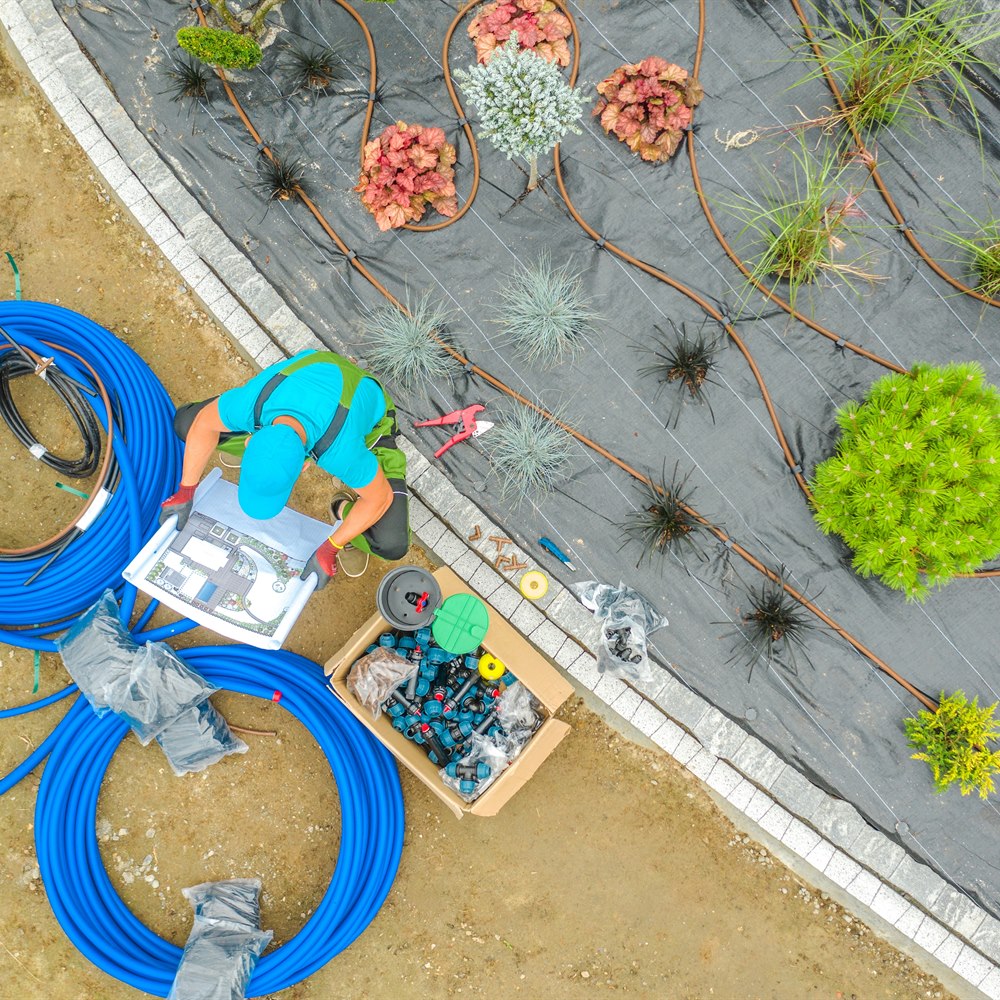
Each zone covers one area of the landscape, a lawn section, a garden bed, or a slope, and typically waters 1,500 to 2,500 square feet depending on head type and water pressure. The $500 to $1,000 per zone covers the pipe, heads, and valve for that circuit, the labor to trench and install, and that zone’s proportional share of the controller, main valve assembly, and water supply connection. Zone cost varies with area size, head spacing, soil conditions that affect trenching, and whether the zone uses rotary heads for turf or drip emitters for beds. (For more on this, see Drip Irrigation for Garden Beds: How It Works.)
Small-Yard System: $1,800 to $3,500
A small residential lot up to a quarter acre with a simple layout and three or four zones runs $1,800 to $3,500 complete. That includes the controller, the backflow preventer (required for code compliance and to protect the water supply), the main valve assembly, all zone piping and heads, and the connection to the water supply. The bottom of the range applies to very small yards with minimal complexity; most small-lot installations using rotary or pop-up fixed heads and a basic timer-based controller land at $2,000 to $3,500.
Large or Complex System: $5,000 to $12,000
Lots over a quarter acre, complex layouts with many obstacles, multiple pressure zones, separate zones for lawn, beds, trees, and slopes, drip irrigation for planting areas in addition to turf, and smart controllers with weather-based programming push the installed cost to $5,000 to $12,000, eight to twelve zones at the per-zone rate above, with a full acre running about $10,000. Difficult trenching conditions such as rocky soil, established root systems, or paved surfaces to cross add labor, and long pipe runs from the water source to the farthest zone add material. Properties that need a booster pump for low municipal water pressure, or a separate well pump system, add $800 to $3,500 above these ranges. (For more on this, see Sprinkler System Design: How Many Zones Do You Need?.) EPA WaterSense recommends about one inch of water a week, avoiding midday watering, and weather-based controllers to cut waste.
How Zone Count Translates to Total Cost
Multiplying zone count by the per-zone cost gives a reliable ballpark before a site visit, but it never lands below the practical floor: most irrigation contractors price a complete installed system at a minimum of about $1,800, because the trenching, backflow preventer, controller, and supply tie-in have to be paid for whether the system has three zones or ten. To estimate zone count, divide your total irrigated area by 1,500 to 2,500 square feet per zone. An average quarter-acre residential lot with about 5,000 square feet of irrigable area needs three or four zones; a half-acre lot needs five to eight. Most suburban properties fall in the three-to-six zone range: a front lawn, a back lawn, and one or two additional zones for planting beds or side yards. Drip zones for beds are counted separately from turf zones.
The two things that push cost above the basic zone calculation are site conditions and features. Rocky soil, hardscape crossings, long pipe runs, and difficult access all add labor over what an open-field installation of the same zone count would require. Features such as smart controllers, drip systems for planting areas, and landscape lighting integration add cost that a zone count alone does not capture. (For more on this, see How Long Does Sprinkler System Installation Take?.)
Upgrades, Permits, and Other Cost Factors
Smart controller: $150 to $350 installed over a basic timer. A smart controller adjusts watering schedules to local weather data, soil type, and evapotranspiration rates, cutting water use by 30 to 50 percent compared with a fixed-schedule timer. Payback on the water savings is typically 2 to 4 years, and some municipalities in water-restricted areas require one.
Drip irrigation: Most residential systems combine both delivery types. Turf zones use overhead or pop-up spray heads and rotary rotors; bed zones use drip emitters on low-pressure tubing that put water at the root zone. Extensive planting areas on premium drip add cost.
Permits and backflow prevention: Many jurisdictions require a permit for a new irrigation system, largely because of the backflow prevention requirement that protects the municipal water supply. A reputable installer pulls the required permits as part of the project.
Water source and pressure: The connection point, available pressure, and whether landscaping such as established beds, hardscape, or tree roots must be crossed all affect the total.
Ongoing Cost and Getting an Accurate Quote
The install price buys a working system, but ownership also includes annual winterization in freeze climates, spring startup, and occasional head replacement. Budget for that maintenance from year one: systems serviced properly last many years, while a system that misses winterization can suffer freeze damage in a single winter that costs far more than the service call.
Because cost depends on zone count, yard configuration, and site conditions, accurate pricing requires a site visit and a zone-by-zone plan. Get at least two written quotes on an equivalent defined scope, and confirm what each one includes: controller type, backflow preventer, permits, number of zones, head type per zone, and the labor warranty. A wide spread between quotes usually reflects differences in scope or component quality rather than price competition.
Frequently Asked Questions
$1,800 to $12,000, averaging $3,500. Each zone runs $500 to $1,000 installed, though a single zone is not a working system and almost no contractor mobilizes a complete install for less than about $1,800. A small yard needing three or four zones sits in the $1,800 to $3,500 range, while a large property with eight to twelve zones, smart controls, or difficult terrain runs $5,000 to $12,000.
$500 to $1,000 per zone installed, covering the pipe, heads, and valve for that circuit, the trenching labor, and a proportional share of the controller and main valve assembly. Cost varies with area size, head spacing, soil conditions, and whether the zone uses rotary heads or drip emitters.
Divide your irrigated area by 1,500 to 2,500 square feet per zone, depending on head type and water pressure. A quarter-acre lot with about 5,000 square feet of irrigable area needs three or four zones; a half-acre lot needs five to eight. Drip zones for planting beds are counted separately.
$1,800 to $3,500 for a complete three-to-four-zone system, including the controller, backflow preventer, main valve assembly, all zone piping and heads, and the water supply connection. Most small-lot installs with rotary or pop-up heads and a basic timer land at $2,000 to $3,500.
More zones, challenging terrain or difficult trenching through rocky soil, established roots, or paved surfaces, smart weather-responsive controllers, drip irrigation for planting areas, long pipe runs, and permit requirements. A booster pump or separate well pump system adds $800 to $3,500.
Usually. A smart controller costs $150 to $350 installed over a basic timer and cuts water use by 30 to 50 percent versus a fixed schedule, with a typical payback of 2 to 4 years. Some municipalities in water-restricted areas require one.
For most homeowners who currently water by hose, yes. An automatic system applies water more efficiently, with water savings of 30 to 50 percent compared with manual watering, and saves 2 to 4 hours per week during the growing season. A properly functioning system is also a positive factor at appraisal, especially in arid markets.
Often yes. Many jurisdictions require permits for new irrigation systems, largely because of the backflow prevention requirement that protects the municipal water supply. A reputable installer pulls the required permits as part of the project.