What Does Professional Air Sealing Cost?
Professional home air sealing typically costs $300 to $1,500, averaging around $800. The price depends on what is being sealed, the number of penetrations, and whether a diagnostic assessment is included.
Assessment and Inspection: $300 to $500
A professional air sealing project should begin with a blower door test a diagnostic procedure that pressurizes or depressurizes the home to quantify the total air leakage rate (measured in CFM50: cubic feet per minute at 50 pascals of pressure) and identify where leakage is occurring. A standalone blower door test costs $300 to $500, and a full energy audit with thermal imaging runs $600 to $900. It is a separate diagnostic fee rather than part of the sealing price, though a contractor’s sales walkthrough is normally free. Without the diagnostic, work is performed based on visual inspection only, which misses leaks in concealed locations. (For more on this, see What Affects the Cost of Air Sealing?.)
Per Window: $5 to $10
Sealing gaps and penetrations around windows caulking, weatherstripping replacement, foam sealant at rough opening gaps costs $5 to $10 per window including material and labor, as a line item inside a larger job rather than a visit anyone will make to seal one window. A house with 20 windows adds $100 to $200 in window sealing alone if significant gaps are present throughout.
Per Door: $35 to $90
Sealing exterior doors door sweeps, threshold sealing, weatherstripping replacement, and caulking at the frame costs $35 to $90 per door. Doors have more components and more linear feet of sealing surface than windows, requiring more material and labor.
Whole-Home Air Sealing Package
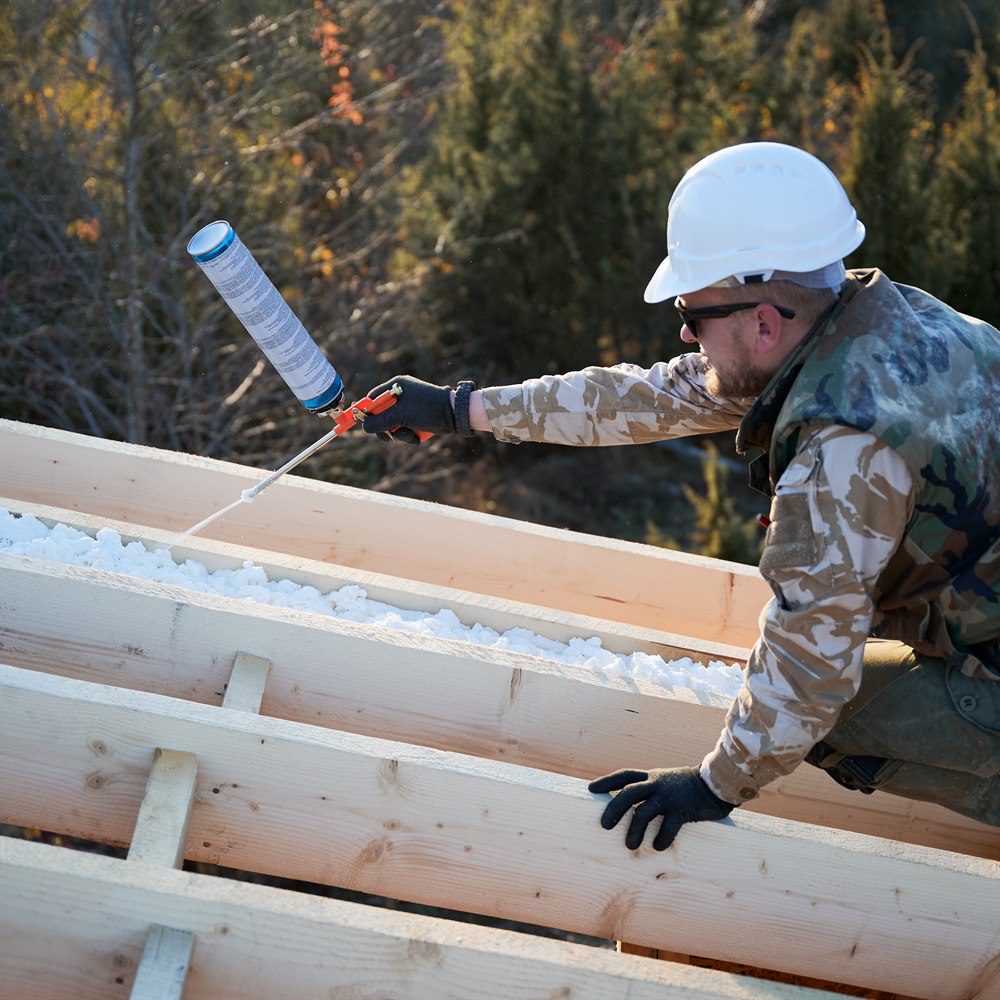
A comprehensive whole-home air sealing package addressing attic bypasses, rim joists, plumbing and electrical penetrations, and all windows and doors typically runs $300 to $1,500 for an average 1,500 to 2,500-square-foot home, and insulation contractors most often write it as a line item on a blown-in insulation quote rather than sell it on its own. Attic air sealing addressing the unsealed openings where top plates, plumbing stacks, and wiring penetrate the ceiling into the attic provides the highest energy return and is the most important component of a comprehensive package. (For more on this, see How Long Does Air Sealing Take?.) The Department of Energy publishes recommended R-values by climate zone and where insulation pays back fastest.
Air Sealing Cost at a Glance
| Cost Factor | Typical Range | Notes |
|---|---|---|
| Blower door test or energy audit | $300 to $900 per visit | $300 to $500 for a standalone blower door test, $600 to $900 for a full audit with thermal imaging |
| Weatherstripping, per window | $5 to $10 each | an incremental line item inside a larger job, not a visit to seal one window |
| Weatherstripping, per door | $35 to $90 each | more material and labor than a window, and still a line item rather than a job on its own |
| Attic-plane sealing package | $300 to $1,500, averaging $800 | every penetration in the attic floor plus top plates, chases and can-light covers |
Cost figures on this page were checked against published pricing on August 28, 2026. How we source cost data.
Planning Your Project Budget
The cost ranges in this article are based on industry data and are intended as planning benchmarks, not fixed prices. The actual cost for your project depends on your specific home, your local labor market, the current price of materials, and the scope the contractor confirms after a site inspection.
Always get at least two written quotes on equivalent defined scope before committing to any home services project. Wide price variation between quotes usually reflects differences in material quality, scope completeness (what is included and what is not), or contractor overhead and experience level rather than simple price competition.
Use the cost data in this article to ask better questions during the quoting process: What material is included? What does that per-square-foot or per-linear-foot rate include and exclude? Are permits, cleanup, and disposal included? What is the warranty on labor? These questions turn a quote into a comparable basis for decision-making. (For more on this, see Questions to Ask an Air Sealing Contractor.)
Working With a Contractor on This Project
Getting the right outcome on any home services project starts before the work begins. A few consistent practices make the difference between a smooth project and a frustrating one.
Get at least two or three quotes. A single quote gives you no basis for comparison. Two or three quotes reveal the market rate for the work, expose scope differences between bidders, and let you assess contractor communication quality before any commitment is made. The lowest bid is not automatically the best value if the scope is thin or the materials are underspecified.
Ask for licenses and insurance before work starts. Verify current general liability insurance and, for any work involving workers on your property, workers compensation coverage. Licensing requirements vary by state and trade; confirm the specific requirements in your jurisdiction. A licensed contractor who carries appropriate insurance protects both parties if something goes wrong during the project.
Get the scope in writing. A written proposal that specifies materials, labor scope, timeline, what is included (permits, cleanup, disposal), and warranty terms is the foundation of a professional engagement. Verbal agreements on any of these points invite misunderstanding. For any project over $500, written scope is non-negotiable.
Clarify the payment schedule upfront. A reasonable payment schedule ties major payments to project milestones: a deposit at signing, a payment at material delivery or project start, and a final payment at completion after a walkthrough confirms satisfaction. A contractor who requires full payment upfront before work begins is a red flag in any trade.