What Is the Lifespan of a Residential Faucet?
A quality residential faucet from a major brand typically lasts 15 to 25 years with normal use and basic maintenance. Here is what affects that lifespan and how to know when replacement is appropriate.
Brand and Material Quality
All-brass body construction with ceramic disc or quality cartridge valves lasts the longest 20 to 25 years is realistic for premium brands (Kohler, Grohe, Delta, Moen) under normal residential use. Zinc die-cast body faucets (often found in budget price points) are lighter, less corrosion-resistant, and typically last 5 to 10 years before surface or structural failure. Solid brass costs more upfront the long-term value is apparent in reduced replacement frequency.
Water Quality Effects
Hard water (high mineral content) accelerates internal valve wear through calcium and magnesium deposits on ceramic discs and cartridge seals. It also causes external mineral buildup that etches chrome and brushed nickel finishes. Aggressive water chemistry (low pH, high chlorine, or high dissolved oxygen) corrodes internal brass components faster than neutral water. Homes with water quality issues see shorter faucet lifespans water softeners and filtration systems protect both faucets and other plumbing fixtures downstream.
Cartridge vs. Ceramic Disc Longevity
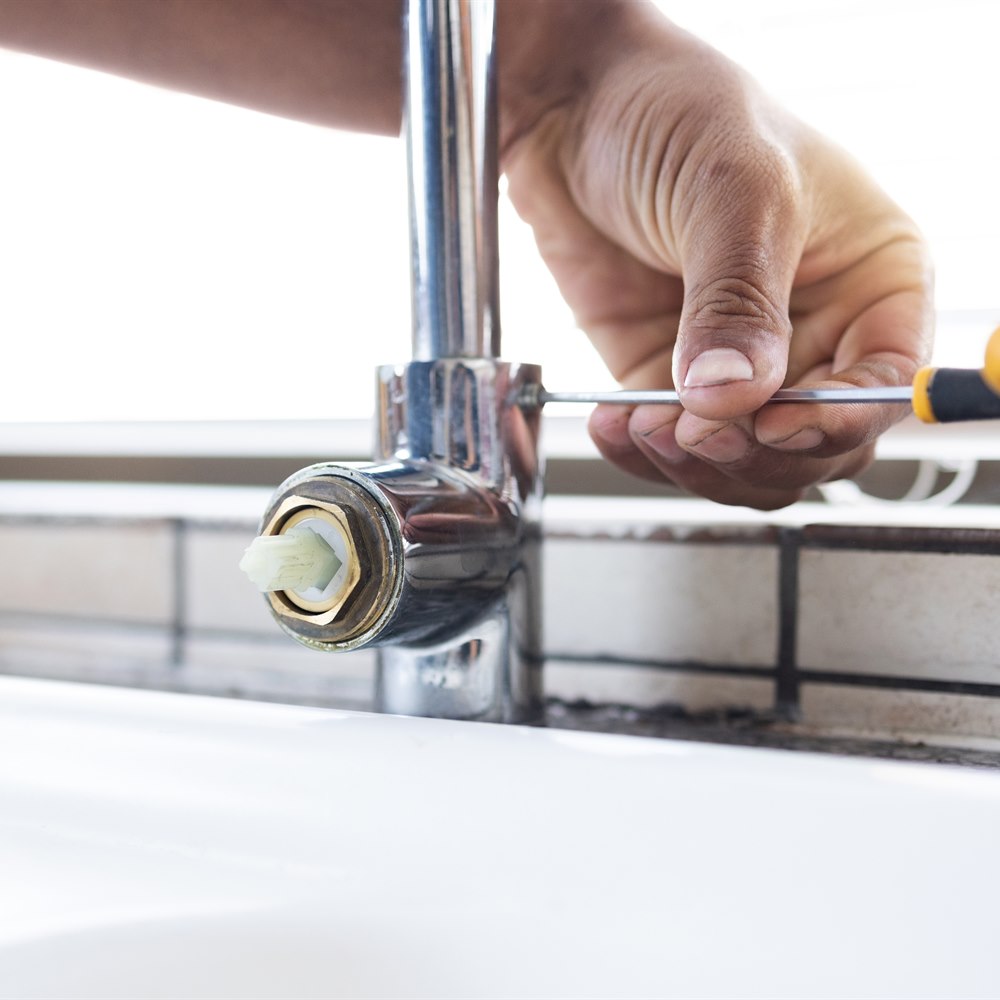
Standard cartridge faucets (the most common residential type) require cartridge replacement every 5 to 10 years the cartridge itself wears from use, but the faucet body remains serviceable. Ceramic disc faucets have the most durable internal mechanism the discs last 20+ years in most cases. A ceramic disc faucet that is maintained properly (cleaned discs when they develop movement restriction) can last the full life of the faucet body without major repair. Compression faucets (old two-handle type) require the most frequent maintenance washer replacement every 3 to 5 years in actively used faucets. (For more on this, see Faucet Types and How Each Affects Repair.)
Faucet Repair Cost at a Glance
Dripping faucet repair: $175 to $400.
| Cost Factor | Typical Range | Notes |
|---|---|---|
| Leak or low-pressure fix | $185 to $500 | Worse access or a longer diagnosis on the same fixture |
| New faucet installation | $190 to $700 | A standard faucet supplied and installed; premium or touchless fixtures run past $1,000 |
| Overall range | $175 to $700, averaging $350 | A service call fee, where one is charged, is a separate $75 to $200 line |
Cost figures on this page were checked against published pricing on August 27, 2026. How we source cost data.
Planning Your Project Budget
The cost ranges in this article are based on industry data and are intended as planning benchmarks, not fixed prices. The actual cost for your project depends on your specific home, your local labor market, the current price of materials, and the scope the contractor confirms after a site inspection.
Always get at least two written quotes on equivalent defined scope before committing to any home services project. Wide price variation between quotes usually reflects differences in material quality, scope completeness (what is included and what is not), or contractor overhead and experience level rather than simple price competition.
Use the cost data in this article to ask better questions during the quoting process: What material is included? What does that per-square-foot or per-linear-foot rate include and exclude? Are permits, cleanup, and disposal included? What is the warranty on labor? These questions turn a quote into a comparable basis for decision-making. (For more on this, see Questions to Ask Before Booking Faucet Repair.)
Working With a Contractor on This Project
Getting the right outcome on any home services project starts before the work begins. A few consistent practices make the difference between a smooth project and a frustrating one.
Get at least two or three quotes. A single quote gives you no basis for comparison. Two or three quotes reveal the market rate for the work, expose scope differences between bidders, and let you assess contractor communication quality before any commitment is made. The lowest bid is not automatically the best value if the scope is thin or the materials are underspecified.
Ask for licenses and insurance before work starts. Verify current general liability insurance and, for any work involving workers on your property, workers compensation coverage. Licensing requirements vary by state and trade; confirm the specific requirements in your jurisdiction. A licensed contractor who carries appropriate insurance protects both parties if something goes wrong during the project.
Get the scope in writing. A written proposal that specifies materials, labor scope, timeline, what is included (permits, cleanup, disposal), and warranty terms is the foundation of a professional engagement. Verbal agreements on any of these points invite misunderstanding. For any project over $500, written scope is non-negotiable.
Clarify the payment schedule upfront. A reasonable payment schedule ties major payments to project milestones: a deposit at signing, a payment at material delivery or project start, and a final payment at completion after a walkthrough confirms satisfaction. A contractor who requires full payment upfront before work begins is a red flag in any trade.