What Hidden Costs Come With Playground Equipment Installation?
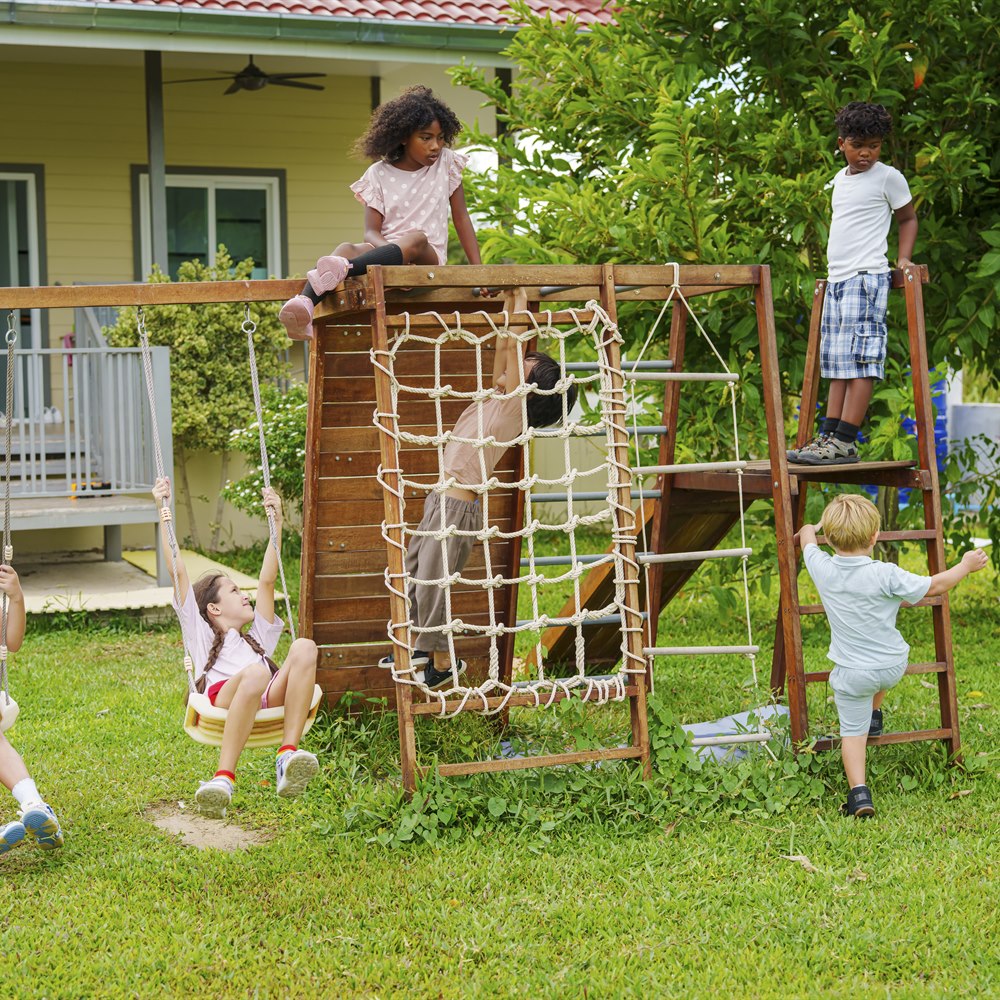
Playground equipment quotes typically cover the structure itself. Fall zone ground cover adds $1,800 to $6,000 for a standard 20×30-foot zone in engineered wood fiber or rubber mulch, ground leveling on a sloped site $300 to $1,500, edging to contain the ground cover $100 to $1,500, and annual replenishment $200 to $600, all of it separate from the playset price.
Fall Zone Ground Cover
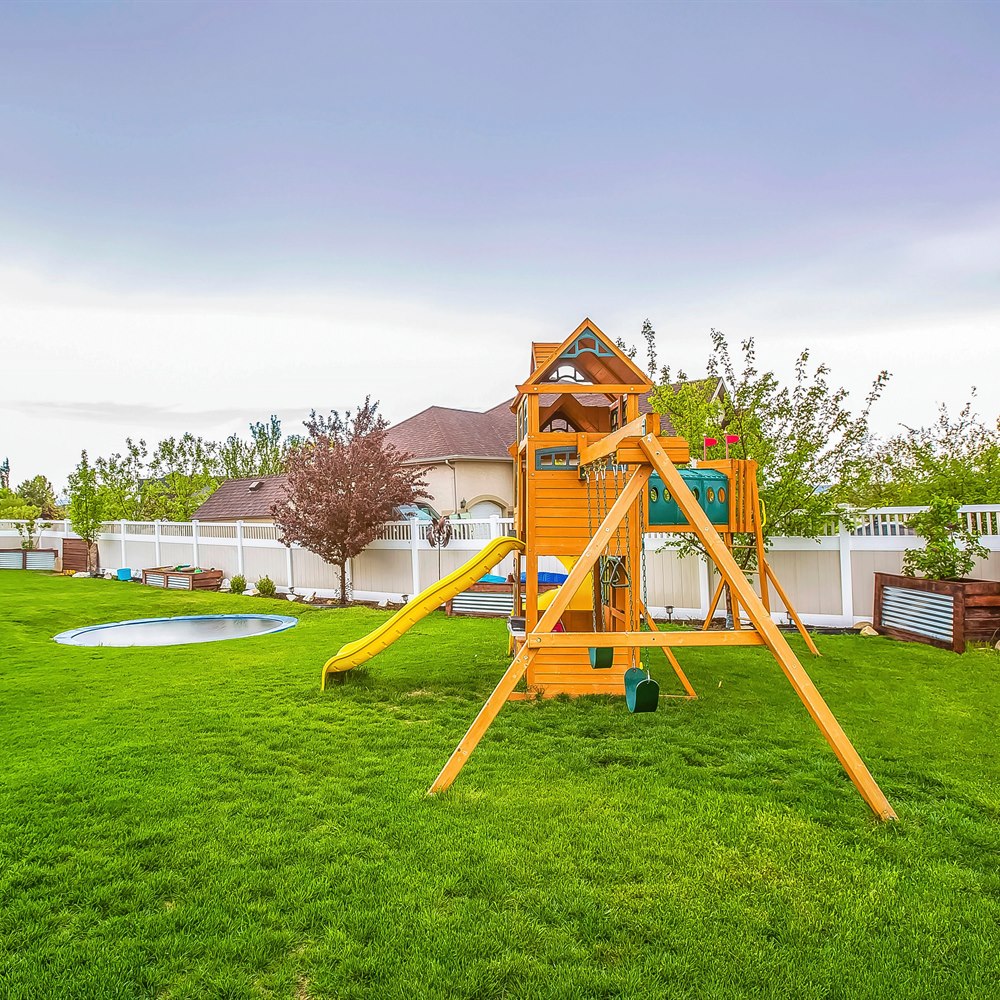
The fall zone — the 6-foot buffer around all sides of the equipment — must have impact-attenuating ground cover at adequate depth. This is a safety requirement, not an option. Engineered wood fiber (EWF) runs $3 to $5 per square foot installed, which is $1,800 to $3,000 for a 20×30-foot fall zone (600 square feet). Rubber mulch: $6 to $10 per square foot, or $3,600 to $6,000 across the same zone. Rubber tiles run $12 to $21 per square foot and poured-in-place rubber $20 to $27. If the zone is bare ground to start, building a base adds $5 to $10 per square foot on top. Pea gravel at 12 inches: $400 to $1,200. These costs are entirely separate from the playset cost. (For more on this, see Backyard Playset Safety: What Every Parent Should Know.) The CPSC’s Public Playground Safety Handbook sets out fall zones, protective surfacing depth, and entrapment clearances.
Ground Leveling
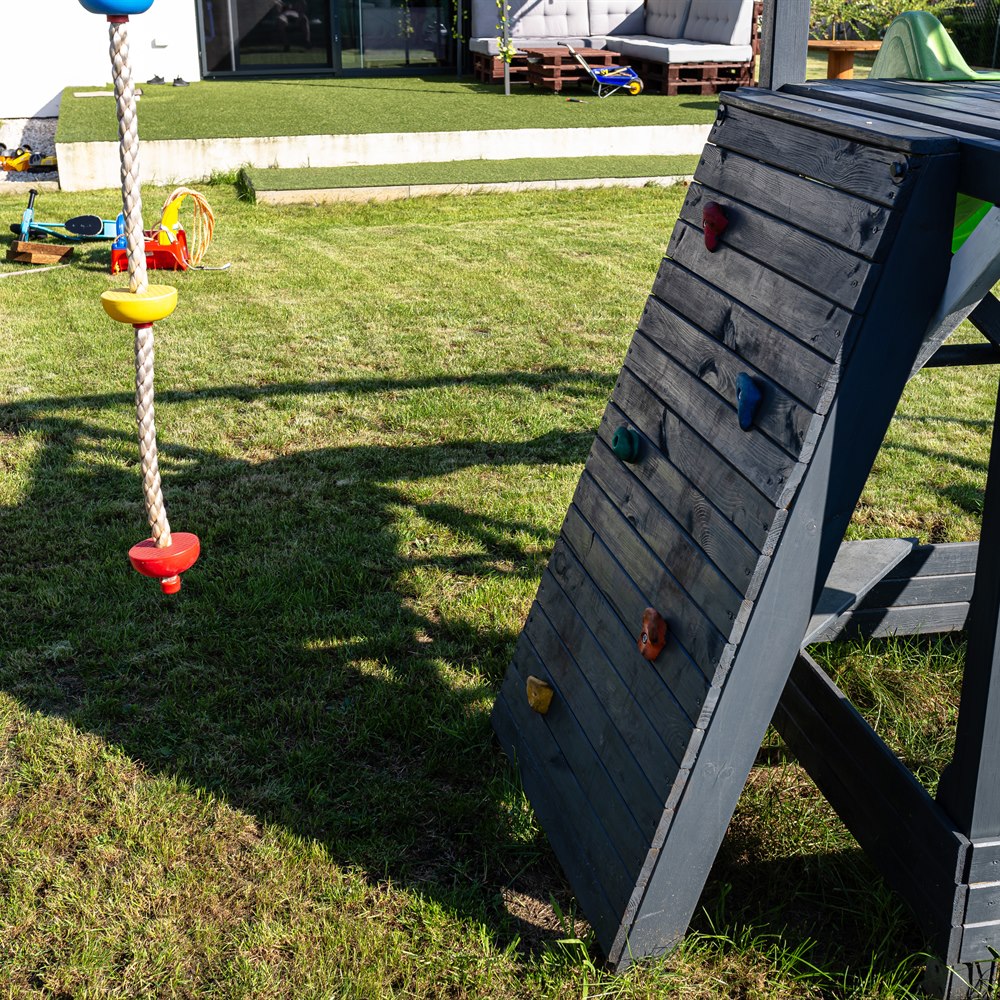
A playset installed on uneven ground requires leveling. A site with more than 3 to 4 inches of grade variation: the installer adjusts the leg lengths or digs the uphill legs deeper to achieve a plumb, level structure. On significantly sloped sites: grading may be required before installation. Grading cost: $300 to $1,500. Some installers include minor leveling in their installation fee; others charge separately for significant grade adjustment. (For more on this, see Playset Installation: Questions to Ask Before the Crew Arrives.)
Edging for the Fall Zone
The fall zone ground cover must be contained by edging to prevent migration. Plastic or composite bender board runs $1 to $3 per linear foot for the material alone, or $5 to $12 per linear foot installed. Metal edging is a bigger line at $10 to $19 per linear foot installed. Timber edging: $5 to $15 per linear foot installed. A 20×30-foot fall zone has approximately 100 linear feet of edging: about $100 in plastic bender board you set yourself, and $1,500 or more for timber or metal installed. This is a separate cost from the ground cover material.
Playground Equipment Cost at a Glance
| Cost Factor | Typical Range | Notes |
|---|---|---|
| Basic swing set | $500 to $1,500 — metal or simple wood set | |
| Mid-range wooden playset | $1,500 to $3,500 | — slides, forts, and climbing features |
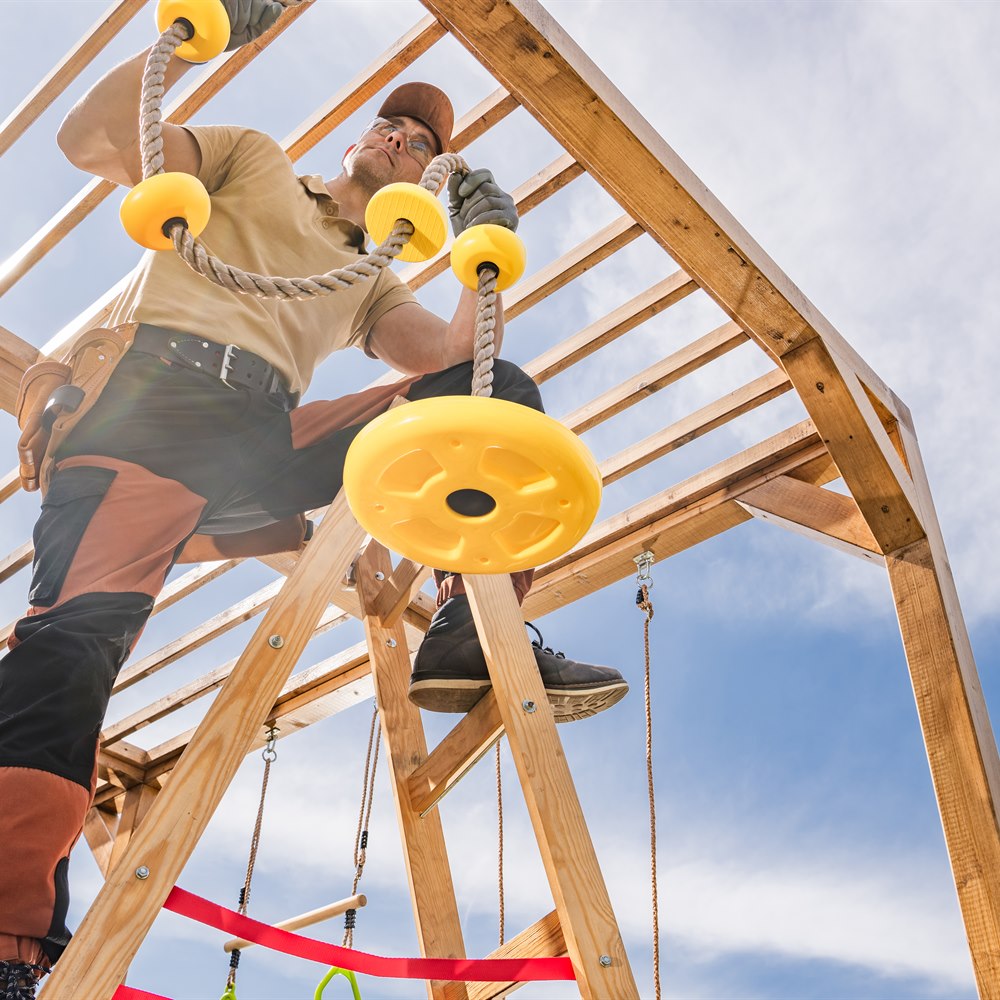
| Large custom structure | $6,000 to $12,000 | — delivered and installed; premium cedar systems list at $7,499 to $10,899 |
| Overall range | $500 to $12,000 | , averaging $2,500 for a mid-range installed playset |
Cost figures on this page were checked against published pricing on August 29, 2026. How we source cost data.
Planning Your Project Budget
The cost ranges in this article are based on industry data and are intended as planning benchmarks, not fixed prices. The actual cost for your project depends on your specific home, your local labor market, the current price of materials, and the scope the contractor confirms after a site inspection.
Always get at least two written quotes on equivalent defined scope before committing to any home services project. Wide price variation between quotes usually reflects differences in material quality, scope completeness (what is included and what is not), or contractor overhead and experience level rather than simple price competition.
Use the cost data in this article to ask better questions during the quoting process: What material is included? What does that per-square-foot or per-linear-foot rate include and exclude? Are permits, cleanup, and disposal included? What is the warranty on labor? These questions turn a quote into a comparable basis for decision-making. (For more on this, see Playset Questions to Ask Before Installation.)
Working With a Contractor on This Project
Getting the right outcome on any home services project starts before the work begins. A few consistent practices make the difference between a smooth project and a frustrating one.
Get at least two or three quotes. A single quote gives you no basis for comparison. Two or three quotes reveal the market rate for the work, expose scope differences between bidders, and let you assess contractor communication quality before any commitment is made. The lowest bid is not automatically the best value if the scope is thin or the materials are underspecified.
Ask for licenses and insurance before work starts. Verify current general liability insurance and, for any work involving workers on your property, workers compensation coverage. Licensing requirements vary by state and trade; confirm the specific requirements in your jurisdiction. A licensed contractor who carries appropriate insurance protects both parties if something goes wrong during the project.
Get the scope in writing. A written proposal that specifies materials, labor scope, timeline, what is included (permits, cleanup, disposal), and warranty terms is the foundation of a professional engagement. Verbal agreements on any of these points invite misunderstanding. For any project over $500, written scope is non-negotiable.
Clarify the payment schedule upfront. A reasonable payment schedule ties major payments to project milestones: a deposit at signing, a payment at material delivery or project start, and a final payment at completion after a walkthrough confirms satisfaction. A contractor who requires full payment upfront before work begins is a red flag in any trade.