
What Hidden Costs Come With Light Fixture Installation?
Light fixture installation quotes sometimes exclude components and conditions that turn out to be necessary. Here is what to plan for.
Structural Mounting for Heavy Fixtures
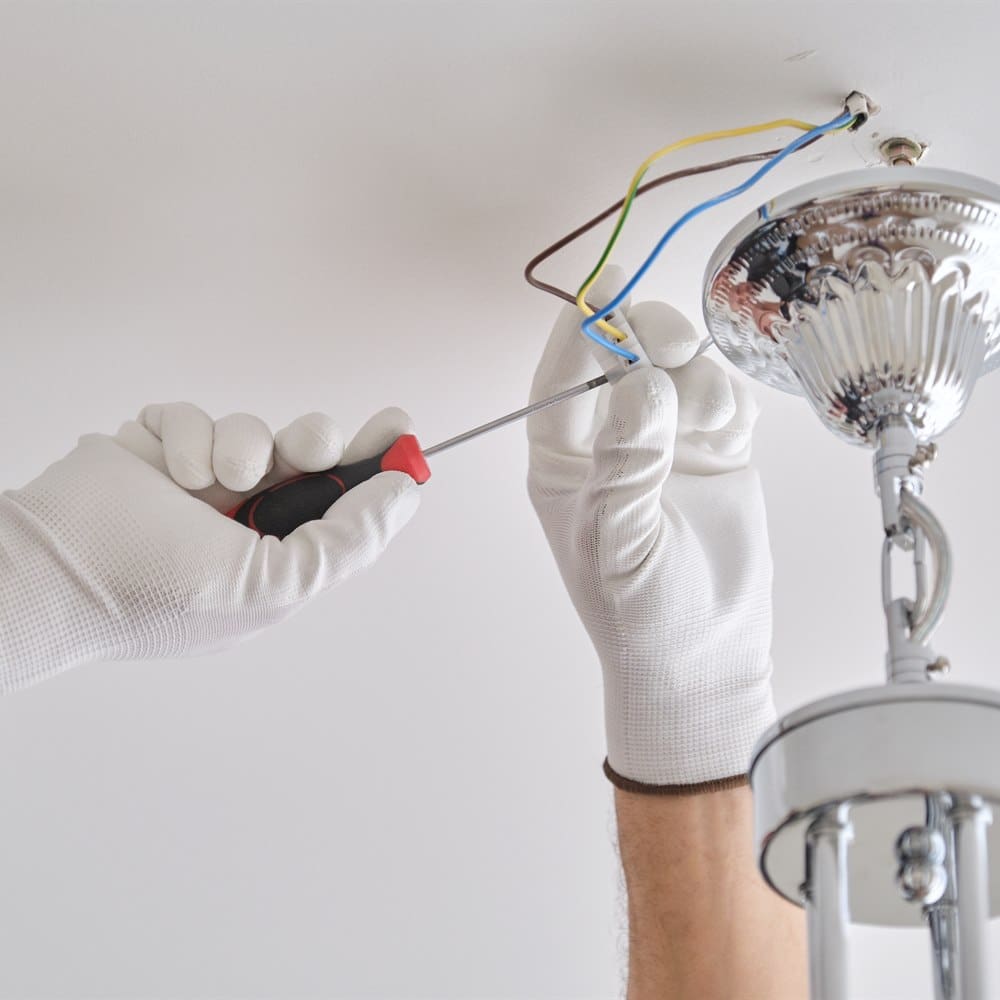
Chandeliers over 35 to 50 pounds (common for larger crystal or iron chandeliers) require structural mounting to a joist rather than just an electrical box a or blocking added between joists. If the existing electrical box is not directly under a joist, the electrician must open the ceiling to add blocking or use a heavy-duty fan-and-fixture brace rated for the chandelier weight. This adds $75 to $200 to the installation and is frequently not apparent until the fixture weight is assessed against the existing mounting point. (For more on this, see How Much Does Light Fixture Installation Cost?.)
Wiring Incompatibility for Dimmers
Installing a dimmer switch requires: compatible dimmable fixtures, a dimmer compatible with the specific LED driver in the fixture (not all dimmers work with all LED fixtures), and in many smart dimmers a a neutral wire in the switch box. Older homes often have only two conductors at the switch (hot and switched-hot, no neutral), limiting smart switch options. Resolving a neutral-wire issue requires either running a new cable to the switch or using a smart switch designed for no-neutral configurations (with limited functionality).
Minimum Service Call Fee
Most electricians charge a minimum service call fee of $75 to $125 that applies regardless of the work scope. Installing one switch and one fixture for $200 in labor may include $75 to $125 in service call fee, with $75 to $125 in actual work time. Combining multiple small jobs in one visit amortizes this fixed cost across more work a the per-job cost drops significantly when the service fee is paid once for five jobs rather than once each. (For more on this, see How Much Will an Electrician Charge to Install a Light Switch and Fixture?.)
Permit Requirements for New Circuits
Adding recessed lighting in a new location or installing new switches on a new circuit requires a permit in most jurisdictions. Permit fees run $50 to $200. Work done without a required permit creates liability at resale a open permits discovered by a buyer’s inspector can delay or derail closings. Confirm permit requirements with your electrician before finalizing the scope. The Electrical Safety Foundation covers where GFCI and AFCI protection is required and which jobs need a licensed electrician.
Light Fixture Installation Cost at a Glance
| Cost Factor | Typical Range | Notes |
|---|---|---|
| Standard switch installation | $75 to $200 including labor and materials | |
| Dimmer or smart switch | $100 to $250 for upgraded controls | |
| Standard fixture installation | $100 to $500 installed | ceiling, wall, or pendant fixture on existing wiring |
| Chandelier installation | $300 to $1,200 installed | weight, ceiling height, and any added support drive the range |
| Overall range | $75 to $1,200, averaging $200 |
Cost figures on this page were checked against published pricing on August 28, 2026. How we source cost data.
Planning Your Project Budget
The cost ranges in this article are based on industry data and are intended as planning benchmarks, not fixed prices. The actual cost for your project depends on your specific home, your local labor market, the current price of materials, and the scope the contractor confirms after a site inspection.
Always get at least two written quotes on equivalent defined scope before committing to any home services project. Wide price variation between quotes usually reflects differences in material quality, scope completeness (what is included and what is not), or contractor overhead and experience level rather than simple price competition.
Use the cost data in this article to ask better questions during the quoting process: What material is included? What does that per-square-foot or per-linear-foot rate include and exclude? Are permits, cleanup, and disposal included? What is the warranty on labor? These questions turn a quote into a comparable basis for decision-making. (For more on this, see Questions to Ask Before Light Fixture Installation.)
Working With a Contractor on This Project
Getting the right outcome on any home services project starts before the work begins. A few consistent practices make the difference between a smooth project and a frustrating one.
Get at least two or three quotes. A single quote gives you no basis for comparison. Two or three quotes reveal the market rate for the work, expose scope differences between bidders, and let you assess contractor communication quality before any commitment is made. The lowest bid is not automatically the best value if the scope is thin or the materials are underspecified.
Ask for licenses and insurance before work starts. Verify current general liability insurance and, for any work involving workers on your property, workers compensation coverage. Licensing requirements vary by state and trade; confirm the specific requirements in your jurisdiction. A licensed contractor who carries appropriate insurance protects both parties if something goes wrong during the project.
Get the scope in writing. A written proposal that specifies materials, labor scope, timeline, what is included (permits, cleanup, disposal), and warranty terms is the foundation of a professional engagement. Verbal agreements on any of these points invite misunderstanding. For any project over $500, written scope is non-negotiable.
Clarify the payment schedule upfront. A reasonable payment schedule ties major payments to project milestones: a deposit at signing, a payment at material delivery or project start, and a final payment at completion after a walkthrough confirms satisfaction. A contractor who requires full payment upfront before work begins is a red flag in any trade.