
What Hidden Costs Come With AC Repair?
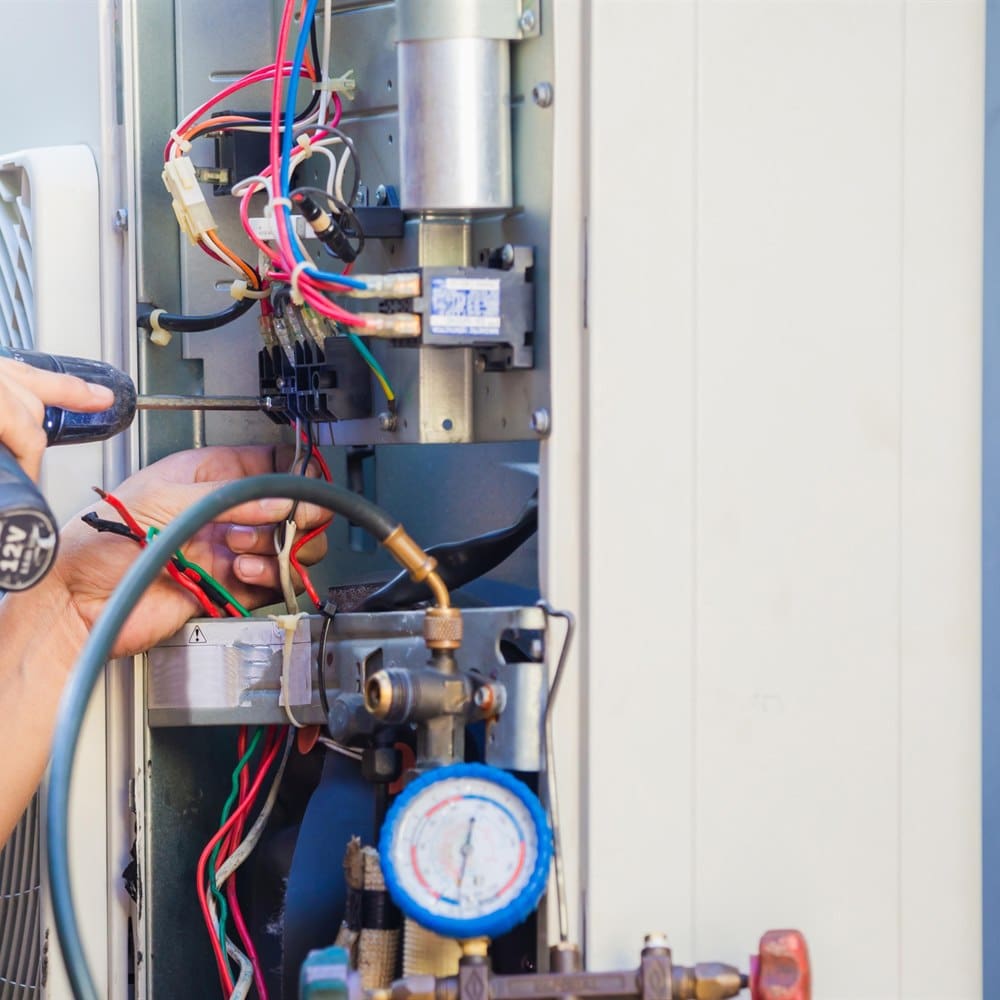
The repair quote is the headline number, but AC repair involves refrigerant, diagnosis, timing, and whatever the technician finds once the panel is off. A few of those costs regularly catch homeowners off guard. Here is what to plan for beyond the basic repair.
The Diagnostic Fee
The diagnostic or service call fee runs $75 to $200. Some companies credit it toward the repair if you proceed; others charge it separately and are effectively paid twice for the first step of the work. Ask specifically when scheduling whether the fee is applied toward the repair if you go ahead that day. Companies that credit it tend to be more confident in their quotes. Note that you pay the fee either way if you decline the repair or take the diagnosis elsewhere for a second opinion, which makes it a real cost to factor in when you are shopping opinions or deciding whether the repair is worth making at all. (For more on this, see How to Budget and Pay for AC Repair.)
Refrigerant Leaks, Not Just Recharges
Refrigerant does not get used up in a properly functioning system, so a system low on refrigerant has a leak. A recharge quote covers the refrigerant but not necessarily the leak repair, which is a separate service using pressure testing, UV dye, or electronic detection and adds $150 to $600 or more. The two jobs are priced differently: a top-off with no leak search runs $405 to $900, while finding the leak, repairing it, and recharging runs $350 to $1,000. Recharging without repairing the leak is temporary; the refrigerant leaks out again and you pay for another recharge. Ask directly whether the recharge quote includes locating and repairing the leak. Older systems running R-22 add another wrinkle, since that refrigerant is being phased out: R-22 costs $90 to $150 per pound installed against $40 to $90 for R-410A, so an older system costs about twice as much to charge.
After-Hours and Emergency Premiums
AC fails on the hottest days, and emergency service commands premium rates. Evening, weekend, and holiday calls carry a real premium, usually a flat adder of $199 to $250 on top of the repair, and a markup of 50 to 100 percent on the standard rate is also common practice in the trade. A $300 capacitor replacement at 10 AM on a Tuesday can run $500 or more at 9 PM on a Saturday. Ask the after-hours rate when you call. If the premium is steep and the house stays habitable with fans and open windows, waiting until the next business morning can save $199 to $250. If there are elderly residents, young children, or pets in extreme heat, pay the premium. A window or portable unit at $100 to $300 to rent or buy can bridge the gap overnight if you decide to wait.
Underlying Problems the Repair Uncovers
What looks like one failure can turn out to be several, and fixing one problem sometimes exposes another. Aging systems in particular carry multiple worn components. Addressing the root cause, whether that is a leak, an electrical issue stressing parts, or a dirty system straining the equipment, costs more than replacing the symptom part but prevents the same failure repeating. Budget for the possibility that the repair is more involved than the initial complaint suggested.
AC Repair Cost at a Glance
| Item | Cost |
|---|---|
| Diagnostic or service call | $75 to $200, often credited toward repair |
| Leak repair, added to the refrigerant | $150 to $600 or more |
| Find the leak, repair it, and recharge | $350 to $1,000 |
| Recharge with no leak search | $405 to $900 |
| Refrigerant per pound installed | $40 to $90 for R-410A, $90 to $150 for R-22 |
| Capacitor replacement | $100 to $500 installed |
| Common repairs (capacitor, contactor, fan or blower motor) | $150 to $1,500 |
| Emergency, evening, or weekend premium | $199 to $250 added |
| Compressor replacement | $1,600 to $4,800 |
| Overall range | $150 to $5,000, averaging $600 |
Cost figures on this page were checked against published pricing on August 25, 2026. How we source cost data.
How to Avoid Paying Twice for the Same Problem
The most avoidable hidden cost is paying repeatedly for one underlying problem because it was treated superficially. Refrigerant is the classic case. Because low refrigerant in a sealed system almost always means a leak, a recharge without a repair leaves you in a cycle of recharges. Fixing the leak costs more upfront and stops the cycle, along with the environmental waste of refrigerant that keeps escaping.
The same principle applies across the system. When a component fails, it is worth knowing why it failed. A part replaced without addressing the cause tends to fail the same way again. A good technician diagnoses not just what failed but why, and says so. Be alert to a pattern of repeated small repairs, which usually signals either a deeper issue or a system near the end of its life. The cheapest immediate fix is often not the most economical one.
When Repair Stops Making Sense
On an older system, or when facing a major repair such as a compressor at $1,600 to $4,800, repeatedly repairing an aging unit can cost more over time than replacing it. A new system is a much larger upfront number, but money poured into a unit near the end of its life buys little. Weigh the pattern of repairs alongside the quote in front of you rather than each repair in isolation. Replacement is a much larger upfront number, $6,000 to $15,000 installed in a home with existing ducts, and a fresh start on efficiency and warranty, so the comparison worth making is not this repair against zero but the next several years of repairs against the cost of a new system. ENERGY STAR publishes certified efficiency ratings for heating and cooling equipment, which is the cleanest way to compare models.
Before You Approve the Work
Ask what the warranty covers. A reputable company warrants both the parts, typically a one-year manufacturer parts warranty, and the labor, typically 30 to 90 days. A parts-only warranty means that if the same component fails next month, you pay for another service call and another round of labor. Confirm the labor warranty period when you accept the quote. (For more on this, see Questions to Ask an AC Repair Company.)
The ranges here are planning benchmarks, not fixed prices; your local labor market and the scope the technician confirms on site decide the final number. On larger jobs, get two written quotes on the same defined scope, and take wide variation as a sign that the scopes differ rather than that one company is simply cheaper. Get the scope in writing, and tie payment to completion rather than paying in full before work begins.
Frequently Asked Questions
Diagnostic fees that are not credited toward the repair, refrigerant leak repair charged separately from the recharge, after-hours premiums of a flat $199 to $250 on top of the repair, and underlying problems the technician finds once work begins.
Finding the leak, repairing it, and recharging runs $350 to $1,000 all in. A top-off with no leak search is a different job at $405 to $900, and the leak repair itself adds $150 to $600 or more on top of the refrigerant. Refrigerant type is the swing: R-410A runs $40 to $90 per pound installed against $90 to $150 for R-22. Leaks in the evaporator coil sit at the high end and may make coil replacement the better value.
Usually yes. Many companies credit the $75 to $200 fee toward the repair if you proceed with them, but you pay it regardless if you decline the work or take the diagnosis elsewhere for a second opinion. Ask when scheduling whether the fee is credited.
Sometimes. Evening, weekend, and holiday calls carry a flat premium of about $199 to $250 on top of the repair, and a 50 to 100 percent markup on the standard rate is also common, so waiting until the next business morning can save $199 to $250 if the home stays habitable with fans and open windows. With elderly residents, young children, or pets in extreme heat, pay the premium. A window or portable unit at $100 to $300 can bridge the gap.
A capacitor stores electrical energy to help start the compressor and fan motors, and heat and voltage fluctuations degrade it over time, typically causing failure after 5 to 10 years. It is the most common reason an AC will not start: the unit hums without starting, or the fan runs while the compressor does not. Replacement runs $100 to $500 installed.
Yes. One symptom can involve several related failures, and aging systems often have multiple worn components. Fixing the root cause, such as a leak or an electrical issue stressing parts, costs more than swapping the failed part but prevents the same failure from repeating.
It should, but ask. A reputable company warrants the parts, typically a one-year manufacturer warranty, and the labor, typically 30 to 90 days. A parts-only warranty means you pay another service call and labor charge if the same component fails again a month later.
When the unit is old and facing a major repair such as a compressor at $1,600 to $4,800, or when small repairs keep recurring. Once a repair quote passes about half the $6,000 to $15,000 cost of a new system installed, replacement is usually the better buy, and repeated repairs on an aging system can exceed the cost of replacement over time, which makes the pattern of repairs more informative than any single quote.


