How Do You Maintain a Garage Door?
A garage door is one of the most frequently operated mechanical systems in the home, opening and closing thousands of times over its service life. Simple maintenance performed consistently extends that service life, prevents costly breakdowns, and keeps the system operating safely. Here is what matters.
Lubricate Moving Parts Annually
Apply garage door lubricant spray (not WD-40, which is a solvent, not a lubricant for this application) to the rollers, hinges, springs, and tracks annually. Lubrication reduces friction, prevents corrosion of moving parts, and eliminates most of the squeaking and grinding that develops over time. This takes 15 minutes and is one of the highest-return maintenance tasks available for a garage door system. Do not spray the rubber weatherstripping; lubricant degrades rubber over time. (For more on this, see Garage Door Maintenance: How to Keep It Working.)
Test the Balance Annually
Disconnect the opener and manually lift the door halfway. A properly balanced door holds in position; one that falls closed or rises by itself indicates an imbalance requiring spring adjustment. An imbalanced door causes the opener to work harder, shortening its life. A technician can adjust spring tension to restore balance. Test this annually or whenever the door seems heavier or lighter than it was previously.
Inspect and Tighten Hardware
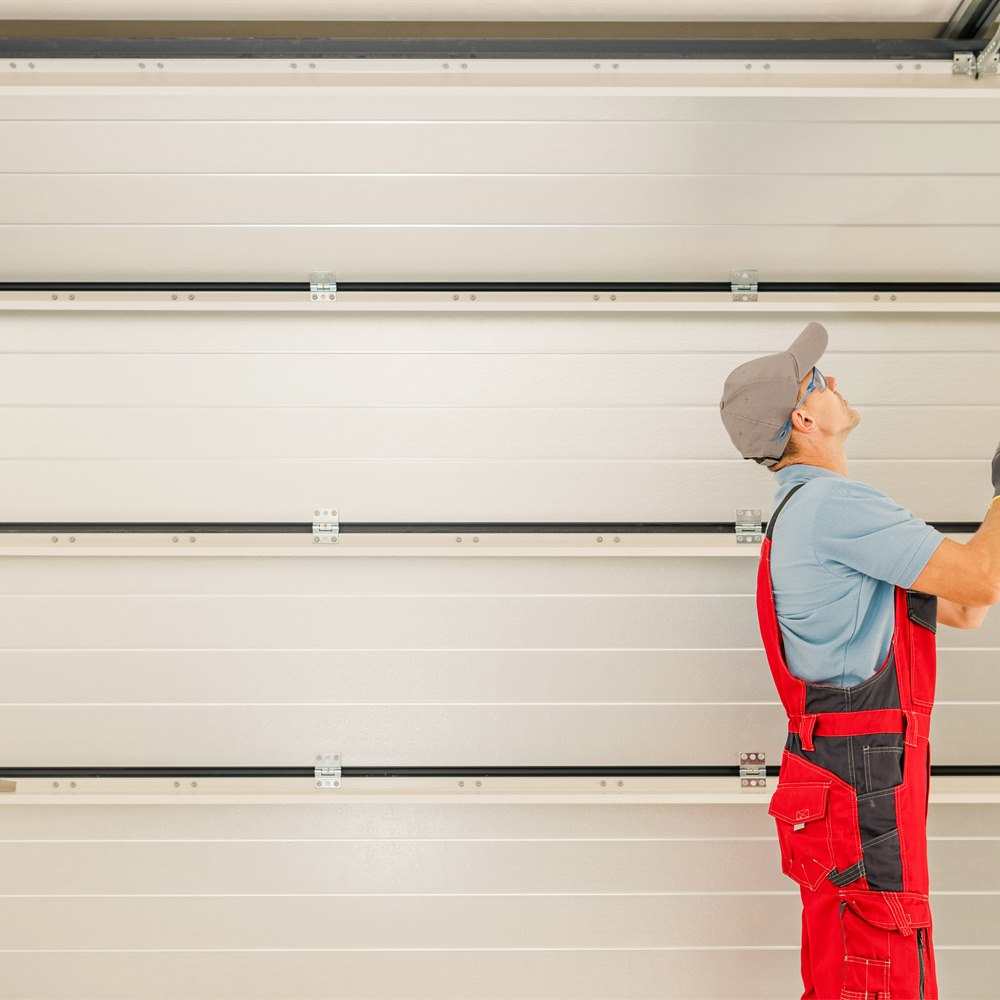
Inspect all visible hardware (hinges, rollers, brackets, track bolts) twice per year and tighten anything that has loosened. A garage door cycles thousands of times per year and the vibration gradually loosens fasteners. Loose hardware creates rattling sounds and eventually allows components to move out of alignment. Check visually for cracks, bending, or wear on any hardware component. (For more on this, see Garage Door Maintenance: What to Do Every Year.)
Test Safety Features Monthly
Test the auto-reverse safety feature monthly: place a two-by-four flat on the ground under the door’s path. The door should reverse upon contacting the board. Also test the safety sensor by waving your hand through the sensor beam while the door is closing; the door should stop and reverse immediately. These tests take one minute and confirm the safety systems are functioning correctly.
Inspect Weatherstripping Seasonally
Check the bottom weatherstrip and side seals for cracks, brittleness, or gaps that allow air and water infiltration. Weatherstripping is inexpensive and easy to replace; addressing deteriorated seals prevents draft, moisture infiltration, and pest entry. Replace weatherstripping that no longer seals fully.
The Economics of Preventive Maintenance
The return on preventive maintenance time is consistently underestimated. The annual maintenance tasks for most systems in this category take 30 to 60 minutes of homeowner time and cost zero to modest amounts in materials. They prevent failures that cost hundreds to thousands of dollars in repair or replacement when they occur. Expressed as an hourly return on the maintenance time invested, preventive maintenance for most residential systems is among the highest-return activities available in home ownership.
The practical barrier is not cost or complexity but consistency: maintenance that is intended but not scheduled does not happen. Linking maintenance tasks to an existing annual routine, a seasonal activity, another maintenance task, or a calendar reminder converts the intention into a reliable practice. Homeowners whose systems consistently perform well over long periods have almost always solved the scheduling problem, not discovered better maintenance techniques.
When to Call a Technician
Call a technician for: spring replacement (never DIY due to extreme tension), off-track door, opener that strains or does not complete cycles consistently, or any component showing significant wear or damage. Regular maintenance catches most issues before they become emergency repairs. When you need service, connect with a local pro below. (For more on this, see Common Garage Door Problems and What They Mean.)
Any project in this category benefits from thorough preparation before the contractor arrives: a clear definition of the scope, an understanding of the site-specific variables that affect cost, and a set of specific questions about approach, warranty, and timeline. Contractors who answer these questions readily and specifically are demonstrating the same transparency they bring to the project. Those who are evasive or vague about any of them are signaling an approach that may produce the same vagueness in the project execution.
The best outcomes in any home improvement project come from homeowners who approach the hiring decision as a partnership evaluation rather than a pure price comparison. Technical competence, local accountability, clear communication, and a backed warranty are the qualities that determine whether a project provides long-term satisfaction, and all of these are assessable before the project begins by asking the right questions and evaluating the quality of the answers.
Decisions made with complete information, multiple site-visit quotes on equivalent scope, and a clear understanding of the warranty and accountability the chosen contractor provides consistently produce the best outcomes, both in quality of work and in long-term satisfaction with the investment.
Frequently Asked Questions
Annual lubrication of rollers, hinges, springs, and tracks; annual balance test; twice-yearly hardware inspection and tightening; monthly safety feature test; seasonal weatherstripping inspection. These tasks take 30 to 60 minutes total annually and prevent most costly garage door breakdowns.
A dedicated garage door lubricant spray or white lithium grease. Do not use WD-40, which is a solvent that displaces moisture but does not provide the lasting lubrication that moving parts require. Apply to rollers, hinges, springs, and tracks. Do not spray weatherstripping or rubber components.
Disconnect the opener (pull the red emergency release cord) and manually lift the door to waist height. Release it. A balanced door holds in position; one that falls closed or rises indicates a spring imbalance requiring adjustment. An imbalanced door should be serviced before continued use, as it strains the opener motor.
Test the auto-reverse by placing a two-by-four flat under the door's path; the door should reverse upon contact. Test the safety sensor by waving your hand through the sensor beam while the door is closing; the door should stop and reverse immediately. Perform both tests monthly.
Homeowners can: lubricate moving parts, test balance, inspect and tighten hardware, test safety features, and replace weatherstripping. Technicians are required for: spring replacement or adjustment (extreme tension, serious injury risk), cable replacement, off-track repair, and opener diagnosis and repair.