How Do You Maintain a Freezer to Prevent Repairs?
Freezer maintenance takes less than 30 minutes per year and prevents the majority of service calls: clean the condenser coils, test the door gasket, and defrost a manual-defrost unit when frost reaches 1/4 inch. It is simpler than refrigerator maintenance.
Clean Condenser Coils Every 12 Months
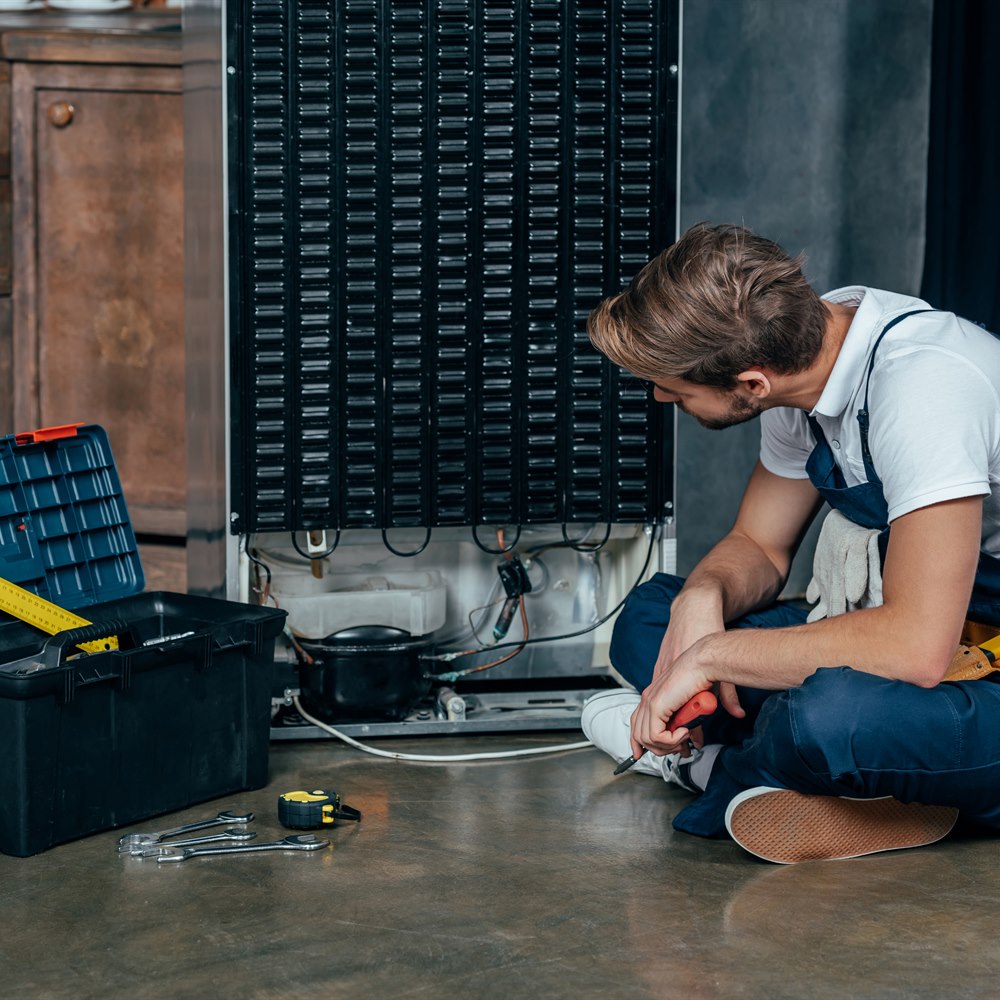
Condenser coils coated with dust and pet hair restrict the freezer’s ability to dissipate heat, forcing the compressor to run harder and longer. For chest freezers with coils on the exterior back or bottom: unplug, vacuum the coils and surrounding area, plug back in. For upright freezers with coils behind a kick plate at the bottom: remove the kick plate, vacuum the coils, replace the kick plate. This task takes 10 minutes and is the single most impactful freezer maintenance step.
Inspect the Door Gasket Annually
Test the door or lid gasket with the dollar bill test: close the door on a dollar bill and pull. If it slides out without resistance, the gasket is not sealing. Inspect visually for cracks, tears, or areas where the gasket pulls away from the door. A failing gasket causes the freezer to run constantly as it compensates for warm air infiltration. Chest freezer lid gaskets are particularly prone to drying and cracking over time. Replace as needed; gaskets cost $55 to $165 in DIY parts. (For more on this, see Common Freezer Problems and What Causes Them.)
Defrost a Manual-Defrost Freezer When Frost Reaches 1/4 Inch
Manual-defrost chest freezers (still common for the most efficient and affordable storage freezers) require periodic defrosting as frost accumulates. When frost on the interior walls reaches approximately 1/4 inch thickness, efficiency drops measurably. Defrost by removing contents, unplugging the freezer, and allowing the frost to melt (place towels at the base for water absorption). Do not use sharp tools or heat guns both risk damaging the evaporator coil.
Maintain Correct Temperature and Keep Full
Set the freezer to 0 degrees F. A fuller freezer holds temperature longer during power outages and cycles the compressor less than a nearly empty one. If the freezer is not full, fill empty space with bags of ice or containers of water to maintain thermal mass. This reduces the compressor cycling frequency and extends compressor life over the unit’s service life. (For more on this, see How to Find the Best Freezer Repair Service.)
Working With a Contractor on This Project
Getting the right outcome on any home services project starts before the work begins. A few consistent practices make the difference between a smooth project and a frustrating one.
Get at least two or three quotes. A single quote gives you no basis for comparison. Two or three quotes reveal the market rate for the work, expose scope differences between bidders, and let you assess contractor communication quality before any commitment is made. The lowest bid is not automatically the best value if the scope is thin or the materials are underspecified.
Ask for licenses and insurance before work starts. Verify current general liability insurance and, for any work involving workers on your property, workers compensation coverage. Licensing requirements vary by state and trade; confirm the specific requirements in your jurisdiction. A licensed contractor who carries appropriate insurance protects both parties if something goes wrong during the project.
Get the scope in writing. A written proposal that specifies materials, labor scope, timeline, what is included (permits, cleanup, disposal), and warranty terms is the foundation of a professional engagement. Verbal agreements on any of these points invite misunderstanding. For any project over $500, written scope is non-negotiable.
Clarify the payment schedule upfront. A reasonable payment schedule ties major payments to project milestones: a deposit at signing, a payment at material delivery or project start, and a final payment at completion after a walkthrough confirms satisfaction. A contractor who requires full payment upfront before work begins is a red flag in any trade.
Making a Confident Decision
The information in this article is designed to help you ask better questions of the professionals you work with, evaluate their answers with more confidence, and understand the decisions involved in this type of home services project. It is not a substitute for professional assessment of your specific home. (For more on this, see Questions to Ask a Freezer Repair Technician.)
Every home is different. Roof slopes, local weather, tree exposure, soil conditions, and existing system condition all affect what the right solution is for your specific situation. The general principles here apply broadly, but a professional who assesses your home in person will give you guidance that accounts for the details that general articles cannot.
When you are ready to move forward, getting at least two or three quotes from licensed, insured, local contractors is the most important practical step. It lets you compare approaches, assess contractor quality, and confirm that the solution proposed matches your specific situation and budget.
Cost figures on this page were checked against published pricing on August 29, 2026. How we source cost data.