
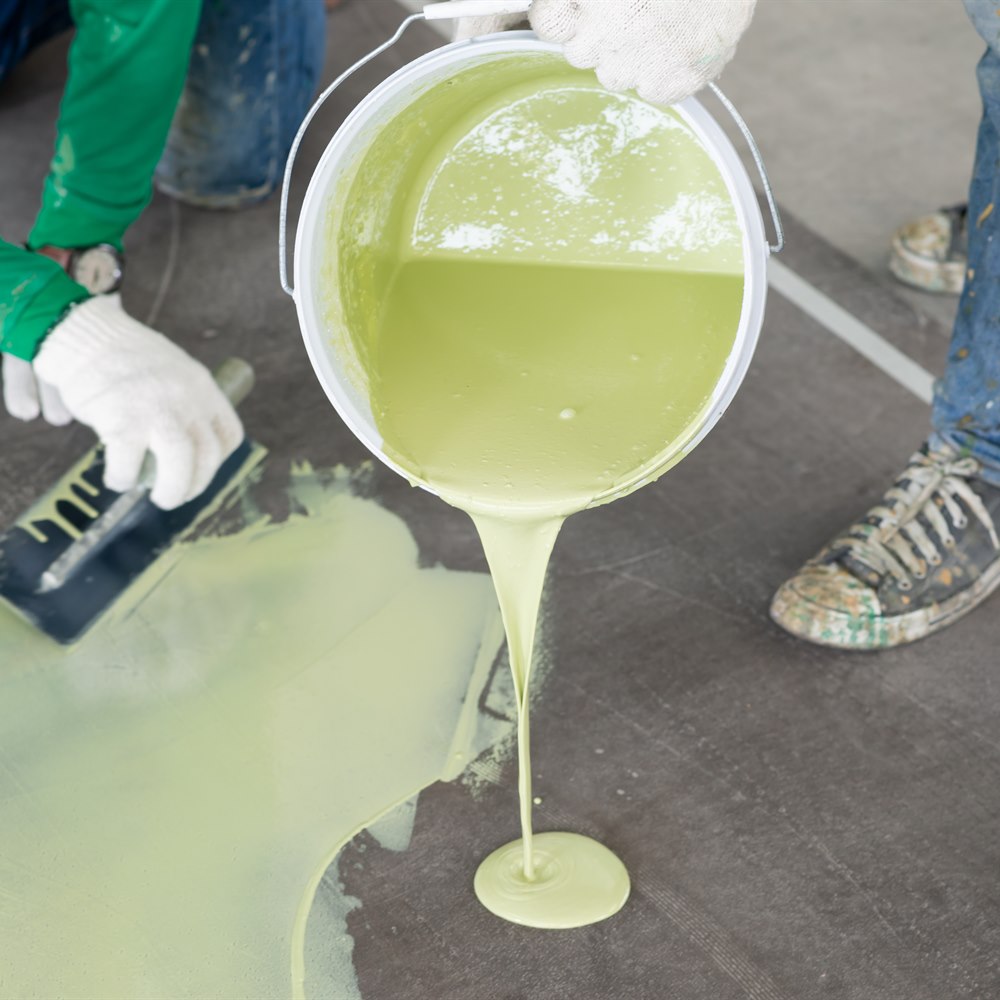
How Does Commercial Epoxy Flooring Differ from Residential?
Commercial epoxy flooring applications share the same chemistry as residential but differ in system thickness, performance requirements, and application scale. Here is how to think about commercial systems if you are comparing quotes or evaluating a contractor’s experience.
System Thickness
Residential garage epoxy: 3 to 5 mils dry film thickness (DFT) for a two-coat system. Commercial epoxy: 10 to 60 mils DFT for high-traffic or heavy-load environments. A 60-mil system (a self-leveling epoxy mortar topping) is 20 times thicker than a standard residential application and provides substantially more durability and impact resistance. The thicker the system: the more material cost, the more application time, and the more substrate preparation required. For residential homeowners: the 3 to 5-mil residential system is appropriate for vehicle traffic and typical garage use; a thicker commercial system is not necessary and adds cost without meaningful residential benefit. (For more on this, see Epoxy vs. Polyaspartic Flooring: Which Is Right for Your Garage?.)
Specialty Performance Requirements
Anti-static (ESD) epoxy: used in electronics manufacturing floors where static discharge would damage components. Chemical-resistant epoxy: used in laboratories, auto shops, and food processing where specific chemicals are regularly present. Anti-microbial epoxy: used in healthcare and food service where bacterial resistance is required. Cove base (the transition from floor to wall with a curved radius): standard in commercial food service and pharmaceutical applications, not typically used in residential. These specialty systems are more expensive ($8 to $20+ per square foot) but are specified for the specific performance requirement, not for general visual enhancement. (For more on this, see How to Prepare a Garage Floor for Epoxy: The Essential Steps.)
Contractor Experience
A contractor who primarily does commercial work is not necessarily better for a residential job — the scale, the material systems, and the application equipment differ. A contractor who has installed 200 residential garage floors has a specific skill set in surface preparation for residential concrete, residential color and flake work, and customer-facing communication that a commercial-only contractor may lack. Ask specifically about residential garage experience when getting quotes for a home garage floor.
Working With a Contractor on This Project
Getting the right outcome on any home services project starts before the work begins. A few consistent practices make the difference between a smooth project and a frustrating one.
Get at least two or three quotes. A single quote gives you no basis for comparison. Two or three quotes reveal the market rate for the work, expose scope differences between bidders, and let you assess contractor communication quality before any commitment is made. The lowest bid is not automatically the best value if the scope is thin or the materials are underspecified.
Ask for licenses and insurance before work starts. Verify current general liability insurance and, for any work involving workers on your property, workers compensation coverage. Licensing requirements vary by state and trade; confirm the specific requirements in your jurisdiction. A licensed contractor who carries appropriate insurance protects both parties if something goes wrong during the project. (For more on this, see Questions to Ask Before Installing Epoxy Flooring.)
Get the scope in writing. A written proposal that specifies materials, labor scope, timeline, what is included (permits, cleanup, disposal), and warranty terms is the foundation of a professional engagement. Verbal agreements on any of these points invite misunderstanding. For any project over $500, written scope is non-negotiable.
Clarify the payment schedule upfront. A reasonable payment schedule ties major payments to project milestones: a deposit at signing, a payment at material delivery or project start, and a final payment at completion after a walkthrough confirms satisfaction. A contractor who requires full payment upfront before work begins is a red flag in any trade.
Making a Confident Decision
The information in this article is designed to help you ask better questions of the professionals you work with, evaluate their answers with more confidence, and understand the decisions involved in this type of home services project. It is not a substitute for professional assessment of your specific home.
Every home is different. Roof slopes, local weather, tree exposure, soil conditions, and existing system condition all affect what the right solution is for your specific situation. The general principles here apply broadly, but a professional who assesses your home in person will give you guidance that accounts for the details that general articles cannot.
When you are ready to move forward, getting at least two or three quotes from licensed, insured, local contractors is the most important practical step. It lets you compare approaches, assess contractor quality, and confirm that the solution proposed matches your specific situation and budget.
Epoxy Flooring Cost at a Glance
| Cost Factor | Typical Range | Notes |
|---|---|---|
| Basic single-coat system | $3 to $7 per square foot | Water-based or low-solids epoxy, similar to DIY kits. Service life: 3 to 7 years professionally applied. |
| Mid-range two-coat system with broadcast flakes | $7 to $10 per square foot | 100 percent solids epoxy base coat, broadcast color flakes, and a polyurethane or polyaspartic clear topcoat. The most common professionally installed system. Service life: 7 to 12 years. |
| Premium metallic or polyaspartic system | $10 to $12 per square foot | Superior UV stability, fast cure, and maximum abrasion resistance. Service life: 10 to 15+ years. |
| Overall range | $3 to $12 per sq ft | , averaging $7 for a mid-range two-coat system on a standard two-car garage |
Cost figures on this page were checked against published pricing on September 1, 2026. How we source cost data.