What Are the Downsides of Foundation Drainage?
A full exterior foundation drainage system can run up to $18,000, and installing it means an open trench around the foundation that tears up whatever is in its path. For a genuine water problem it’s usually well worth it, it prevents damage that can be serious and costly. That’s the honest verdict. But here’s the candid look at the trade-offs before you install.
Exterior Work Is Disruptive
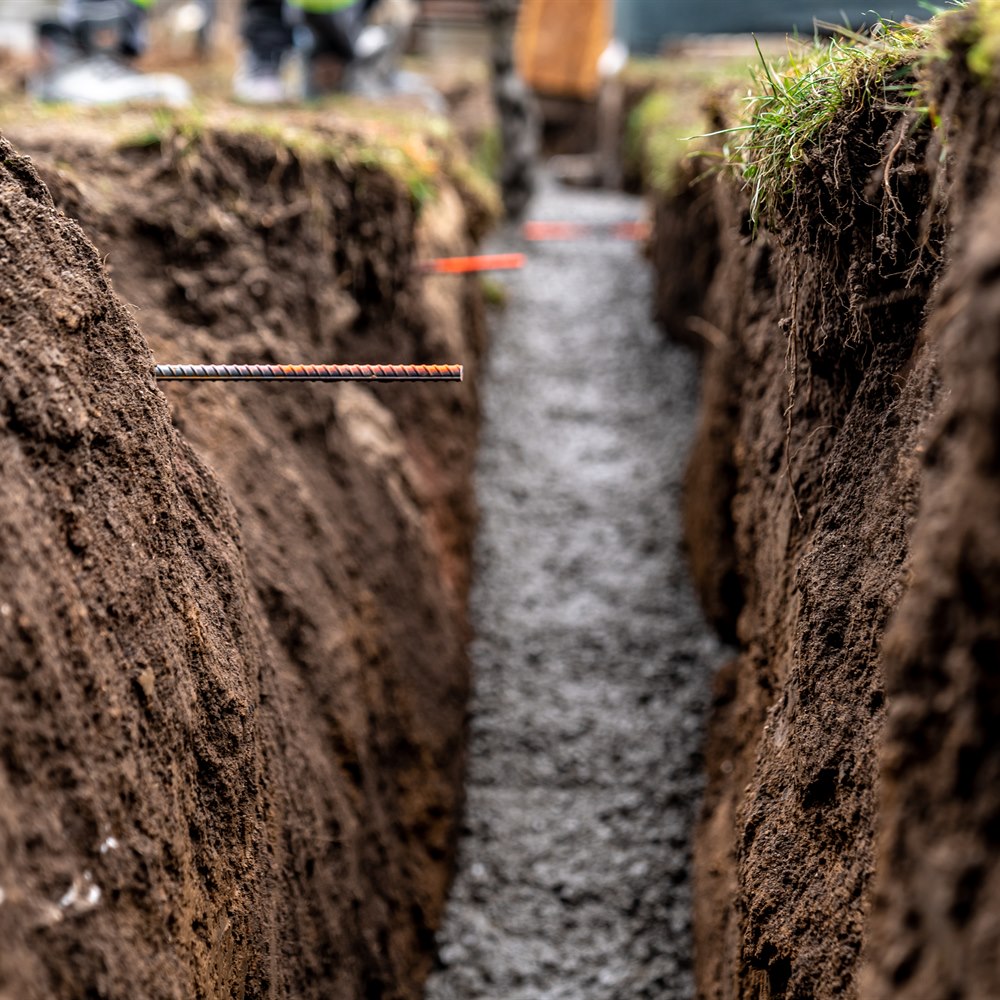
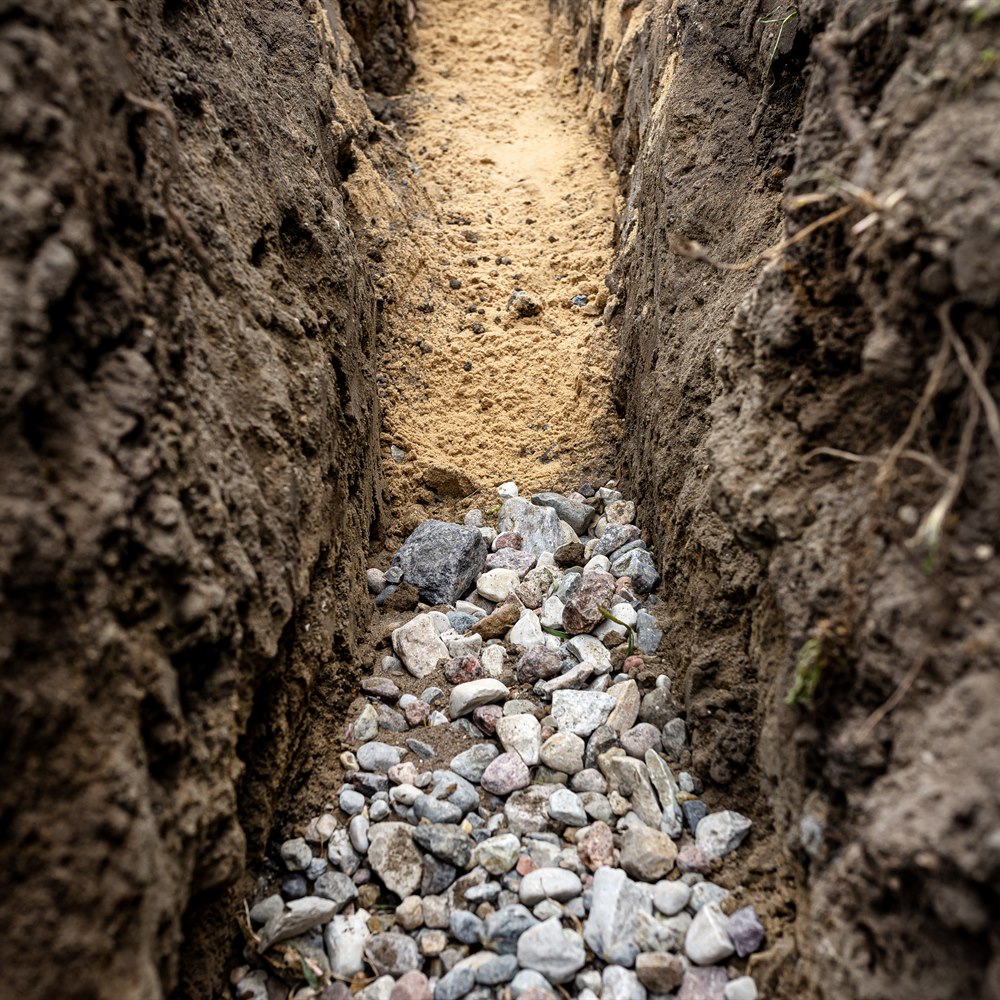
An exterior drainage system requires excavating a trench around the foundation, which disrupts your yard, landscaping, lawn, walkways, and anything in the trench’s path is dug up and must be restored. This is a major, if temporary, disruption, and the restoration adds cost and time. For exterior drainage, expect real disruption during the project. It’s more involved than installing a drain alone suggests. The trench is the source of the disruption, because reaching the footing means an open excavation the depth of the foundation running along the affected walls, so for the length of the project the ground beside the house becomes a construction zone, and anything in that strip, plantings, sod, a walk or patio, comes out and goes back, which is why exterior drainage is best scheduled when you can tolerate the yard being torn up. (For more on this, see When Foundation Drainage Isn’t Necessary (and When It Is).)
It Can Be Expensive
A full exterior drainage system is a significant expense (up to $18,000). For a foundation with a real water problem, the cost is justified by the damage it prevents; for a minor issue, cheaper fixes (grading, downspouts) may suffice. The cost is real, and the key is trying inexpensive fixes first and matching the system to the actual problem. Drainage is an investment, so right-sizing it matters. The expense becomes a real drawback mainly when the solution is oversized for the problem, since the same foundation might be well served by a few hundred dollars of downspout and grading work or genuinely need a full system depending on what’s driving the water, so the cost is best judged not in the abstract but against whether cheaper measures were tried first and the system was matched to the actual problem. (For more on this, see The Best Foundation Drainage Solution for Your Situation.)
Interior Drains Rely on a Sump Pump
An interior French drain manages water by collecting it and pumping it out with a sump pump, which means it relies on the pump working, and storms that bring water often bring power outages. Without a battery backup, the system can fail when needed. This isn’t a flaw so much as a design characteristic to plan for, an interior drain needs a reliable, backed-up pump. Understand that interior drainage depends on the pump. The practical consequence is that an interior drain’s reliability is only as good as its pump and power, so its vulnerable moment is a pump failure or an outage during the very storm that’s delivering water, which is exactly why a battery backup is treated as core rather than optional, and why some homeowners with severe problems prefer exterior drainage that can often move water by gravity without depending on a pump at all.
It May Not Solve Every Water Problem
Drainage manages water around the foundation, but if the real issue involves something drainage doesn’t address, a structural crack, an interior humidity problem, water may persist. A drainage system is only as good as its match to the actual problem. This is why accurate diagnosis matters, drainage solves water-collection problems, not every basement moisture issue. Make sure drainage targets your actual problem. This is where diagnosis and results meet, because drainage is designed to collect and redirect water, so if the true issue is a structural crack letting water through or humid air condensing on cool surfaces, a drain may run perfectly and the basement stay damp, which is why matching the solution to the actual cause, rather than assuming any moisture calls for drainage, is what determines whether the money solves the problem. (For more on this, see Hidden Costs of Foundation Drainage.) The EPA treats moisture control as the decisive factor — mold returns unless the water source is fixed.
Systems Need Some Maintenance
A drainage system isn’t entirely maintenance-free. French drains can clog with silt or debris over time and may need occasional clearing, sump pumps need testing and eventual replacement, and discharge points need to stay clear. This maintenance is modest, but a system requires occasional attention to keep working. Expect some upkeep to keep the drainage functioning over the years. The most common maintenance issue is silting, because fine soil can gradually work into a drain and reduce its flow, which is why quality drains are built with a fabric filter and clean gravel to keep sediment out, and why keeping the discharge outlet clear and, for interior systems, testing the sump pump periodically are the modest habits that keep a drainage system doing its job for the long haul.
Is It Still Worth It?
For a foundation with a genuine water problem, drainage is often very worth it, the damage unmanaged foundation water causes (a wet basement, foundation deterioration, mold, structural issues) far exceeds the cost of preventing it. The drawbacks are about going in informed: exterior work is disruptive, a full system is a real expense, interior drains rely on a pump, it must target the real problem, and systems need some maintenance. Weighed honestly, for a real water problem, drainage is a sound, protective investment. When you’re ready to explore it, connect with local pros below.
Cost figures on this page were checked against published pricing on August 25, 2026. How we source cost data.
Frequently Asked Questions
Exterior work is disruptive, it requires excavating a trench around the foundation, so the yard, landscaping, and walkways are dug up and must be restored, a major (if temporary) disruption that adds cost and time. For exterior drainage, expect real disruption during the project.
It can be, up to $18,000 for a full exterior system. For a foundation with a real water problem, the cost is justified by the damage prevented; for a minor issue, cheaper fixes (grading, downspouts) may suffice. The key is trying inexpensive fixes first and matching the system to the actual problem.
Yes. An interior drain collects water and pumps it out with a sump pump, so it relies on the pump working, and storms that bring water often bring power outages. Without a battery backup, the system can fail when needed. It's a design characteristic to plan for, an interior drain needs a reliable, backed-up pump.
No. Drainage manages water around the foundation, but if the real issue is a structural crack or an interior humidity problem, water may persist. A drainage system is only as good as its match to the actual problem, so accurate diagnosis matters. Drainage solves water-collection problems, not every moisture issue.
Some. French drains can clog with silt or debris over time and may need clearing, sump pumps need testing and eventual replacement, and discharge points need to stay clear. This upkeep is modest, but a system requires occasional attention. Expect some maintenance to keep the drainage functioning over the years.