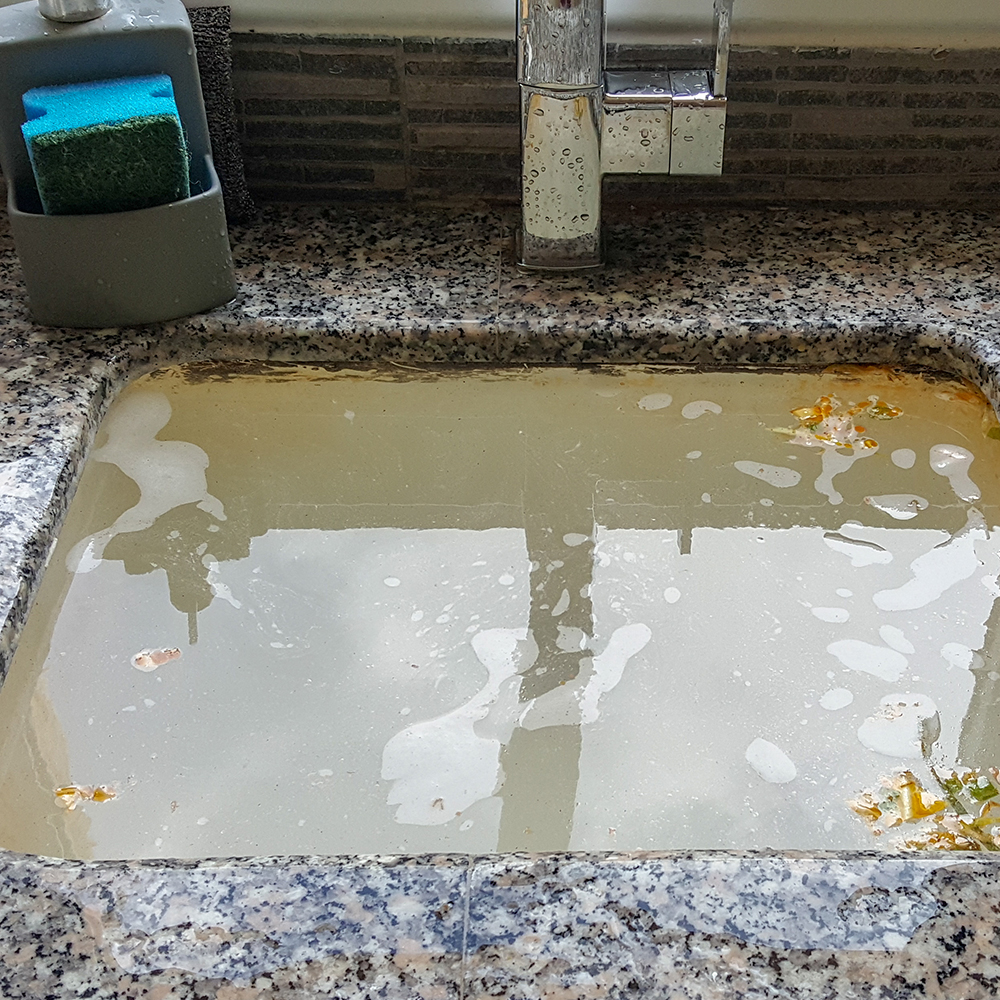
What Do You Do When a Drain Is Completely Blocked?
Stop using the affected plumbing, keep chemical drain openers out of the standing water, remove what water you can, and call a plumber for same-day service. A completely blocked drain, where water will not go down at all and may be backing up, needs different handling than a slow drain. Here is the right sequence.
Stop Using the Affected Drain System
For a single blocked fixture (sink, tub): stop using that fixture. For a main sewer line backup (multiple fixtures affected, water backing up from floor drains): stop using all plumbing in the home immediately. Every flush, every sink use, every shower while the main line is blocked adds more water to a system with nowhere to go water will eventually back up from the lowest fixture in the home (often the basement floor drain) and onto the floor. This backup can cause significant damage to floors and contents. Shut off the water supply to the affected area or, for a main line backup, to the whole house. (For more on this, see Main Sewer Line Clog vs. Individual Drain Clog: How to Tell the Difference.)
Do Not Use Chemical Drain Openers on a Complete Blockage
Chemical drain openers (Drano, Liquid-Plumr) do not dissolve solid blockages they work on soft organic clogs like hair and grease. On a complete blockage where water cannot drain: the chemical sits in the standing water and concentrates, potentially damaging the pipe and creating a hazardous situation for the plumber who must work in or near the chemical. Do not add chemical openers to a completely blocked drain; save them for slow-drain maintenance situations only. (For more on this, see How to Find the Best Drain Cleaning Plumber.)
Contain the Water and Protect the Area
If water has backed up onto a floor: use towels, mops, or a wet-dry vacuum to contain and remove standing water. Protect adjacent areas with towels at doorways. Move any electronics, rugs, or valuables out of the wet area. Water damage from a sewage backup grows with every hour of exposure the faster the water is removed and the area dried, the lower the remediation cost.
Drain Cleaning Cost at a Glance
| Cost Factor | Typical Range | Notes |
|---|---|---|
| Simple sink or tub clog | $199 to $400 | Cleared at the fixture or its branch cleanout |
| Toilet clog | $179 to $345 | Hand auger at the low end; pull and reset the toilet at the high end |
| Main sewer line clog | $269 to $700 | Cabled through an accessible cleanout; top of the range includes a camera inspection |
| Hydro-jetting | $349 to $1,097 | A separate, heavier method for grease or roots |
| Camera line inspection | $320 to $325 | About $99 when added to a clearing on the same visit |
| Overall range | $179 to $700, averaging $325 | Excludes hydro-jetting, which is priced on its own |
Cost figures on this page were checked against published pricing on August 27, 2026. How we source cost data.
Planning Your Project Budget
The cost ranges in this article are based on industry data and are intended as planning benchmarks, not fixed prices. The actual cost for your project depends on your specific home, your local labor market, the current price of materials, and the scope the contractor confirms after a site inspection.
Always get at least two written quotes on equivalent defined scope before committing to any home services project. Wide price variation between quotes usually reflects differences in material quality, scope completeness (what is included and what is not), or contractor overhead and experience level rather than simple price competition.
Use the cost data in this article to ask better questions during the quoting process: What material is included? What does that per-square-foot or per-linear-foot rate include and exclude? Are permits, cleanup, and disposal included? What is the warranty on labor? These questions turn a quote into a comparable basis for decision-making. (For more on this, see Questions to Ask Before Booking Drain Cleaning.)
Working With a Contractor on This Project
Getting the right outcome on any home services project starts before the work begins. A few consistent practices make the difference between a smooth project and a frustrating one.
Get at least two or three quotes. A single quote gives you no basis for comparison. Two or three quotes reveal the market rate for the work, expose scope differences between bidders, and let you assess contractor communication quality before any commitment is made. The lowest bid is not automatically the best value if the scope is thin or the materials are underspecified.
Ask for licenses and insurance before work starts. Verify current general liability insurance and, for any work involving workers on your property, workers compensation coverage. Licensing requirements vary by state and trade; confirm the specific requirements in your jurisdiction. A licensed contractor who carries appropriate insurance protects both parties if something goes wrong during the project.
Get the scope in writing. A written proposal that specifies materials, labor scope, timeline, what is included (permits, cleanup, disposal), and warranty terms is the foundation of a professional engagement. Verbal agreements on any of these points invite misunderstanding. For any project over $500, written scope is non-negotiable.
Clarify the payment schedule upfront. A reasonable payment schedule ties major payments to project milestones: a deposit at signing, a payment at material delivery or project start, and a final payment at completion after a walkthrough confirms satisfaction. A contractor who requires full payment upfront before work begins is a red flag in any trade.