What Does AC Repair Cost?
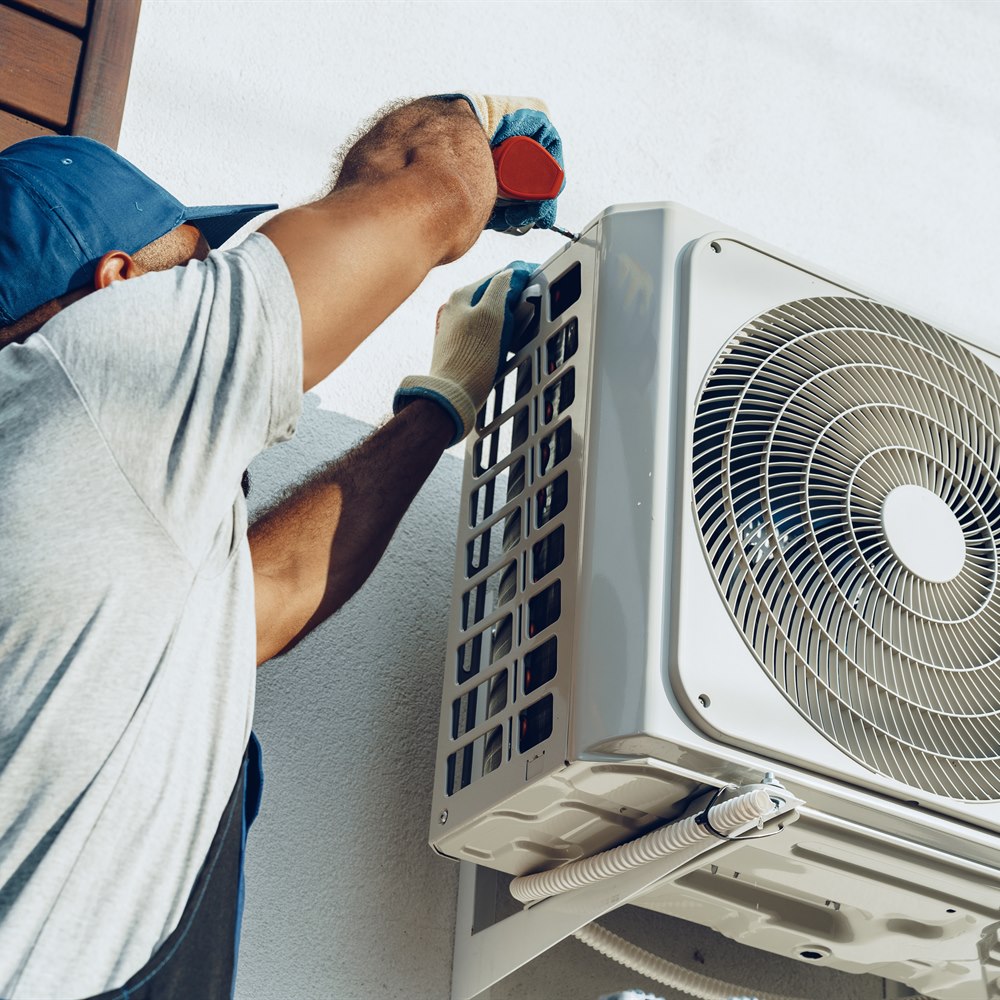
Air conditioning repair typically costs $150 to $5,000, averaging around $600 for most residential service calls. The wide range reflects the significant cost difference between common maintenance repairs and major component replacement.
Diagnostic or Service Call: $75 to $200
Most HVAC companies charge a diagnostic or service call fee a professional comes to the home, runs tests, and identifies the problem. This fee runs $75 to $200 and is often credited toward the repair cost if you proceed with the same company. Emergency, evening, and weekend work carries a separate premium on top of the repair, typically a flat $199 to $250, and it is the most common reason a bill lands above a published range. Do not skip the diagnostic: identifying the specific failed component correctly before ordering parts prevents paying for the wrong repair. (For more on this, see How to Choose an AC Repair Service.)
Common Repairs: $150 to $1,500
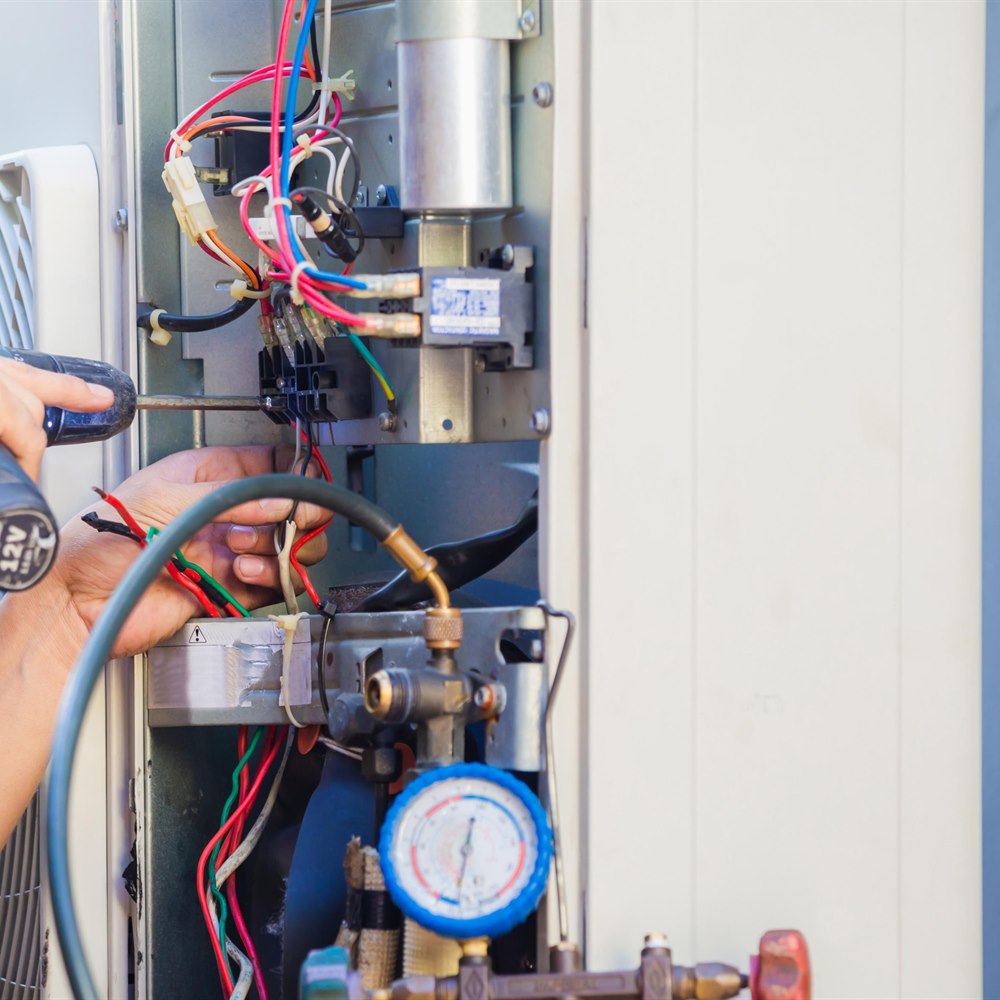
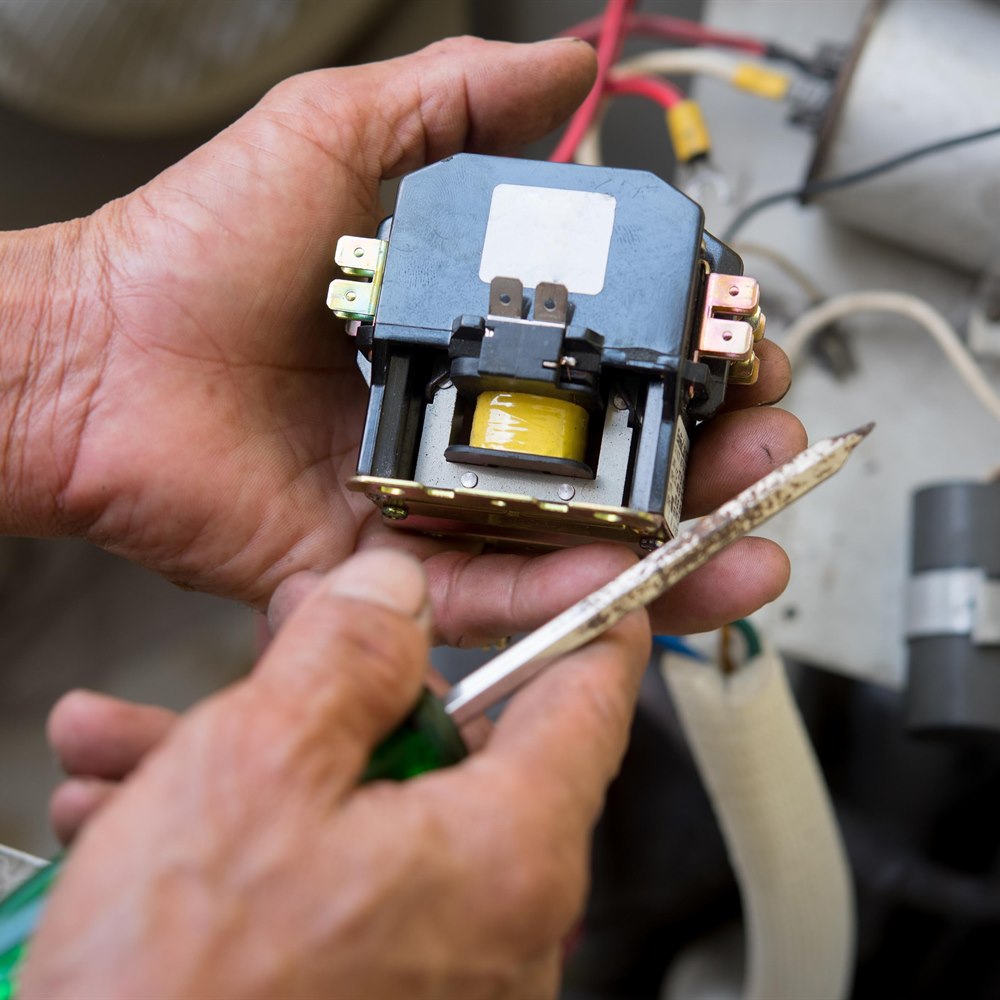
The most frequent AC repairs fall in the $150 to $1,500 range. Capacitor replacement (the most common AC failure): $100 to $500. Contactor replacement: $200 to $600. Condenser fan motor replacement: $500 to $900. Indoor blower motor replacement: $500 to $1,300, and $1,000 to $1,500 for a variable-speed ECM motor, which is what sets the top of this range. Thermostat replacement: $140 to $650. Refrigerant gets its own section below, because a recharge and a leak repair are not the same job. These repairs address the most common causes of AC failure in residential systems and represent the majority of residential AC service calls. ENERGY STAR publishes certified efficiency ratings for heating and cooling equipment, which is the cleanest way to compare models.
Refrigerant: $350 to $1,000
Refrigerant is the biggest single variable on an AC repair bill, and two different jobs get called the same thing. Finding the leak, repairing it, and recharging the system runs $350 to $1,000. A top-off with no leak search is a different job at $405 to $900, and it is a temporary fix if the refrigerant is escaping somewhere. Refrigerant type is the other swing: R-410A runs $40 to $90 per pound installed against $90 to $150 per pound for R-22, so an older R-22 system costs about twice as much to charge.
Major Component Replacement: $1,600 to $5,000
Compressor replacement is the most expensive AC repair the compressor is the heart of the refrigerant cycle, and its failure is often the decision point between repair and full system replacement. Installed, a compressor runs $1,600 to $4,800. Two repairs sit at the same tier: an evaporator coil at $2,100 to $4,800 and a thermostatic expansion valve at $1,500 to $3,000. Once a quote at this level passes about half the $6,000 to $15,000 cost of a new system installed, replacement is the better buy, so weigh the repair price against the age of the system before proceeding.
AC Repair Cost at a Glance
| Cost Factor | Typical Range | Notes |
|---|---|---|
| Diagnostic or service call | $75 to $200, often credited toward repair | Billed separately from the repair itself |
| Common repairs (capacitor, contactor, fan or blower motor) | $150 to $1,500 | A capacitor is $100 to $500 and a contactor $200 to $600, but a condenser fan motor runs $500 to $900 and an ECM blower motor $1,000 to $1,500 |
| Refrigerant | $350 to $1,000 to find the leak, repair it, and recharge | A top-off with no leak search is a different job at $405 to $900, and R-410A is $40 to $90 per pound installed against $90 to $150 for R-22 |
| Emergency, evening, or weekend work | $199 to $250 added | A flat premium on top of the repair, and the usual reason a bill exceeds a published range |
| Major component (compressor, evaporator or condenser coil) | $1,600 to $5,000 | A compressor is $1,600 to $4,800 and an evaporator coil $2,100 to $4,800, where a $6,000 to $15,000 replacement is worth considering |
| Overall range | $150 to $5,000, averaging $600 |
Cost figures on this page were checked against published pricing on August 25, 2026. How we source cost data.
Planning Your Project Budget
The cost ranges in this article are based on industry data and are intended as planning benchmarks, not fixed prices. The actual cost for your project depends on your specific home, your local labor market, the current price of materials, and the scope the contractor confirms after a site inspection.
Always get at least two written quotes on equivalent defined scope before committing to any home services project. Wide price variation between quotes usually reflects differences in material quality, scope completeness (what is included and what is not), or contractor overhead and experience level rather than simple price competition.
Use the cost data in this article to ask better questions during the quoting process: What material is included? What does that per-square-foot or per-linear-foot rate include and exclude? Are permits, cleanup, and disposal included? What is the warranty on labor? These questions turn a quote into a comparable basis for decision-making.
Working With a Contractor on This Project
Getting the right outcome on any home services project starts before the work begins. A few consistent practices make the difference between a smooth project and a frustrating one.
Get at least two or three quotes. A single quote gives you no basis for comparison. Two or three quotes reveal the market rate for the work, expose scope differences between bidders, and let you assess contractor communication quality before any commitment is made. The lowest bid is not automatically the best value if the scope is thin or the materials are underspecified.
Ask for licenses and insurance before work starts. Verify current general liability insurance and, for any work involving workers on your property, workers compensation coverage. Licensing requirements vary by state and trade; confirm the specific requirements in your jurisdiction. A licensed contractor who carries appropriate insurance protects both parties if something goes wrong during the project.
Get the scope in writing. A written proposal that specifies materials, labor scope, timeline, what is included (permits, cleanup, disposal), and warranty terms is the foundation of a professional engagement. Verbal agreements on any of these points invite misunderstanding. For any project over $500, written scope is non-negotiable.
Clarify the payment schedule upfront. A reasonable payment schedule ties major payments to project milestones: a deposit at signing, a payment at material delivery or project start, and a final payment at completion after a walkthrough confirms satisfaction. A contractor who requires full payment upfront before work begins is a red flag in any trade.