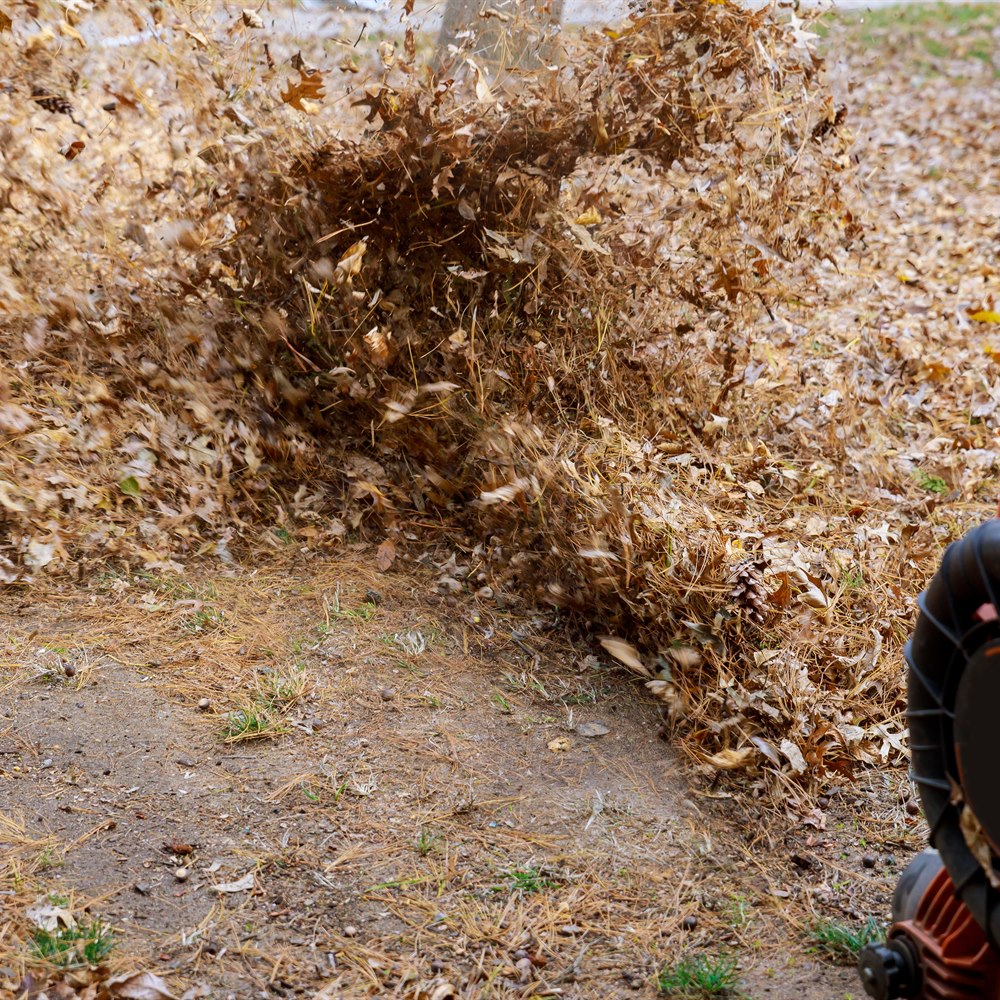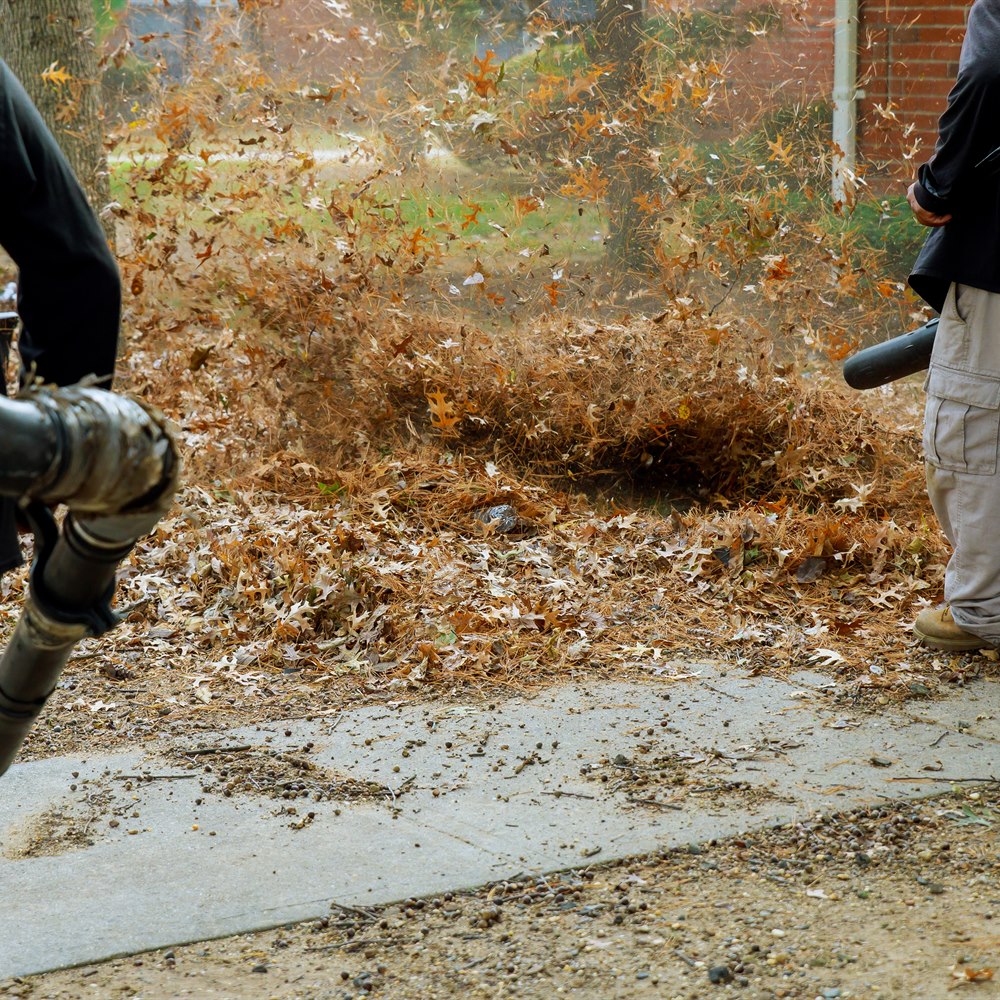
Why Should You Remove Leaves From Your Lawn?
The question of whether to remove leaves or simply let them lie is more consequential than it appears. Leaving a heavy leaf layer on turf through fall creates real lawn problems that persist into spring, while timely removal (or proper mulching) protects the grass through winter. Here’s the case for managing leaves rather than ignoring them.
Smothering and Light Deprivation
A thick layer of leaves blocks light and air from reaching grass beneath it. Turf needs light even in fall to continue photosynthesis at a reduced rate and to store carbohydrates for winter, and it needs air circulation to avoid fungal problems. A dense, matted leaf layer deprives turf of both. The grass beneath a thick leaf mat can be weakened, yellowed, or killed, particularly if the leaves stay wet and compressed through a warm, moist fall period. The result is thin, weak turf going into winter and slow recovery in spring. (For more on this, see Common Leaf Removal Mistakes to Avoid.)
Fungal Disease Risk
Wet, matted leaves create the ideal conditions for certain turf diseases, particularly snow mold, which develops under leaf layers and causes distinct circular patches of dead or discolored grass that appear in spring as snow melts. Snow mold prevention is one of the standard reasons lawn care professionals recommend clearing leaves before winter. Turf areas that were under heavy, moist leaf accumulation through late fall are significantly more likely to show disease damage in spring than cleared areas. (For more on this, see Leaf Removal Safety: Protecting Your Lawn Under Leaves.)
The Mulching Option
Removing leaves isn’t the only option: mulching them with a mower, shredding the leaf layer finely and returning the particles to the turf, decomposes them into the soil and can actually benefit the lawn by adding organic matter. Research from Michigan State University and others has shown that mulched leaves don’t significantly harm turf and can reduce fertilizer needs. Mulching works best when the leaf layer isn’t too deep (more than a few inches of whole leaves at once is too much to shred effectively), the leaves are dry enough to shred rather than mat, and the result is fine enough that it falls into the turf rather than covering it. When these conditions are met, mulching is both effective and free.
When Removal Is the Better Choice
Mulching has limits. Very heavy accumulations, wet or partially decomposed leaves that won’t shred properly, late-season drops on already-dormant turf, and properties with disease history are situations where removal rather than mulching is the better choice. Removing leaves is also appropriate for planting beds, where shredded leaves can smother perennials and provide overwintering habitat for pests. Understanding when to mulch and when to remove, rather than applying one approach to all conditions, produces the best outcome for the lawn. (For more on this, see Leaf Removal vs. Leaf Mulching: Which Is Better?.)
Timing Matters
The timing of leaf management matters alongside the method. Leaves managed promptly, before they accumulate into thick layers and before extended wet weather mats them, are easier to handle by either method. Waiting until December to address October’s leaf accumulation means dealing with matted, wet, partially decomposed material that neither blows easily nor mulches well, and that has been sitting on the turf through exactly the wet, cool conditions that favor disease. Starting leaf management when leaves are falling rather than after they’ve accumulated is both better for the lawn and less work.
What Leaves Do to Soil and How Mulching Compares
The choice between removing leaves and mulching them into the soil is partly agronomic and partly practical, and understanding the soil dimension helps make the decision more intentionally. Leaf mulch decomposes into organic matter that improves soil biology, adds nutrients, and builds the organic content that makes soil more water-retentive and better-structured over time. Michigan State University research and others have documented that mulched leaves in reasonable quantities don’t harm turf and can reduce fertilizer needs. From a soil health perspective, returning organic material to the soil is beneficial and is what happens in natural woodland settings without intervention.
The practical limits of this approach are volume-based. A moderate layer of shredded leaves that falls into the turf and is invisible within a few days is one thing; several inches of whole or partially shredded leaves sitting visibly on the surface is another. The difference is whether the material is processing into the soil ecosystem or sitting on top of it, blocking light and air. Turf grasses need reasonable air and light access through winter to remain healthy; natural woodland soils that tolerate deep leaf cover are structurally different from mowed lawn environments. The correct approach for most residential properties is a hybrid: mulch light accumulations regularly, which provides the soil benefit without the smothering risk, and remove heavy ones. This captures the ecological value of leaf recycling where practical while managing the volumes that exceed what the turf can absorb.
Managing Leaves Well
Removing or mulching leaves before they accumulate into thick, wet layers protects turf from smothering, disease, and winter damage. Mulching is an effective, free option when conditions allow; removal is appropriate for heavy accumulations and planting beds. When you’re ready for professional fall leaf management, connect with a local pro below.
Frequently Asked Questions
A thick leaf layer blocks light and air from grass, depriving turf of the light it needs for late-season photosynthesis and air circulation needed to avoid fungal problems. Matted wet leaves create conditions for snow mold and other turf diseases visible in spring. Timely removal or mulching protects grass through winter and supports spring recovery.
Snow mold is a turf disease that develops under leaf layers and moist, cool conditions, creating circular patches of dead or discolored grass visible in spring. Wet, matted leaves through late fall create ideal conditions for it. Clearing leaves before winter is standard snow mold prevention on susceptible properties.
Yes, when conditions allow. Shredding leaves finely with a mower and returning the particles to the turf decomposes them into organic matter that benefits the soil. Research shows mulched leaves don't significantly harm turf. It works best when the layer isn't too deep, leaves are dry enough to shred rather than mat, and the result falls into the turf rather than covering it.
Very heavy accumulations, wet or partially decomposed leaves that won't shred properly, late-season drops on dormant turf, properties with disease history, and all planting beds (where shredded leaves can smother perennials) are situations where removal is the better choice over mulching.
Yes. Leaves managed promptly before they accumulate and before wet weather mats them are easier to handle by either method. Waiting until December to address October accumulation means dealing with matted wet material that neither blows easily nor mulches well, and that has been sitting on turf through conditions that favor disease.