
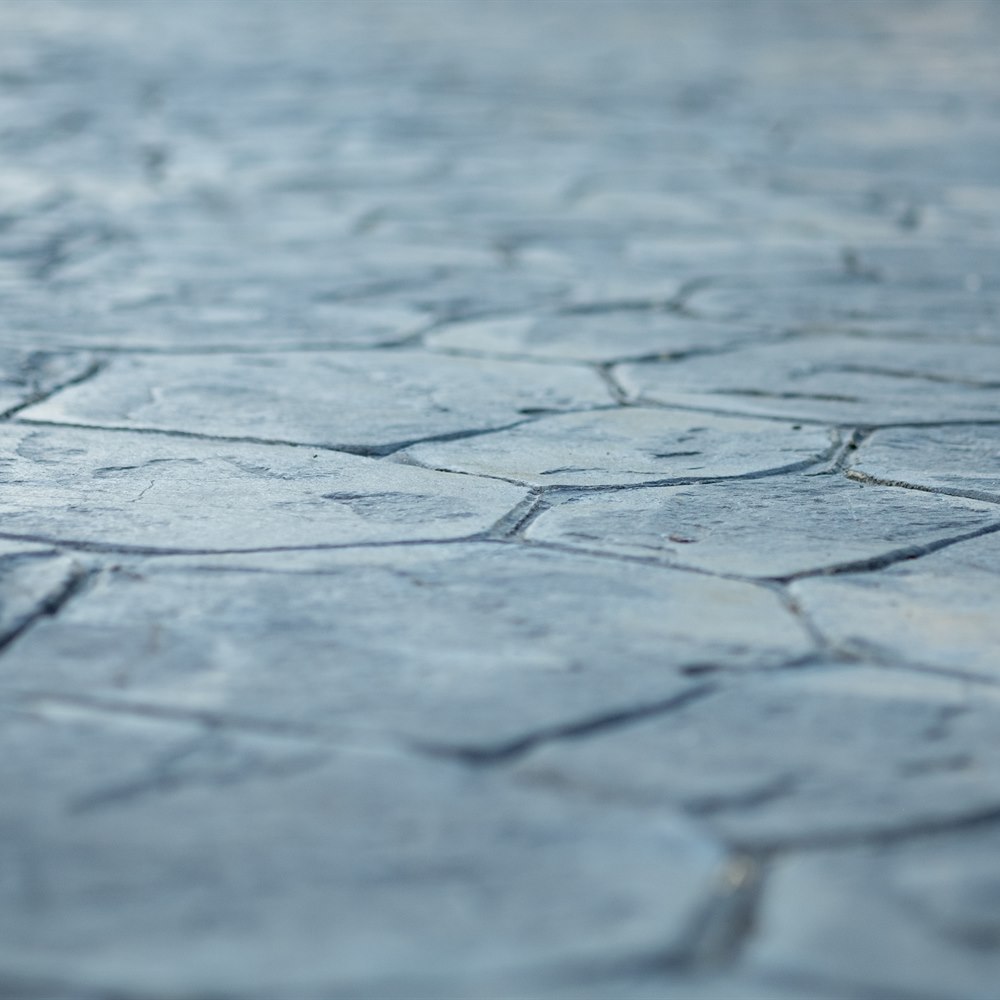
How Do You Maintain Stamped Concrete?
Stamped concrete requires consistent maintenance to preserve its color, protect the surface, and prevent the deterioration that makes it look worn prematurely. Here is what matters and how often to do it.
Sealing Is the Most Important Task
Resealing every two to three years is the single most important stamped concrete maintenance task. Sealer protects the color from UV fading, prevents the water infiltration behind freeze-thaw damage, and shields the surface from staining and abrasion. In high-UV regions or high-traffic applications, annual sealing may be needed. The condition of the sealer is the most reliable guide: if water no longer beads on the surface, resealing is overdue. (For more on this, see Stamped Concrete Maintenance: What You Need to Know.)
The bead test takes a minute: pour a little water on the surface and watch it. Water that stands up in beads means the sealer is still doing its job. Water that soaks in and darkens the concrete means the sealer has worn through and the surface is absorbing everything else that lands on it too.
Cleaning Before Resealing
Before each application, the surface has to be cleaned of dirt, organic growth such as algae and mildew, staining, and deteriorated sealer residue. Pressure washing with an appropriate cleaning solution removes most surface contamination. Strip the old sealer first when it has built up, gone cloudy, or started delaminating, because new sealer applied over degraded sealer produces a poor result.
Avoid Chloride-Based Ice Melters
Rock salt (sodium chloride) and other chloride-based de-icing products cause surface spalling and sealer breakdown, particularly in the first few years of service. Use sand, cat litter, or calcium magnesium acetate for ice control instead. Consistent sealer coverage is the best protection against both freeze-thaw and ice control damage.
Address Stains Promptly
Oil, rust, and organic stains come out far more easily fresh than aged into the surface. Cleaning spills promptly on a properly sealed surface prevents staining from penetrating a degraded sealer into the concrete itself, where removal requires aggressive treatment that can affect the color. Surface chips are similar: color-matched repair is difficult to execute invisibly on a decorative surface, so prevention beats correction.
What the Annual Inspection Covers
Walk the surface once a year and check four things: sealer condition using the bead test, new cracking at or between control joints, surface spalling or delamination, and the condition of edges and joints. Catching small issues early prevents escalation to repairs that are expensive and hard to blend into a stamped pattern.
What Happens If You Skip It
Without resealing, color fades from UV exposure, the surface becomes porous and takes on stains, and freeze-thaw damage accelerates. Neglected stamped concrete loses its appearance in 5 to 8 years in moderate climates, which is a fraction of what the same surface delivers when it is sealed on schedule. (For more on this, see Stamped Concrete Maintenance: How to Keep It Looking Great.)
The return on preventive maintenance here is consistently underestimated. The annual tasks take 30 to 60 minutes of your time and cost zero to modest amounts in materials, and they prevent failures that cost hundreds to thousands of dollars to repair when they arrive. Expressed as a return on the time invested, this is among the highest-value work available in home ownership.
Setting Up a Maintenance Schedule
The practical barrier is not cost or complexity but consistency: maintenance that is intended but never scheduled does not happen. Write the schedule down rather than relying on memory. Note the installation date, the first task due date, and the recurring interval for each task, and set a calendar reminder for the first resealing date and every interval after it. Linking the work to an existing seasonal routine or another maintenance task converts intention into practice. A written schedule eliminates the “when did I last seal this?” uncertainty that leads to deferred maintenance and accelerated deterioration. Homeowners whose surfaces hold up over long periods have almost always solved the scheduling problem, not discovered better techniques.
When to Call a Professional
Cleaning, sealing, and basic visual inspection are homeowner-appropriate tasks. Anything that involves opening up the structure of the surface, or a repair you are not confident executing without leaving a visible patch, belongs with a professional. If you are uncertain whether an inspection finding needs professional attention, the conservative answer is to call. A diagnostic service call costs modestly compared to a DIY repair that makes the problem worse or leaves a permanent mark on a decorative surface. Homeowners who seal on schedule without exception get the longest service life and the best appearance out of stamped concrete. (For more on this, see Questions to Ask Before Installing Stamped Concrete.)
Hiring Out the Sealing or Repair Work
When you do bring in a contractor for resealing or a color-matched repair, get two or three site-visit quotes on equivalent defined scope rather than comparing numbers that cover different work. Ask what surface preparation is included, whether stripping the old sealer is part of the price or an extra, which sealer product and sheen will be used, and what warranty covers the labor. Confirm the scope in writing before work begins. Scope items discussed verbally and never written down are the most common source of disputes at the end of a job.
Frequently Asked Questions
Every 2 to 3 years in moderate climates, and annually in high-UV or high-traffic situations. The bead test is the most reliable guide: if water no longer beads on the surface, resealing is overdue.
Color fades from UV exposure, the surface becomes porous and susceptible to staining, and freeze-thaw damage accelerates. Neglected stamped concrete loses its appearance in 5 to 8 years in moderate climates.
No. Chloride-based de-icing salts cause surface spalling and sealer breakdown, particularly in the first few years. Use sand, cat litter, or calcium magnesium acetate instead, and keep sealer coverage consistent as the primary protection.
Pressure wash with an appropriate cleaning solution to remove dirt, algae, mildew, and staining. Strip the old sealer first if it has built up, gone cloudy, or begun delaminating, since new sealer over degraded sealer produces a poor result.
Stains caught fresh on a properly sealed surface can usually be cleaned off. Stains that have penetrated a degraded sealer are harder to remove without affecting color, and surface chips need color-matched repair that is difficult to execute invisibly. Consistent sealing is the best protection against both.
Check sealer condition with the bead test, look for new cracking at or between control joints, check for surface spalling or delamination, and inspect edge and joint condition. Catching these early prevents repairs that are expensive and hard to hide in a stamped pattern.
Cleaning, sealing, and visual inspection are homeowner tasks that take 30 to 60 minutes a year plus materials. Call a professional for any repair that opens up the surface or that you cannot execute without leaving a visible patch, since a diagnostic service call costs far less than a DIY repair that makes it worse.