
How Do You Plan Sports Lighting for a Backyard Court?
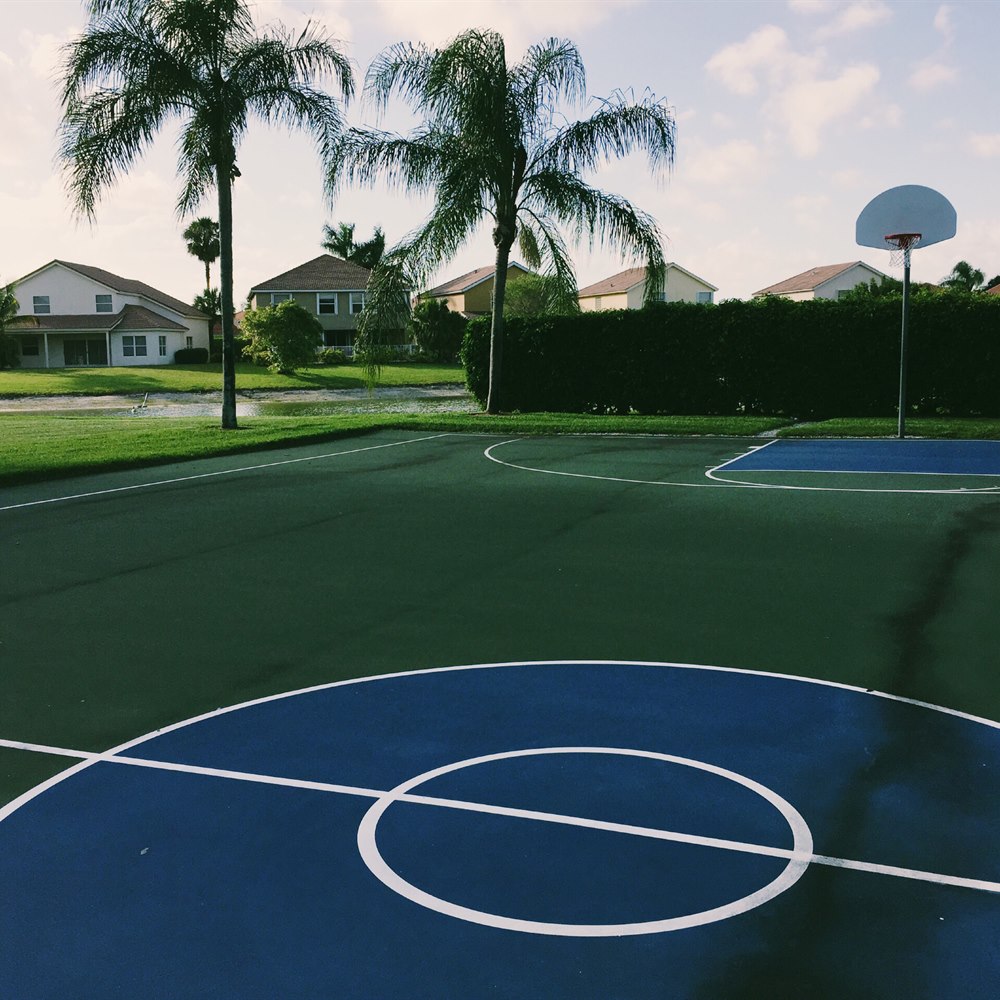
Target 30 to 50 foot-candles at the playing surface: for a 40×50-foot court, that is 4 poles at 15 to 20 feet with 100 to 150-watt LED fixtures. Below 20 fc a fast-moving ball is hard to track; above 75 fc you are paying for light your neighbors will notice. Ask the contractor for a photometric layout confirming the numbers before you buy.
Illumination Level Requirements
The primary metric for sports lighting: foot-candles (fc) of illumination at the playing surface. Residential backyard recreational play: 30 fc minimum, 50 fc preferred. This illumination level allows comfortable ball tracking and avoids eye strain during play. Too low an illumination level (below 20 fc): difficult to track a fast-moving ball, creating both frustration and safety risk. Too high (above 75 fc): unnecessary cost and potential neighbor light intrusion. A lighting contractor can provide a photometric layout (a computer-modeled lighting plan) that confirms pole count, height, and fixture selection to achieve the target illumination level for the specific court dimensions. (For more on this, see Backyard Basketball and Pickleball Court Planning Guide.)
Pole Height and Fixture Selection
For a 40×50-foot basketball or pickleball court: 4 poles at 15 to 20-foot height with 100 to 150-watt LED sports fixtures. The pole height determines the angle of illumination — taller poles provide more even coverage across the court surface with less hot-spot effect directly under the fixture. Shorter poles (under 12 feet) create uneven illumination with bright spots under the fixture and dark areas between poles. LED sports fixtures (Musco, Qualux, or similar sports lighting brands) at 100 to 150 watts are highly efficient — consuming approximately 60 to 70 percent less energy than equivalent metal halide fixtures while providing better illumination quality and longer life (50,000+ hours rated life vs. 15,000 hours for metal halide).
Electrical Planning
The electrical scope for a 4-pole court lighting system: underground conduit from the home’s electrical panel to the first pole base, conduit between poles (direct burial or in conduit depending on local code), and electrical connections at each pole. A 20-amp to 30-amp circuit (depending on the total fixture wattage) is typically adequate for a 4-fixture residential system. Smart control options: a simple timer at the panel (set to turn off automatically after a specified time), a smart switch accessible from a phone app, or motion-sensor control. An electrical permit is required in most jurisdictions.
Working With a Contractor on This Project
Getting the right outcome on any home services project starts before the work begins. A few consistent practices make the difference between a smooth project and a frustrating one.
Get at least two or three quotes. A single quote gives you no basis for comparison. Two or three quotes reveal the market rate for the work, expose scope differences between bidders, and let you assess contractor communication quality before any commitment is made. The lowest bid is not automatically the best value if the scope is thin or the materials are underspecified.
Ask for licenses and insurance before work starts. Verify current general liability insurance and, for any work involving workers on your property, workers compensation coverage. Licensing requirements vary by state and trade; confirm the specific requirements in your jurisdiction. A licensed contractor who carries appropriate insurance protects both parties if something goes wrong during the project. (For more on this, see Questions to Ask Before Building a Sport Court.)
Get the scope in writing. A written proposal that specifies materials, labor scope, timeline, what is included (permits, cleanup, disposal), and warranty terms is the foundation of a professional engagement. Verbal agreements on any of these points invite misunderstanding. For any project over $500, written scope is non-negotiable.
Clarify the payment schedule upfront. A reasonable payment schedule ties major payments to project milestones: a deposit at signing, a payment at material delivery or project start, and a final payment at completion after a walkthrough confirms satisfaction. A contractor who requires full payment upfront before work begins is a red flag in any trade.
Making a Confident Decision
The information in this article is designed to help you ask better questions of the professionals you work with, evaluate their answers with more confidence, and understand the decisions involved in this type of home services project. It is not a substitute for professional assessment of your specific home. (For more on this, see Questions to Ask a Sport Court Contractor.)
Every home is different. Roof slopes, local weather, tree exposure, soil conditions, and existing system condition all affect what the right solution is for your specific situation. The general principles here apply broadly, but a professional who assesses your home in person will give you guidance that accounts for the details that general articles cannot.
When you are ready to move forward, getting at least two or three quotes from licensed, insured, local contractors is the most important practical step. It lets you compare approaches, assess contractor quality, and confirm that the solution proposed matches your specific situation and budget.
Ranges here are national ballpark figures, not quotes. Actual pricing varies by region, home condition, materials, and contractor. How we source cost data.