Power Washing vs. Soft Washing: What Is the Difference?
Choosing the wrong method for your surface can cause real damage. Here is how these two approaches differ and when each applies.
Power Washing: High Pressure for Hard Surfaces
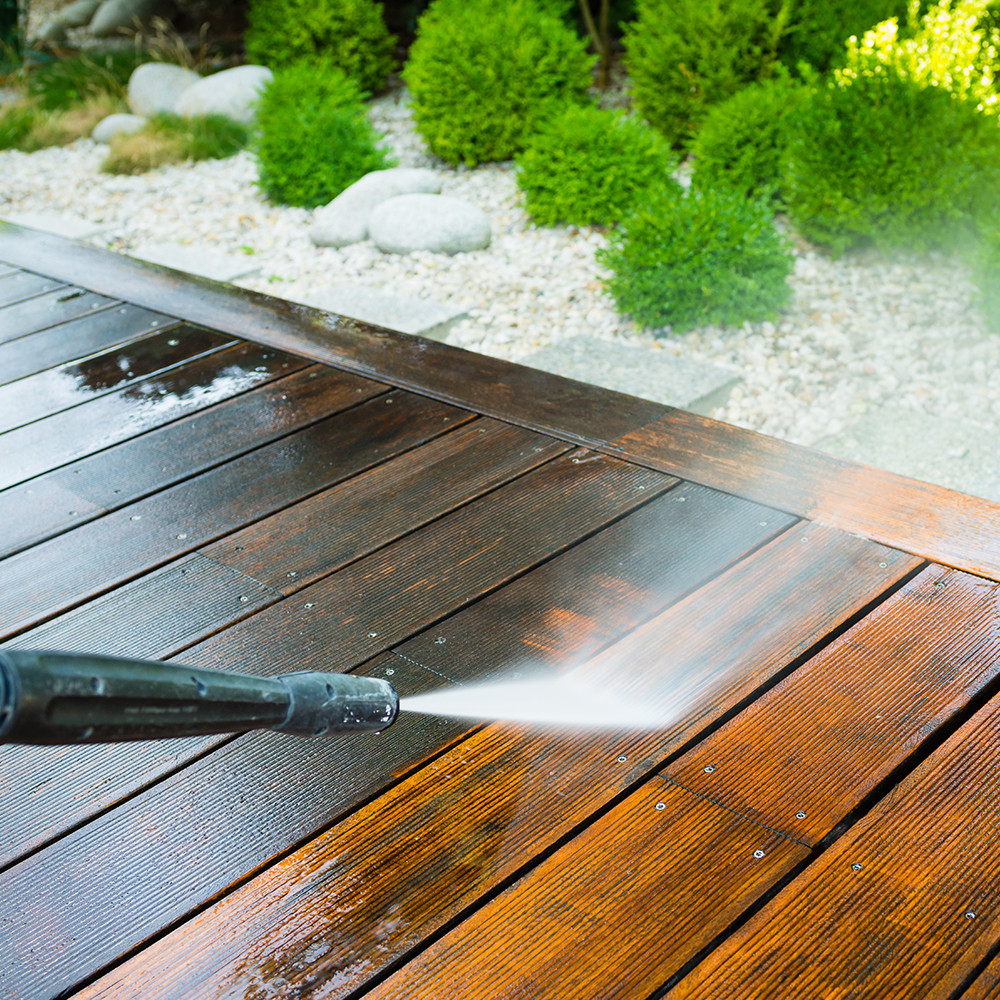
Power washing uses heated water at pressures of 1,500 to 4,000 PSI to blast surface contaminants from hard, durable materials. Appropriate surfaces: concrete driveways and sidewalks, brick pavers, stone retaining walls, garage floors, concrete patios, and pool surrounds. The high pressure physically removes embedded dirt, oil stains, and light biological growth. For these surfaces, high pressure is the correct tool it is fast, effective, and does not risk surface damage on properly cured concrete or dense masonry.
Soft Washing: Low Pressure Plus Chemistry for Delicate Surfaces
Soft washing applies cleaning solution at low pressure (under 500 PSI, comparable to a garden hose) that kills biological growth at the cell level algae, mold, mildew, and lichen die on contact with the biocidal surfactant. The solution dwells on the surface for several minutes, then is rinsed away at low pressure. Appropriate surfaces: vinyl and fiber cement siding, painted wood, stucco, EIFS (synthetic stucco), painted brick, roof shingles, and any surface where high pressure risks damage or forces water into the structure. Soft washing is the method the Asphalt Roofing Manufacturers Association (ARMA) recommends for cleaning asphalt shingles.
Why This Distinction Matters for Homeowners
A power washing company that uses high pressure on vinyl siding, painted wood siding, or roofing risks: stripping paint, forcing water under siding and into wall cavities, breaking window seals, and damaging shingles. These are expensive repairs. Before booking, ask specifically whether the company uses soft-wash for your siding and roofing materials. A company that says ‘we use the same machine for everything’ is a risk for surfaces that require low pressure. (For more on this, see What Surfaces Can and Cannot Be Power Washed?.)
Working With a Contractor on This Project
Getting the right outcome on any home services project starts before the work begins. A few consistent practices make the difference between a smooth project and a frustrating one. (For more on this, see The Real Cost of Power Washing Services for Your Home.)
Get at least two or three quotes. A single quote gives you no basis for comparison. Two or three quotes reveal the market rate for the work, expose scope differences between bidders, and let you assess contractor communication quality before any commitment is made. The lowest bid is not automatically the best value if the scope is thin or the materials are underspecified.
Ask for licenses and insurance before work starts. Verify current general liability insurance and, for any work involving workers on your property, workers compensation coverage. Licensing requirements vary by state and trade; confirm the specific requirements in your jurisdiction. A licensed contractor who carries appropriate insurance protects both parties if something goes wrong during the project. (For more on this, see Questions to Ask Before Hiring a Power Washing Company.)
Get the scope in writing. A written proposal that specifies materials, labor scope, timeline, what is included (permits, cleanup, disposal), and warranty terms is the foundation of a professional engagement. Verbal agreements on any of these points invite misunderstanding. For any project over $500, written scope is non-negotiable.
Clarify the payment schedule upfront. A reasonable payment schedule ties major payments to project milestones: a deposit at signing, a payment at material delivery or project start, and a final payment at completion after a walkthrough confirms satisfaction. A contractor who requires full payment upfront before work begins is a red flag in any trade.
Making a Confident Decision
The information in this article is designed to help you ask better questions of the professionals you work with, evaluate their answers with more confidence, and understand the decisions involved in this type of home services project. It is not a substitute for professional assessment of your specific home.
Every home is different. Roof slopes, local weather, tree exposure, soil conditions, and existing system condition all affect what the right solution is for your specific situation. The general principles here apply broadly, but a professional who assesses your home in person will give you guidance that accounts for the details that general articles cannot.
When you are ready to move forward, getting at least two or three quotes from licensed, insured, local contractors is the most important practical step. It lets you compare approaches, assess contractor quality, and confirm that the solution proposed matches your specific situation and budget.
Power Washing Cost at a Glance
Standard single-family home: $250 to $650 for exterior walls, driveway, and sidewalk on one visit.
Large home or multiple surfaces: $550 to $1,300 for siding, driveway, deck, and fence on a larger property.
Single surfaces booked alone: driveway and sidewalk $75 to $350; deck, patio, or fence $100 to $350. Booked on their own they fall below the whole-visit range.
Method matters: pressure washing siding runs $212 to $447; soft washing the same siding runs $300 to $800.
Heavy grime or mold: Added cost for stubborn buildup needing more time and stronger solutions.
Overall range: $250 to $1,200 for a whole-home visit, averaging $450.
Cost figures on this page were checked against published pricing on August 27, 2026. How we source cost data.