What Are the Most Common Microwave Problems?
A failed door interlock switch is the most common microwave service call, repairable at $100 to $250 all-in, and a microwave that runs but does not heat usually needs a diode ($10 to $30 in parts) or a magnetron, a $250 to $550 job once labor is counted. The symptom typically points to a specific component. Here is what each common symptom means.
Microwave Does Not Start
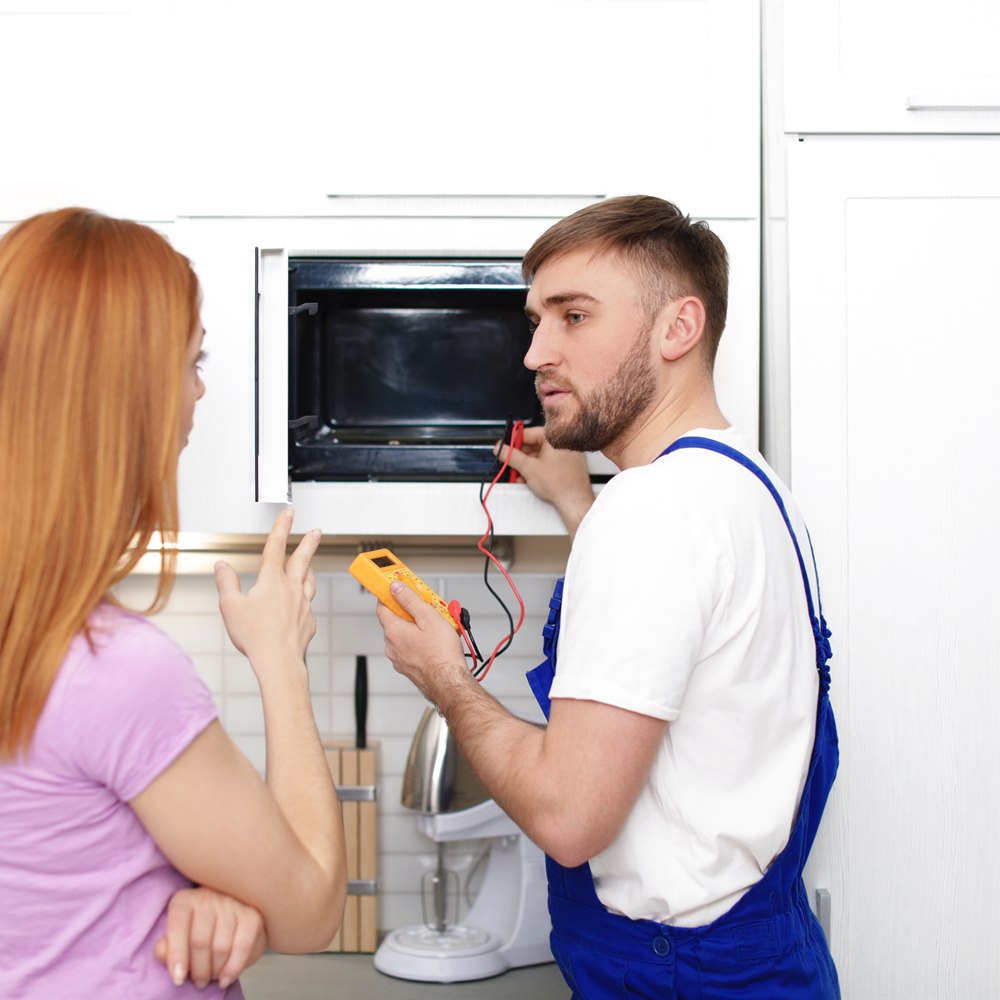
Most commonly a failed door interlock switch. Microwaves have two or three door switches that must all engage when the door closes for the microwave to operate; a single failed switch prevents all operation. The control pad lights up, the clock works, but the microwave does not run. Door switch failure is the most common service call and is repairable at $100 to $250 all-in. (For more on this, see DIY Microwave Fixes vs. When to Call a Pro.)
Microwave Starts but Does Not Heat
Most commonly a failed magnetron, high-voltage diode, or capacitor. The turntable may spin and the light works, but food is not heated. A failed diode ($10 to $30 in parts) is the least expensive fix in this symptom category. A failed magnetron is more expensive: $105 to $190 for the part and $250 to $550 for the job. Both require safe capacitor discharge before access not DIY-safe without training.
Sparking Inside the Microwave
Most commonly caused by metallic residue on the microwave interior (food with metallic packaging residue, foil flecks), a damaged waveguide cover, or damaged microwave paint/interior coating. Clean the interior first and inspect the waveguide cover (the flat panel on the interior wall, often made of mica) if it is damaged, scorched, or has food burned into it, replace it. Waveguide covers cost $10 to $30 and are user-replaceable. If sparking continues after cleaning and cover replacement, the magnetron or interior coating may be damaged. (For more on this, see Microwave Repair vs. Replacement: How to Decide.)
Microwave Makes Unusual Noise
A grinding or scraping noise from the turntable area: the turntable support ring, turntable plate, or roller guide may be dirty or misaligned. Clean the turntable components and confirm the roller guide is seated correctly. Continued grinding: the turntable motor may have failed. A loud humming that is different from normal operating sound: high-voltage transformer or magnetron developing a problem. A sparking or crackling sound: see sparking section above.
Working With a Contractor on This Project
Getting the right outcome on any home services project starts before the work begins. A few consistent practices make the difference between a smooth project and a frustrating one.
Get at least two or three quotes. A single quote gives you no basis for comparison. Two or three quotes reveal the market rate for the work, expose scope differences between bidders, and let you assess contractor communication quality before any commitment is made. The lowest bid is not automatically the best value if the scope is thin or the materials are underspecified.
Ask for licenses and insurance before work starts. Verify current general liability insurance and, for any work involving workers on your property, workers compensation coverage. Licensing requirements vary by state and trade; confirm the specific requirements in your jurisdiction. A licensed contractor who carries appropriate insurance protects both parties if something goes wrong during the project.
Get the scope in writing. A written proposal that specifies materials, labor scope, timeline, what is included (permits, cleanup, disposal), and warranty terms is the foundation of a professional engagement. Verbal agreements on any of these points invite misunderstanding. For any project over $500, written scope is non-negotiable.
Clarify the payment schedule upfront. A reasonable payment schedule ties major payments to project milestones: a deposit at signing, a payment at material delivery or project start, and a final payment at completion after a walkthrough confirms satisfaction. A contractor who requires full payment upfront before work begins is a red flag in any trade.
Making a Confident Decision
The information in this article is designed to help you ask better questions of the professionals you work with, evaluate their answers with more confidence, and understand the decisions involved in this type of home services project. It is not a substitute for professional assessment of your specific home. (For more on this, see Questions to Ask a Microwave Repair Technician.)
Every home is different. Roof slopes, local weather, tree exposure, soil conditions, and existing system condition all affect what the right solution is for your specific situation. The general principles here apply broadly, but a professional who assesses your home in person will give you guidance that accounts for the details that general articles cannot.
When you are ready to move forward, getting at least two or three quotes from licensed, insured, local contractors is the most important practical step. It lets you compare approaches, assess contractor quality, and confirm that the solution proposed matches your specific situation and budget.
Microwave Repair Cost at a Glance
| Cost Factor | Typical Range | Notes |
|---|---|---|
| Diagnostic/service call | $80 to $150 | A separate charge for the visit, usually credited toward the repair if you proceed |
| Minor repair (door switch, fuse, diode, turntable motor) | $100 to $250 including parts and labor | |
| Major component repair (magnetron, high-voltage transformer, control board) | $250 to $550 | |
| Countertop unit, whole job | $100 to $250 | Replacement usually wins here: a standard new countertop unit runs $107 to $229 |
| Over-the-range unit, whole job | $200 to $450 | Usually worth repairing; a new one is $199 to $449 before the mounting and venting work |
| Built-in or drawer unit, whole job | $280 to $580 | The tier most often worth fixing, since a replacement has to match the cabinet opening |
| Overall range | $100 to $450, averaging $225 | Covers a countertop or over-the-range repair. A countertop unit usually costs less to replace than to repair; a built-in or over-the-range unit is normally worth fixing. |
Cost figures on this page were checked against published pricing on August 29, 2026. How we source cost data.