Which Putting Green Setup Is Best for You?
The best backyard putting green depends on your space, your game, and your budget, a compact practice green, a contoured course-like green, or a full setup with a chipping area all suit different golfers. Matching the green to your situation gets the best result. Here’s how to choose.
For Limited Space or Budget: A Compact Practice Green
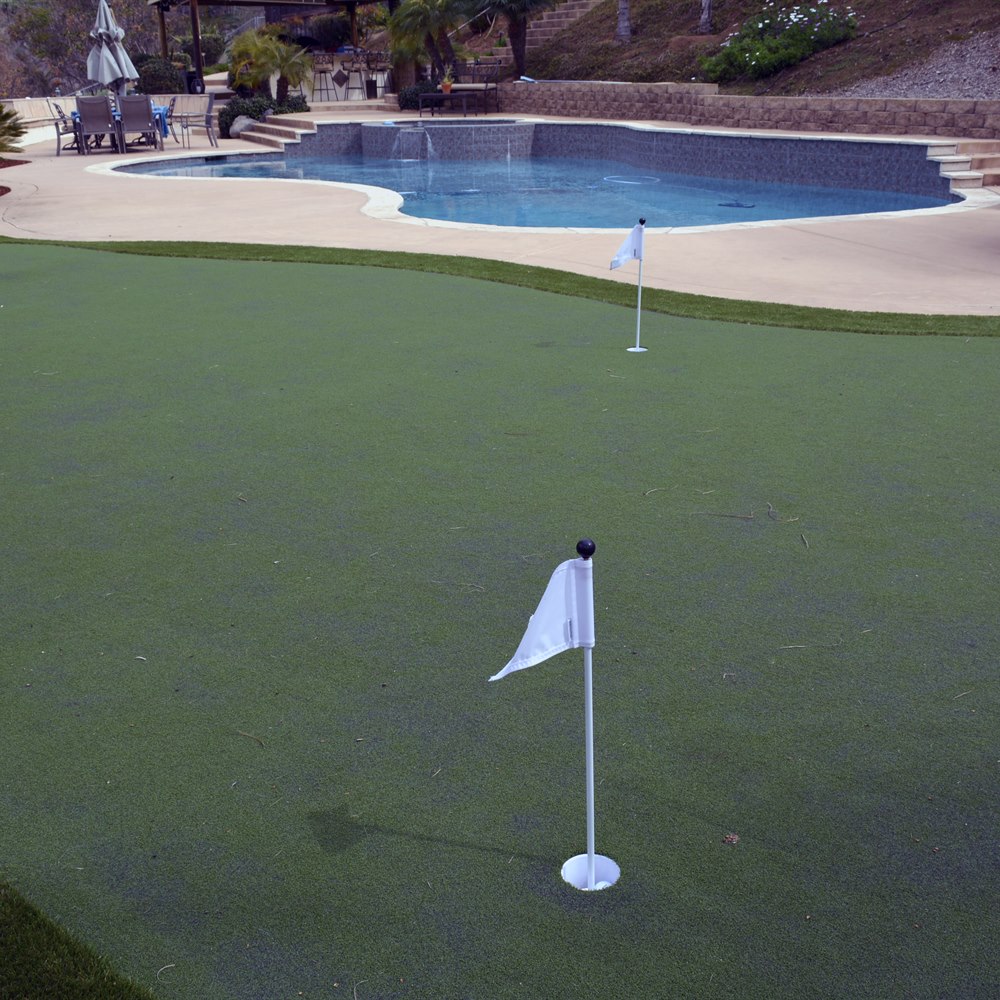
If space or budget is limited, a small, relatively flat green with one or two cups delivers real putting practice affordably. It fits a modest yard and a smaller budget while still letting you work on your stroke and short putts. For focused putting practice without a large investment, a compact green is the smart choice. It’s the efficient option when you want practice, not an elaborate course. Small can still be genuinely useful. Even a compact green delivers real value because so much of scoring is decided inside a few feet of the hole, so a small, mostly flat surface with a cup or two is enough to groove your stroke, dial in short-putt speed, and build the repetition that lowers scores, which is often more practically useful than an elaborate green used only occasionally. Even a compact green delivers the reps that matter most, since a large share of scoring putts are short ones, so a modest surface with a cup or two lets you groove your stroke, work on start line, and build the confidence on short putts that translates directly to the course, all without needing the space or budget a contoured green demands. (For more on this, see How to Budget and Pay for a Backyard Putting Green.)
For a Serious Golfer: A Contoured, Tour-Grade Green
If you’re a serious golfer working on your short game, invest in a contoured green with tour-grade turf and realistic breaks. Premium turf and true contours let you practice reading greens, lag putts, and breaking putts, closer to real course conditions. For a dedicated player, this course-like green delivers the realistic practice that improves your game. When your game is the priority, the contoured tour-grade green is worth it. Serious practice calls for a serious green. What makes tour-grade turf worth it for a dedicated player is that it holds a faster, more uniform green speed close to real course conditions, so the reads and speed control you practice at home actually transfer to the course, whereas a slower or less consistent surface can train habits that don’t hold up when you play, which is the specific reason a competitive golfer benefits from the premium turf and true contours. What tour-grade turf and true contours add for a dedicated player is the ability to practice the reads and speeds they actually face on course, a faster, truer stimp trains touch on quick greens, and well-built breaks teach you to judge line and pace together, so the premium green isn’t about luxury but about replicating the conditions that actually transfer to lower scores. (For more on this, see What Makes a Putting Green Cost More (or Less)?.)
For Complete Short-Game Practice: A Green With a Chipping Fringe
If you want to practice chipping as well as putting, add a fringe or chipping area of longer turf around the green. This lets you practice chip shots onto the green, a complete short-game setup. For golfers who want to work on the whole short game, not just putting, the green-plus-chipping setup is ideal. It expands your practice beyond the putting surface. The added fringe turns a putting green into a short-game practice area. The fringe works by using a taller, denser collar turf around the putting surface that mimics the longer grass ringing a real green, so a chip pitched onto it checks and releases realistically before running out onto the faster putting turf, letting you rehearse the full landing-and-release of a chip rather than only the putt that follows it. Because the fringe uses a taller turf that catches and checks a chip much like real greenside grass, it lets you practice landing spots and roll-out, the feel of a chip releasing toward the hole, which is a distinct and valuable skill that a bare putting surface can’t teach, effectively doubling what the installation lets you work on. (For more on this, see When a Backyard Putting Green Isn’t the Right Choice.)
For a Family or Casual Fun: A Playable, Forgiving Green
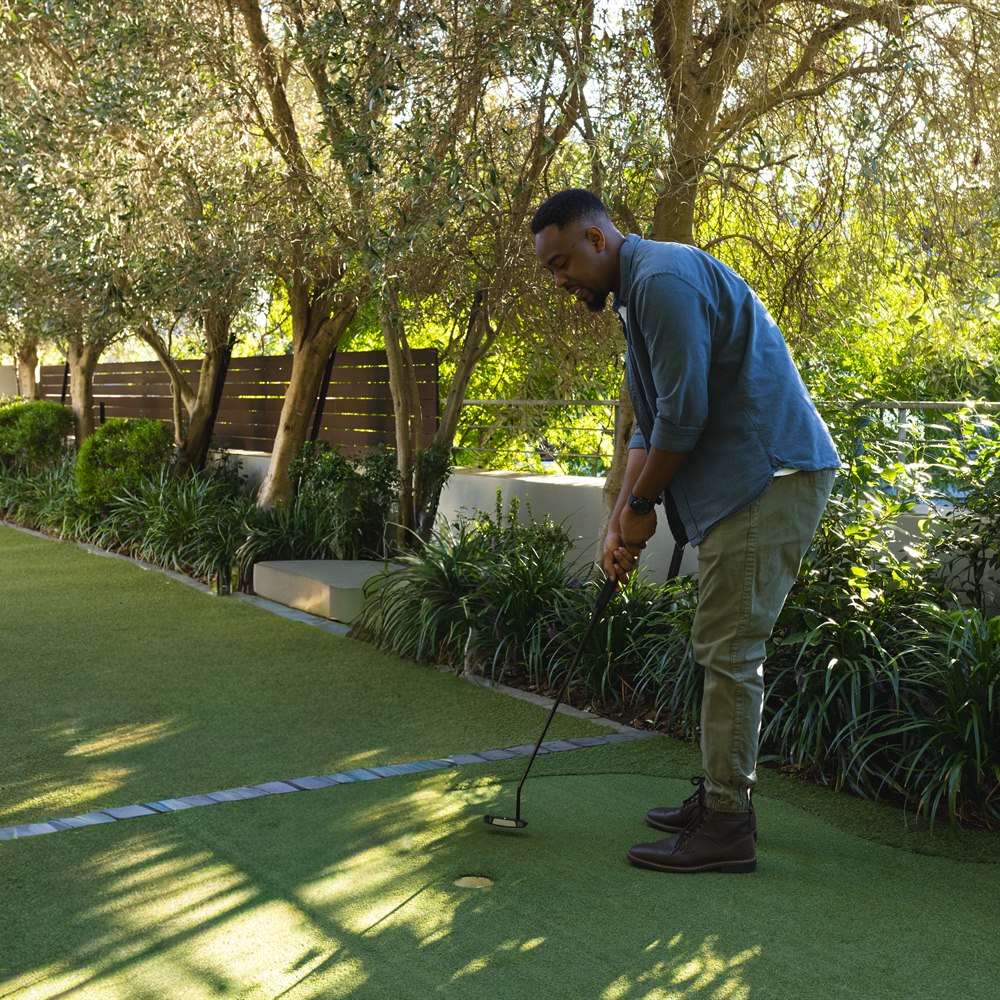
If the green is more for family fun and casual play than serious practice, a moderately-sized green with gentle, fun contours (not tournament-tough) suits everyone. It’s enjoyable for casual players and kids without being frustrating. For a fun backyard amenity the whole household enjoys, a forgiving, playable green is the right call. Fun and accessible beats challenging when casual enjoyment is the goal. Gentle contours are the key to a family-friendly green: enough slope to be interesting and let kids and casual players see putts break, but not the severe undulations that make a competition green punishing, so the design goal shifts from testing skill to rewarding participation, which keeps everyone coming back to it rather than getting discouraged. Gentle contours are the key to this, subtle breaks give casual players and kids the satisfaction of a rolling, real-feeling green without the steep slopes that turn every putt into a frustrating adventure, so a forgiving design keeps the whole household coming back to it, which is exactly what makes a family green worth having.
For Maximum Realism: Multiple Cups and Varied Breaks
If you want the most course-like experience, a larger green with multiple cups (different pin positions), varied breaks, and a chipping area recreates real green play. You can practice a range of putts and shots, as if playing different holes. For the golfer who wants a true backyard course feature, this full setup delivers maximum realism, at a premium cost. When realism is the goal, more cups and contours deliver it. Multiple cups set among varied breaks are what create the sense of playing different holes, since each pin position, an uphill left-to-right putt here, a downhill slider there, presents a distinct read and speed, so a larger multi-cup green with a chipping fringe effectively becomes a compact practice course rather than a single repeated putt, which is exactly what a realism-focused golfer is paying the premium for. Multiple pin positions are what unlock the variety, since each cup sits in its own surrounding contour and demands a different read and distance, so a green built with several holes effectively becomes a rotating set of different putts, letting you practice as though moving between holes on a course rather than repeating the same putt from the same spot.
Matching the Green to Your Situation
The best green flows from your priorities: compact for space or budget, contoured tour-grade for serious practice, a chipping fringe for the full short game, forgiving for family fun, or an elaborate multi-cup setup for maximum realism. A good installer helps design the green that fits your space, game, and budget. Knowing your priority points to the right setup.
Getting the Right Green for You
The best green matches your space, game, and goals, compact and affordable, contoured and serious, chipping-equipped, family-friendly, or elaborately realistic. A good installer designs it to fit. When you’re ready for that guidance, connect with a local pro below.
Frequently Asked Questions
A compact, relatively flat green with one or two cups, it delivers real putting practice affordably, fitting a modest yard and smaller budget while still letting you work on your stroke and short putts. For focused practice without a large investment, small can still be genuinely useful.
A contoured green with tour-grade turf and realistic breaks, letting you practice reading greens, lag putts, and breaking putts closer to real course conditions. For a dedicated player, this course-like green delivers the realistic practice that improves your game. Serious practice calls for a serious green.
Add a fringe or chipping area of longer turf around the green, letting you practice chip shots onto it, a complete short-game setup. For golfers who want to work on the whole short game, the green-plus-chipping setup is ideal, expanding practice beyond the putting surface.
A moderately-sized green with gentle, fun contours (not tournament-tough) that everyone enjoys, casual players and kids, without frustration. For a fun backyard amenity the whole household enjoys, a forgiving, playable green is the right call. Fun and accessible beats challenging for casual enjoyment.
A larger green with multiple cups (different pin positions), varied breaks, and a chipping area, recreating real green play so you can practice a range of putts and shots as if playing different holes. For a true backyard course feature, this full setup delivers maximum realism, at a premium cost.