What Backyard Playset Safety Practices Matter Most?
Keep 12 inches of impact-attenuating ground cover across the full fall zone, which extends 6 feet beyond the equipment on every side, and inspect the playset annually for protrusions, entrapment gaps, and loose hardware. At 6 inches, that ground cover provides less than half the impact protection. Backyard playsets are a leading source of residential childhood injuries, and most of those injuries are preventable with proper installation and maintenance.
Fall Zone Ground Cover
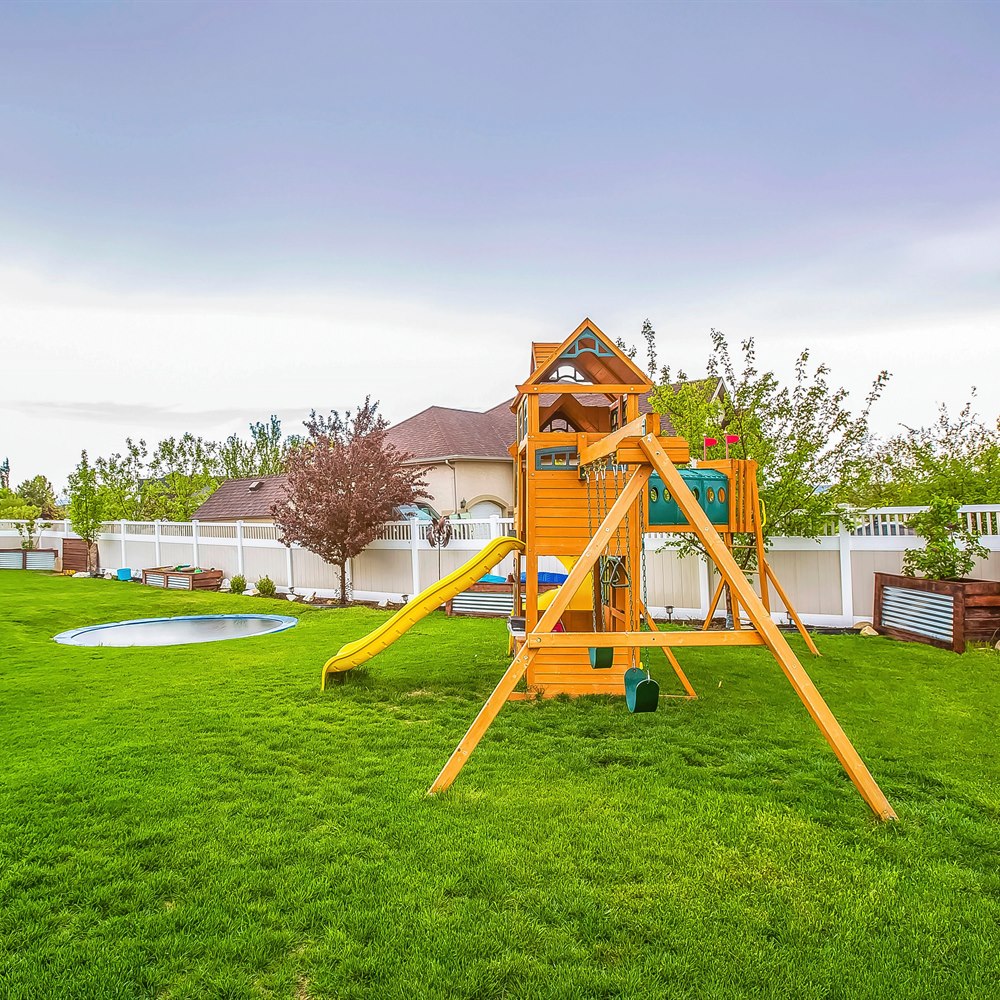
Falls from equipment are the most common playset injury. The fall zone (6 feet beyond all sides of the equipment, extending the distance of any slide or swing overhang) must have impact-attenuating ground cover. Per ASTM F1292: engineered wood fiber (EWF) at 12 inches provides adequate protection for equipment up to 8 feet high. Pea gravel and wood chips at 12 inches are also acceptable. The ground cover must be maintained at the correct depth — it compacts from use and weather, and a depth of 6 inches provides less than half the impact protection of 12 inches. Check depth monthly and replenish annually or as needed.
Annual Equipment Inspection
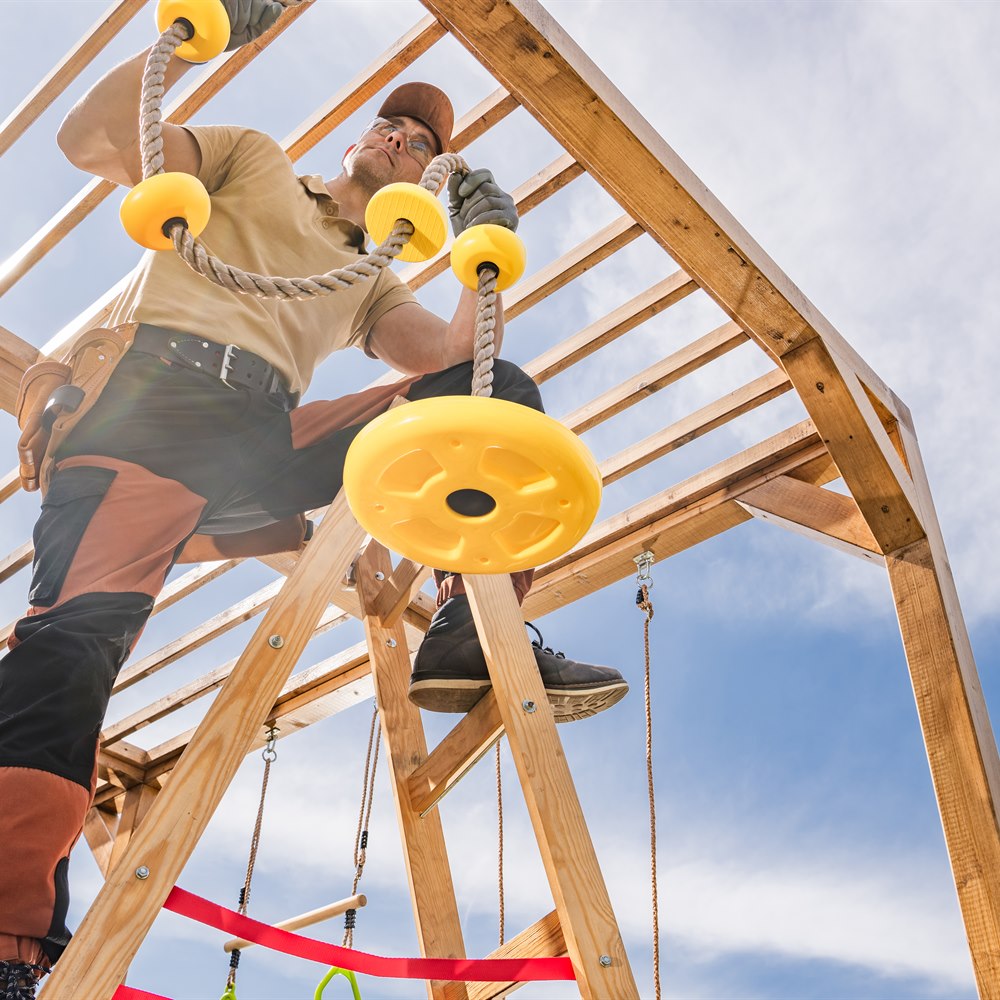
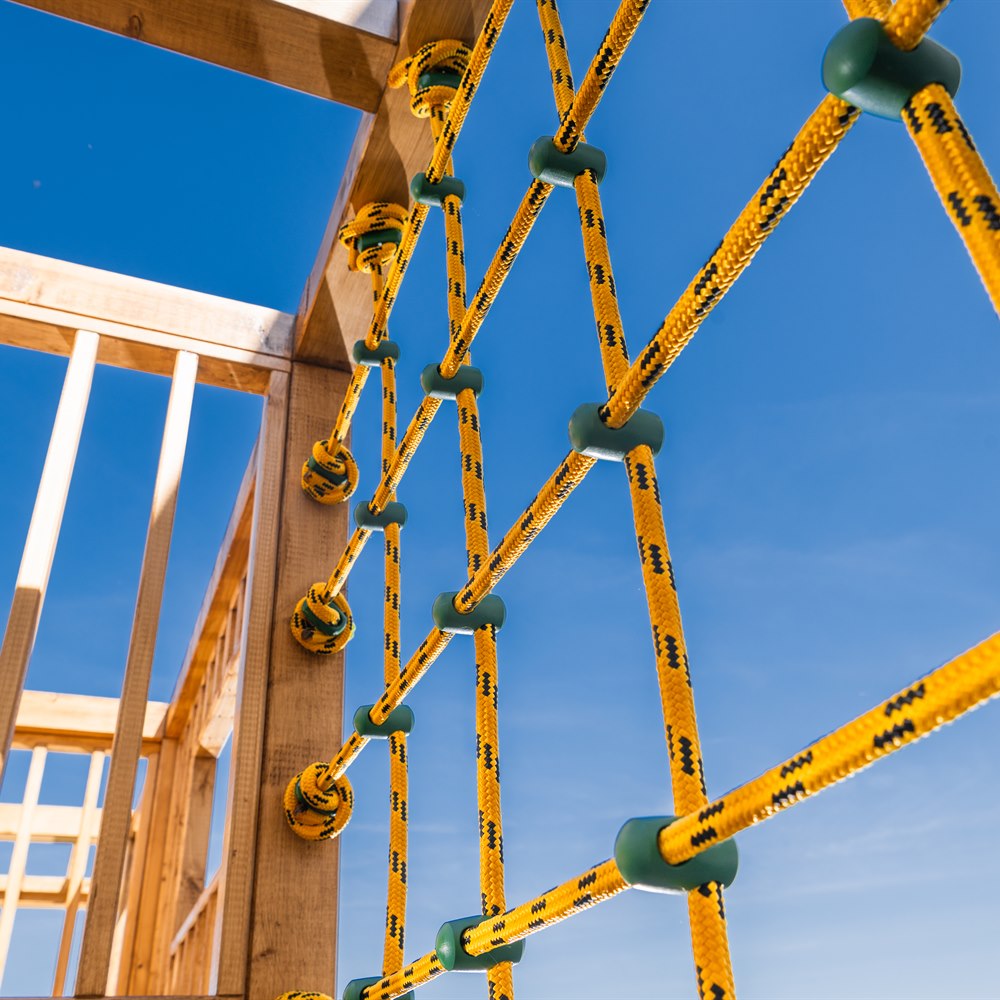
Inspect the playset for safety hazards annually: protrusions that can snag clothing (open S-hooks should be pinched closed or replaced with closure hooks — an open S-hook is the leading cause of entrapment strangulation with neck cords or strings). Exposed bolt ends that extend more than 2 threads beyond the nut (cover with bolt caps or grind flush). Gaps between equipment components between 3.5 and 9 inches in width (a child’s head can enter and become entrapped). Wood splinters or sharp edges on platforms and handrails. Rope or chain wear (fraying ropes must be replaced; kinked chains must be replaced). Hardware loosening (tighten all bolts and screws annually). (For more on this, see Playground Equipment Safety: What Every Parent Should Know.)
Clothing and Cord Hazards
Drawstrings on hoods and jackets are the leading cause of entrapment at playset openings and S-hooks. Never allow children to wear clothing with drawstrings or loose cords while using playground equipment. Necklaces and chains can catch on equipment components. Bike helmets should not be worn on playsets — the chin strap can catch on equipment and cause strangulation. Remove these hazards before play, not after an incident. (For more on this, see Playset Installation: Questions to Ask Before the Crew Arrives.)
Supervision by Age
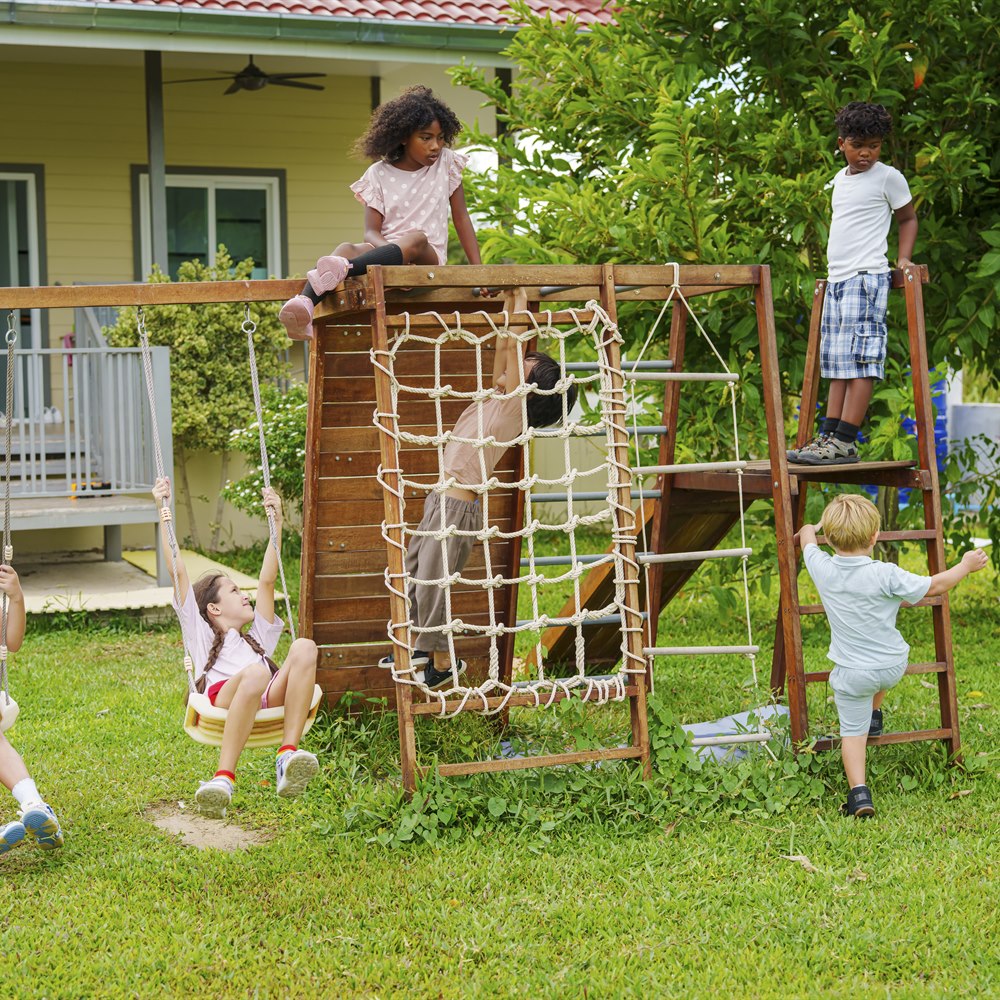
Children under 5 require close adult supervision during playset use — they lack the judgment to recognize fall hazards and can move between equipment elements unpredictably. Children 5 to 12 benefit from periodic supervision and clearly communicated rules (no pushing, no standing on swings). The supervision level should correspond to the specific child’s developmental stage, not just chronological age. The CPSC’s Public Playground Safety Handbook sets out fall zones, protective surfacing depth, and entrapment clearances.
Working With a Contractor on This Project
Getting the right outcome on any home services project starts before the work begins. A few consistent practices make the difference between a smooth project and a frustrating one.
Get at least two or three quotes. A single quote gives you no basis for comparison. Two or three quotes reveal the market rate for the work, expose scope differences between bidders, and let you assess contractor communication quality before any commitment is made. The lowest bid is not automatically the best value if the scope is thin or the materials are underspecified.
Ask for licenses and insurance before work starts. Verify current general liability insurance and, for any work involving workers on your property, workers compensation coverage. Licensing requirements vary by state and trade; confirm the specific requirements in your jurisdiction. A licensed contractor who carries appropriate insurance protects both parties if something goes wrong during the project. (For more on this, see Playset Questions to Ask Before Installation.)
Get the scope in writing. A written proposal that specifies materials, labor scope, timeline, what is included (permits, cleanup, disposal), and warranty terms is the foundation of a professional engagement. Verbal agreements on any of these points invite misunderstanding. For any project over $500, written scope is non-negotiable.
Clarify the payment schedule upfront. A reasonable payment schedule ties major payments to project milestones: a deposit at signing, a payment at material delivery or project start, and a final payment at completion after a walkthrough confirms satisfaction. A contractor who requires full payment upfront before work begins is a red flag in any trade.
Making a Confident Decision
The information in this article is designed to help you ask better questions of the professionals you work with, evaluate their answers with more confidence, and understand the decisions involved in this type of home services project. It is not a substitute for professional assessment of your specific home.
Every home is different. Roof slopes, local weather, tree exposure, soil conditions, and existing system condition all affect what the right solution is for your specific situation. The general principles here apply broadly, but a professional who assesses your home in person will give you guidance that accounts for the details that general articles cannot.
When you are ready to move forward, getting at least two or three quotes from licensed, insured, local contractors is the most important practical step. It lets you compare approaches, assess contractor quality, and confirm that the solution proposed matches your specific situation and budget.
Ranges here are national ballpark figures, not quotes. Actual pricing varies by region, home condition, materials, and contractor. How we source cost data.