What Goes Wrong With Holiday Lighting?
Whether you DIY or hire out, holiday lighting has real pitfalls, some dangerous, some just disappointing, that homeowners run into. Avoiding them keeps your display safe and beautiful. Here’s what goes wrong and how to avoid it.
Mistake: Booking Too Late (for Professional Installs)
How to avoid it: Waiting until December to hire an installer often means they’re fully booked, leaving you without a display or paying a rush premium. Avoid it by booking in late summer or early fall. Early booking secures your installer and often better pricing. Don’t leave professional lighting to the last minute. Booking ahead is the simplest fix. Late booking is the most common regret. (For more on this, see Hidden Costs of Professional Holiday Lighting.)
Mistake: Overloading Electrical Circuits
How to avoid it: Plugging too many light strands into one circuit or outlet can trip breakers or, worse, create a fire hazard. Avoid it by distributing the load across circuits, not exceeding strand-connection limits, and using outdoor-rated cords and outlets. Professionals manage this; DIYers must be careful. Electrical safety is critical with lighting. Don’t overload circuits, spread the load safely.
Mistake: Using Indoor Lights or Cords Outside
How to avoid it: Using indoor-rated lights or extension cords outdoors is a safety hazard, they’re not built for weather. Avoid it by using only outdoor-rated lights, cords, and connections for exterior displays. Weather-rated equipment is essential outside. Don’t use indoor gear outdoors. Outdoor-rated equipment prevents hazards. Only weather-rated gear belongs outside.
Mistake: Unsafe Ladder or Roof Work (DIY)
How to avoid it: DIY hanging means ladder and roof work in cold weather, a leading cause of holiday injuries from falls. Avoid it by working safely (proper ladder use, never alone, not in ice), or better, hiring professionals who have the equipment and training. If you’re not confident at height, don’t risk it. Falls are the real danger of DIY lighting. Safety at height is non-negotiable. (For more on this, see Holiday Lighting Safety: What Homeowners Need to Know.)
Mistake: A Cluttered, Uncoordinated Look
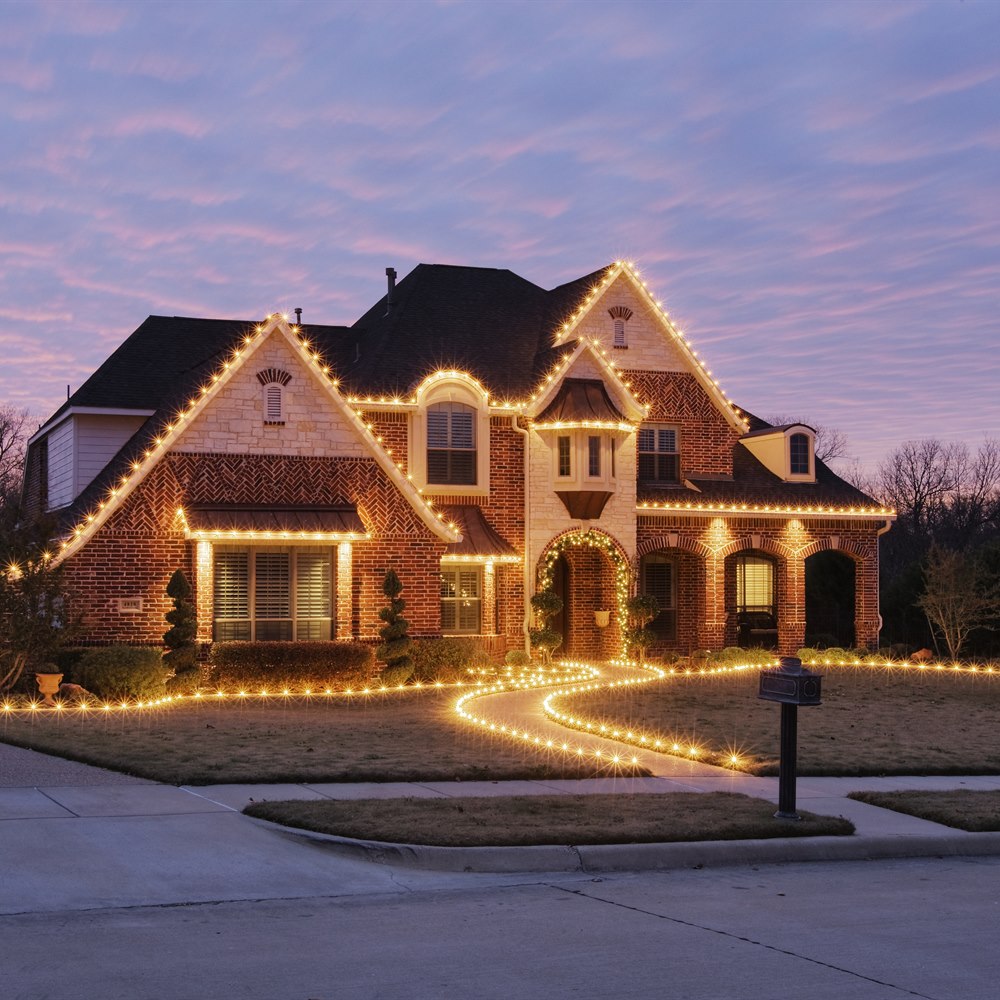
How to avoid it: Throwing up mismatched lights without a plan produces a cluttered, uneven display. Avoid it by planning a cohesive design, consistent light types and colors, even spacing, a coordinated look, or hiring a pro who designs it. A little planning (or professional design) makes a big difference. Plan the look for a polished result. A coordinated design beats a random one.
Mistake: Neglecting Takedown and Storage
How to avoid it: Leaving lights up too long (faded, weathered, an eyesore) or storing them carelessly (tangled, damaged for next year) are common. Avoid it by taking lights down in a timely way and storing them properly (or using a full-service plan that handles both). Proper takedown and storage protect the lights and your home’s look. Don’t neglect the end of the season. Timely takedown and good storage matter.
Fire Safety and Weatherproof Connections
The most serious holiday-lighting mistakes are the electrical ones, because they carry fire and shock risk, not just disappointment. Beyond simply overloading a circuit, common errors include daisy-chaining more strands end-to-end than the manufacturer rates as safe, running cords under rugs or through door jambs where they can be crushed and abraded, and leaving connections lying in spots where snowmelt pools around them. Each of these can lead to overheating or a short. The fixes are straightforward, honor the maximum-connected-strand limits printed on the packaging, spread the load across multiple circuits and GFCI-protected outdoor outlets, and keep cord-to-strand connections up off the ground and, ideally, protected from direct water.
Weatherproofing the connections is the detail DIYers most often skip and professionals never do. Outdoor connections sit exposed to rain, snow, and freeze-thaw for weeks, and an unprotected plug junction sitting in slush is both a failure point (that’s often where a strand goes dark mid-season) and a hazard. Using outdoor-rated cords and lights, elevating connections, and covering junctions with weatherproof caps or enclosures keeps the display both safer and more reliable. If any of this feels beyond your comfort, that discomfort is itself a signal, holiday displays are a leading source of seasonal falls and electrical incidents, and there’s no shame in having the electrical and at-height work done by someone equipped to do it safely.
The common thread is that a great display is as much about safety and planning as about the lights themselves. Respecting electrical limits, using weatherproof outdoor-rated gear, planning a cohesive look, and either working safely at height or leaving that part to professionals turns holiday lighting from a hazard-prone chore into a beautiful, trouble-free part of the season.
Staying Ahead of Mistakes
The common holiday lighting mistakes, booking late, overloading circuits, using indoor gear outside, unsafe height work, a cluttered look, and neglecting takedown, are all avoidable with planning, electrical safety, and either careful DIY or a professional service. When you’re ready to connect with local pros, connect below. (For more on this, see The Benefits of Professional Holiday Lighting.)
Frequently Asked Questions
For professional installs, booking too late, waiting until December often means installers are fully booked, leaving you without a display or paying a rush premium. Book in late summer or early fall to secure your installer and better pricing. Late booking is the most common regret with professional holiday lighting.
Yes. Plugging too many strands into one circuit or outlet can trip breakers or create a fire hazard. Distribute the load across circuits, don't exceed strand-connection limits, and use outdoor-rated cords and outlets. Professionals manage this; DIYers must be careful. Electrical safety is critical with holiday lighting.
No, it's a safety hazard, indoor-rated lights and extension cords aren't built for weather. Use only outdoor-rated lights, cords, and connections for exterior displays. Weather-rated equipment is essential outside to prevent electrical hazards. Only weather-rated gear belongs outdoors, don't use indoor equipment for an exterior display.
Falls, DIY hanging means ladder and roof work, often in cold weather, which is a leading cause of holiday injuries. Work safely (proper ladder use, never alone, not on ice) or, better, hire professionals with the equipment and training. If you're not confident working at height, don't risk it, falls are the real danger.
Plan a cohesive design, consistent light types and colors, even spacing, and a coordinated look, rather than throwing up mismatched lights without a plan (which looks cluttered and uneven). A little planning, or hiring a pro who designs the display, makes a big difference. A coordinated design beats a random one.