How Do You Choose the Right Irrigation System?
Choosing the right sprinkler system means matching the system type and configuration to your yard’s specific needs, water pressure, and landscape makeup. There isn’t one right answer; there are good choices for different situations. Here’s how to choose well.
Start With What You’re Watering
The most fundamental choice is matching the irrigation type to what’s being watered. Turf (lawn) and planting beds have fundamentally different needs: turf benefits from overhead spray or rotary coverage that distributes water across the whole surface, while planting beds benefit from drip or low-volume irrigation that delivers water slowly and directly to root zones, minimizing evaporation and keeping foliage dry. A system designed as if all areas are lawn overwatered beds and potentially damages plants. The right system for most properties combines spray or rotary zones for lawn and drip for planting areas. (For more on this, see Lawn Sprinkler vs. Drip vs. Hand Watering: What Is Most Efficient?.) EPA WaterSense recommends about one inch of water a week, avoiding midday watering, and weather-based controllers to cut waste.
Spray Heads vs. Rotary Heads for Lawn
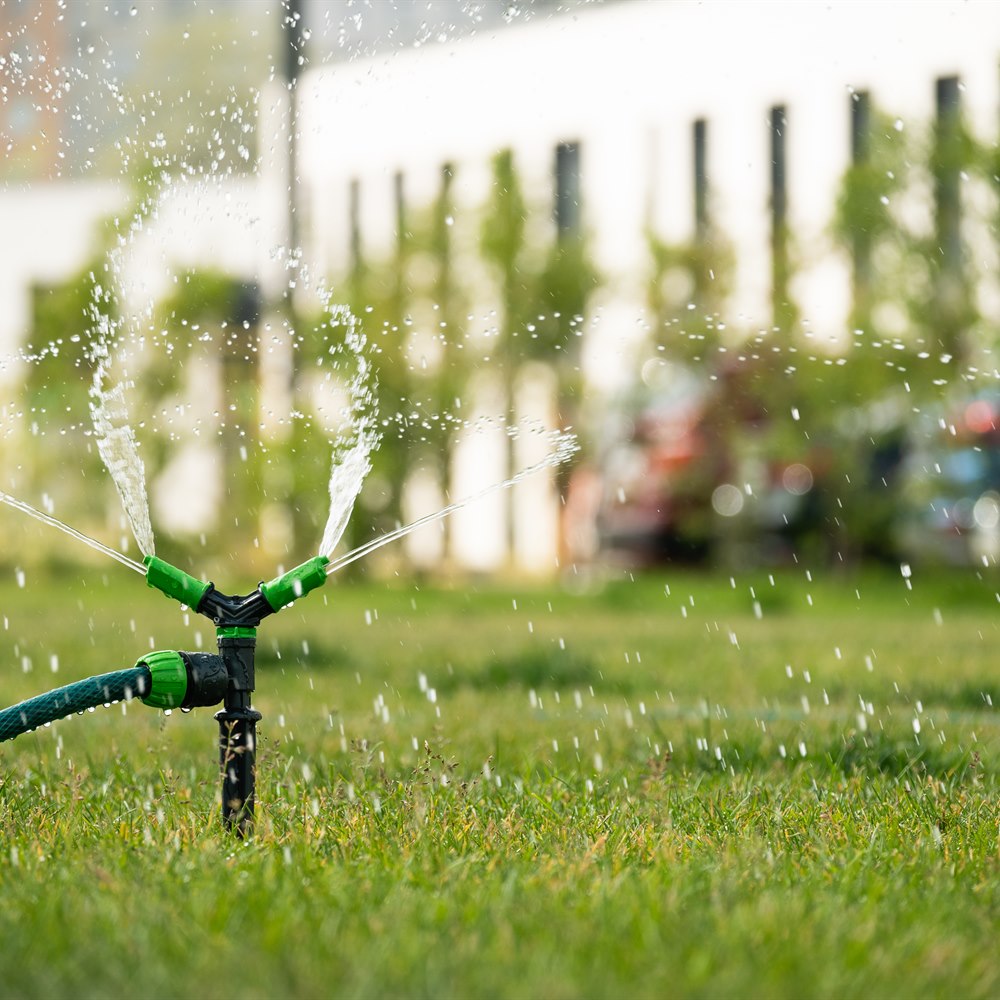
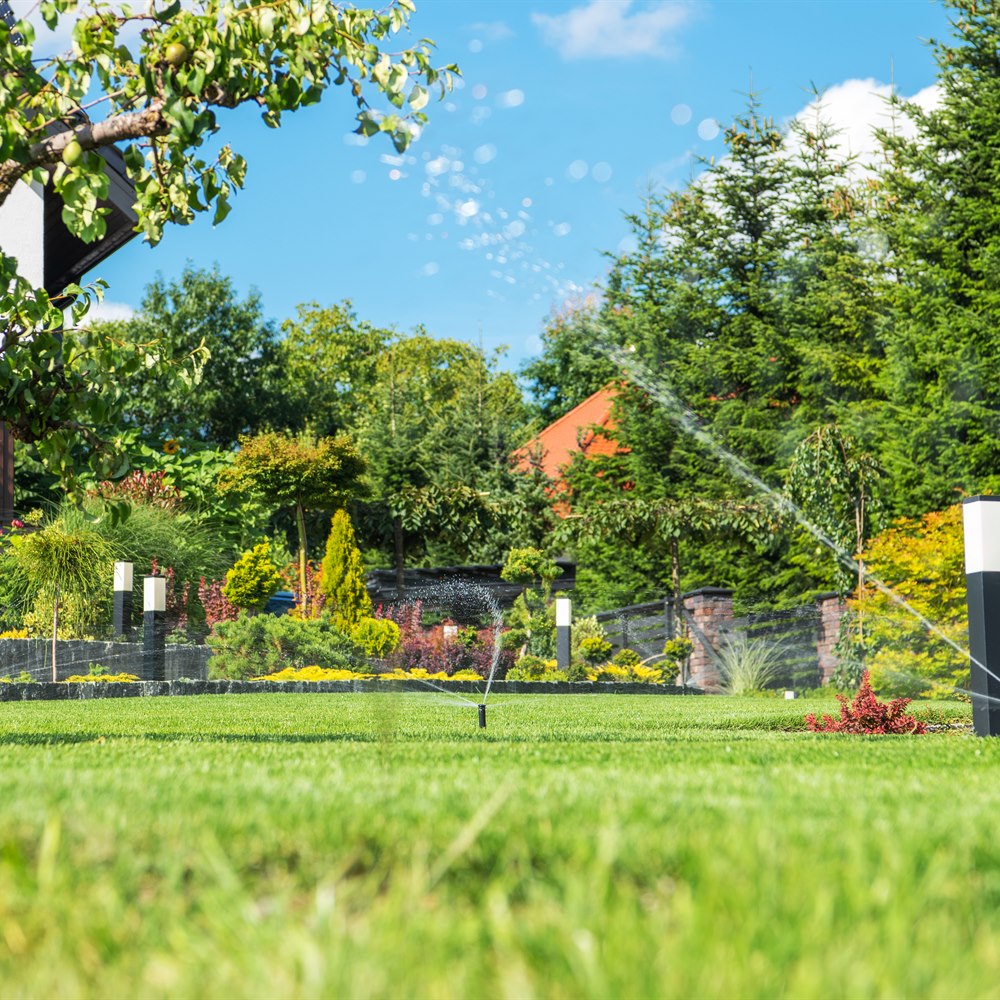
For turf irrigation, two head types dominate: fixed spray heads and rotary heads. Fixed spray heads cover a specific radius at a fixed pattern, applying water quickly, and suit smaller lawn areas where runtime is shorter and uniformity within a compact pattern is more important. Rotary heads rotate and cover longer distances, applying water more slowly, and suit larger lawn areas where longer runtimes produce the deep watering that encourages deep root growth. Mixing them in the same zone doesn’t work well because of different precipitation rates, so zones should use one type consistently.
Drip Irrigation for Planted Areas
Drip irrigation, which delivers water slowly through emitters directly to root zones, is the right choice for planting beds, trees, shrubs, and vegetable gardens. It’s more water-efficient than overhead spray, keeps foliage dry (reducing fungal disease risk), and allows longer watering times without runoff. The tradeoff is that drip systems require more maintenance than spray systems: emitters clog, lines shift, and new plants need emitters added. But for planted areas, drip consistently produces better plant health with less water than overhead coverage. (For more on this, see Drip Irrigation for Garden Beds: How It Works.)
Smart Controllers Are Worth It
Regardless of head type, pairing the system with a smart controller that connects to local weather data is one of the most impactful choices. Smart controllers automatically skip watering after rain, reduce frequency during cool cloudy periods, and increase during heat, all without programming changes. They’re typically required to qualify for utility rebates on irrigation systems in regions that offer them, and they consistently reduce water use by 20 to 50 percent compared with timer-based controllers left on a fixed schedule. The premium over a basic timer controller is modest relative to the total system cost.
Plan for the Landscape You’re Building, Not Just the Current One
If your landscape is still developing, and most are, design the irrigation system for where the landscape is going rather than just where it is. New planting areas will need drip zones. Trees will eventually need separate zones sized for established root systems rather than new-tree establishment. A controller with unused capacity and main supply sized for future zones allows expansion without retrofitting. Discussing your landscape plans with the installer, and sizing the system infrastructure for what you envision rather than just the current state, is the difference between a system that serves you for years and one that needs partial replacement as the property develops. (For more on this, see Sprinkler System Design: How Many Zones Do You Need?.)
Matching the System to Your Watering Goals
The best irrigation system is the one that delivers the right amount of water to the right places with the least waste, and that definition points toward different system configurations for different properties and goals. For a homeowner focused primarily on lawn appearance, the priority is uniform turf coverage with heads spaced for head-to-head coverage, rotary heads for larger areas, and a smart controller that prevents overwatering. For a homeowner with significant planting investment, drip zones for beds and trees are as important as the turf zones. For a homeowner in a water-restricted region, efficiency in every component choice, high-efficiency nozzles, drip, and a smart controller with soil moisture sensing, matters most.
It’s also worth being realistic about the system’s role in an overall irrigation strategy. An irrigation system is not a substitute for sound landscape design: plants suited to the site’s natural moisture levels need supplemental irrigation primarily during establishment, while plants that require continuous artificial irrigation to survive in a site where conditions don’t naturally suit them are an ongoing cost rather than a solved problem. The best irrigation systems support plants that belong in the landscape; they struggle when asked to compensate indefinitely for plants installed against the site’s conditions. Pairing the right system with good plant selection and proper mulching, which reduces moisture loss, produces the most efficient and effective outdoor water use and the most satisfying result from the irrigation investment.
Making the Choice
Match the irrigation type to what’s being watered (spray or rotary for lawn, drip for beds), choose head type appropriate to lawn area size, use a smart controller, and plan for the landscape you’re building. When you’re ready for a system designed for your specific yard, connect with a local pro below.
Frequently Asked Questions
Match the type to what you're watering: spray or rotary heads for turf, drip irrigation for planting beds. Most properties need both. Choose fixed spray heads for smaller lawn areas (quick coverage), rotary heads for larger areas (slower application, deeper watering), and drip for all planted areas. Pair with a smart controller that adjusts to weather.
Fixed spray heads cover a specific radius quickly at a fixed pattern, suiting smaller lawn areas. Rotary heads rotate and cover longer distances while applying water more slowly, suiting larger areas where longer runtimes produce deep watering. Mixing them in one zone doesn't work because of different precipitation rates.
Yes. Drip delivers water slowly to root zones, uses less water than overhead spray, keeps foliage dry (reducing disease), and allows longer watering without runoff. The tradeoff is more maintenance than spray zones: emitters clog and lines shift over time. But for planted areas, drip consistently produces better plant health with less water.
Yes. They automatically skip watering after rain, reduce frequency during cool periods, and increase during heat without programming changes. They typically qualify for utility rebates in regions that offer them, and they reduce water use by 20 to 50 percent compared with timer-based controllers on fixed schedules. The premium over a basic timer is modest relative to total system cost.
Yes. A controller with unused capacity and main supply sized for future zones allows expansion without retrofitting. New planting areas will need drip zones, trees will eventually need separate zones, and planning for the landscape you're building rather than just its current state produces a system that serves you for years without partial replacement.