
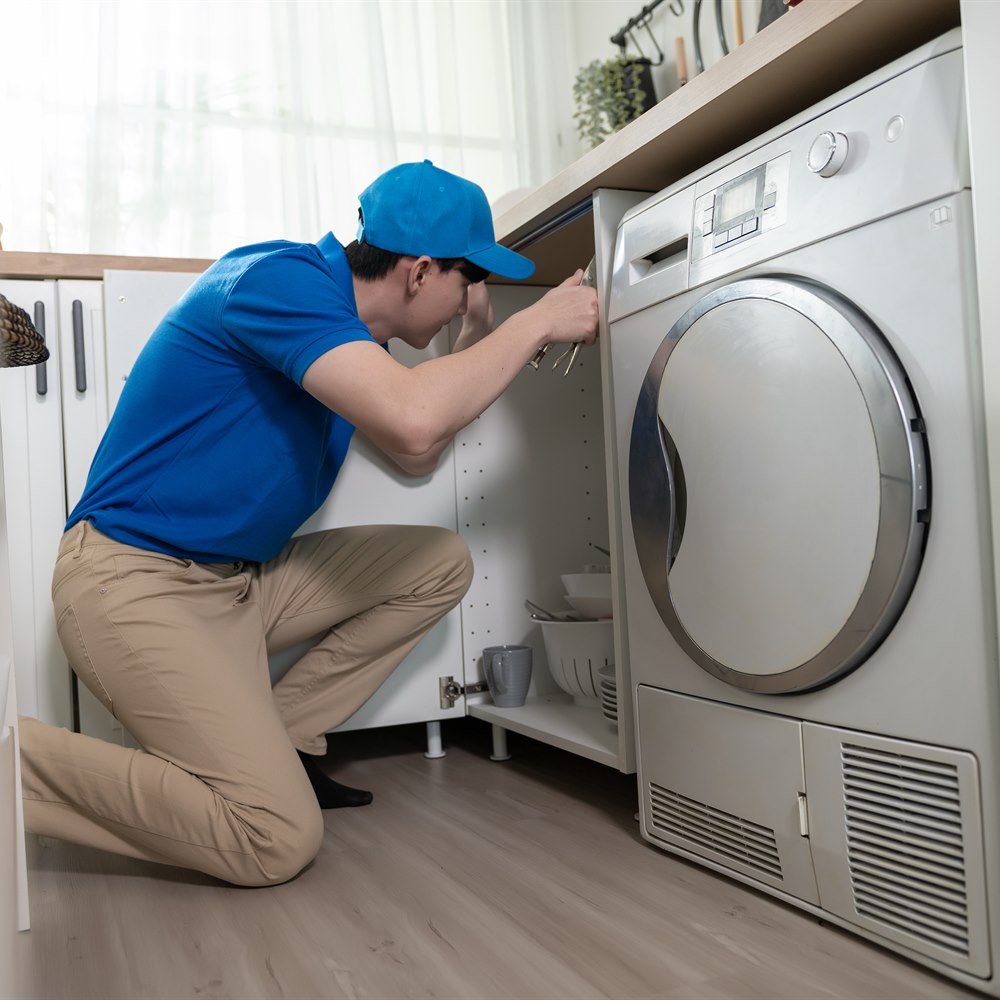
Should You Repair or Replace Your Dryer?
Repair the dryer when it is relatively new, the repair is minor, and the machine has been reliable; replace it when it is old, the repair approaches half the price of a comparable new machine, or it has been repaired repeatedly. Before either, rule out a clogged vent — poor drying, long cycles, and overheating shutoffs are often restricted airflow rather than a failed part, and a vent cleaning costs far less than a repair or a replacement. Making the wrong call means scrapping a fixable machine or pouring money into a lost cause.
The Quick Answer
As a general rule, repair makes sense when the dryer is relatively new, the repair is minor, and the machine has been reliable; replacement makes sense when the dryer is old, the repair is major (approaching a meaningful fraction of a new machine’s price), or it’s been repaired repeatedly. First, though, rule out a clogged vent, since if that’s the real cause, neither repair nor replacement is needed, just a vent cleaning. The diagnostic tells you the repair cost, and comparing it against age and a new machine’s price gives you the answer. (For more on this, see How to Budget and Pay for Dryer Repair.)
Rule Out the Vent First
Before the repair-or-replace math, confirm the problem isn’t simply a clogged vent, which is uniquely important for dryers. Poor drying, long cycles, and overheating shutoffs are frequently caused by restricted airflow, not a failed part or a worn-out machine. A vent cleaning is far cheaper than either a component repair or a replacement, and it also removes a fire hazard. Homeowners have replaced perfectly good dryers over a problem a vent cleaning would have solved. Always rule out the vent before concluding the machine itself needs repair or replacement. The U.S. Fire Administration found failure to clean was the leading ignition factor in home clothes dryer fires, at 31 percent.
The Cost Comparison
If it’s a genuine part failure, the most common guideline is the “half rule”: if a repair costs more than roughly half the price of a comparable new machine, replacement is often the better value, especially on an older unit. A minor $150-$275 repair is usually far below that threshold and clearly worth it. A major $350-$650 repair on an inexpensive dryer often meets or exceeds the threshold, making replacement worth considering. Running the actual numbers, repair cost versus new-machine price, turns a vague decision into a clear one. Get the diagnosis first. (For more on this, see Hidden Costs of Dryer Repair.)
The Age Factor
A dryer’s age heavily influences the decision. Most dryers have a typical lifespan of roughly a decade or more, depending on quality and use. A repair on a machine only a few years old, with much life left, is usually worth it. A repair on a machine near or past its expected lifespan is riskier, even if you fix this problem, others may follow. The closer a machine is to the end of its expected life, the more replacement is favored, especially for a major repair. (For more on this, see Common Dryer Repair Mistakes and How to Avoid Them.)
The Reliability History
Consider whether this dryer has been trouble-free or a repeat offender. A first repair on an otherwise reliable machine is a good bet. A machine that’s needed multiple repairs is signaling deeper decline, and continuing to fix it often costs more over time than replacing it. The pattern matters: one failure on a solid machine is different from the latest in a series. If the machine keeps failing, that history itself is a strong argument for replacement, regardless of this specific repair’s cost.
When Repair Clearly Wins
Repair is clearly the right call when the dryer is relatively new, still reliable, and the repair is minor and affordable, well under half a new machine’s price, or when a simple vent cleaning solves the problem. In those situations, replacing a good machine would be wasteful. A minor repair that restores a solid, not-old dryer to full function is almost always the economical choice. When the numbers and the machine’s condition both favor fixing it, or the fix is just a vent cleaning, repair wins clearly.
Efficiency, Capacity, and Features in the Decision
When a dryer repair sits in the genuinely borderline zone, some non-cost factors can reasonably tip the decision toward replacement. Newer dryers often offer meaningfully better efficiency, moisture-sensing that stops the cycle when clothes are dry (rather than running a fixed time), and other features that reduce energy use and protect fabrics. If your current dryer is old, inefficient, and lacks these features, a significant repair can be the moment to upgrade to a machine that costs less to run and dries more gently and smartly. The operating-cost savings won’t usually justify replacing a perfectly good machine, but they add weight when you’re already on the fence.
Capacity and fit matter too. If your household has grown and your dryer struggles to keep up, or you’re moving toward a stacked or larger-capacity setup, a breakdown is a natural point to reassess rather than pour money into a machine that no longer suits your needs. Matching the dryer to the washer’s capacity also improves efficiency, an undersized dryer paired with a large washer runs extra cycles. As with washers, none of these considerations overrides a clear financial signal: a cheap repair on a good, well-sized machine is still worth doing, and a lost cause is still a lost cause. But in the ambiguous cases, whether a newer machine’s efficiency, capacity, and features would genuinely serve you better is a fair and practical way to settle a close call.
Making the Call
First rule out a clogged vent, then weigh the repair cost against the machine’s age, reliability history, and a new dryer’s price, using the half rule as a guide. Repair a newer, reliable machine with a minor fault; replace an old, repair-prone machine facing a major repair. Get the diagnosis first for real numbers. When you’re ready for an honest assessment, connect with a local pro below.
Cost figures on this page were checked against published pricing on September 1, 2026. How we source cost data.
Frequently Asked Questions
First rule out a clogged vent, which is often the real cause of poor drying. If it's a genuine part failure: repair when the dryer is relatively new, the repair minor, and it's been reliable; replace when it's old, the repair major (approaching a fraction of a new machine's price), or it's been repaired repeatedly. Get the diagnosis, then compare cost against age and a new machine's price.
Yes, always, it's uniquely important for dryers. Poor drying, long cycles, and overheating shutoffs are frequently caused by a clogged vent, not a failed part or worn-out machine. A vent cleaning is far cheaper than a repair or replacement and removes a fire hazard. Homeowners have replaced perfectly good dryers over a problem a vent cleaning would have solved.
For a genuine part failure, the common half rule: if a repair costs more than roughly half the price of a comparable new machine, replacement is often the better value, especially on an older unit. A minor $150-$275 repair is usually well below that and worth it; a major repair on an inexpensive dryer may approach it. Run the numbers after the diagnosis.
Heavily. Most dryers last roughly a decade or more, depending on quality and use. A repair on a machine only a few years old, with much life left, is usually worth it. A repair on a machine near or past its expected lifespan is riskier, since others may follow. The closer to end of life, the more replacement is favored, especially for a major repair.
When the dryer is relatively new, still reliable, and the repair is minor and affordable, well under half a new machine's price, or when a simple vent cleaning solves the problem. In those cases, replacing a good machine would be wasteful. A minor repair that restores a solid, not-old dryer to full function is almost always the economical choice.